Let’s Talk Turkey
November 25, 2020 Leave a comment
Let’s Talk Turkey
But first, a word from our sponsors ….
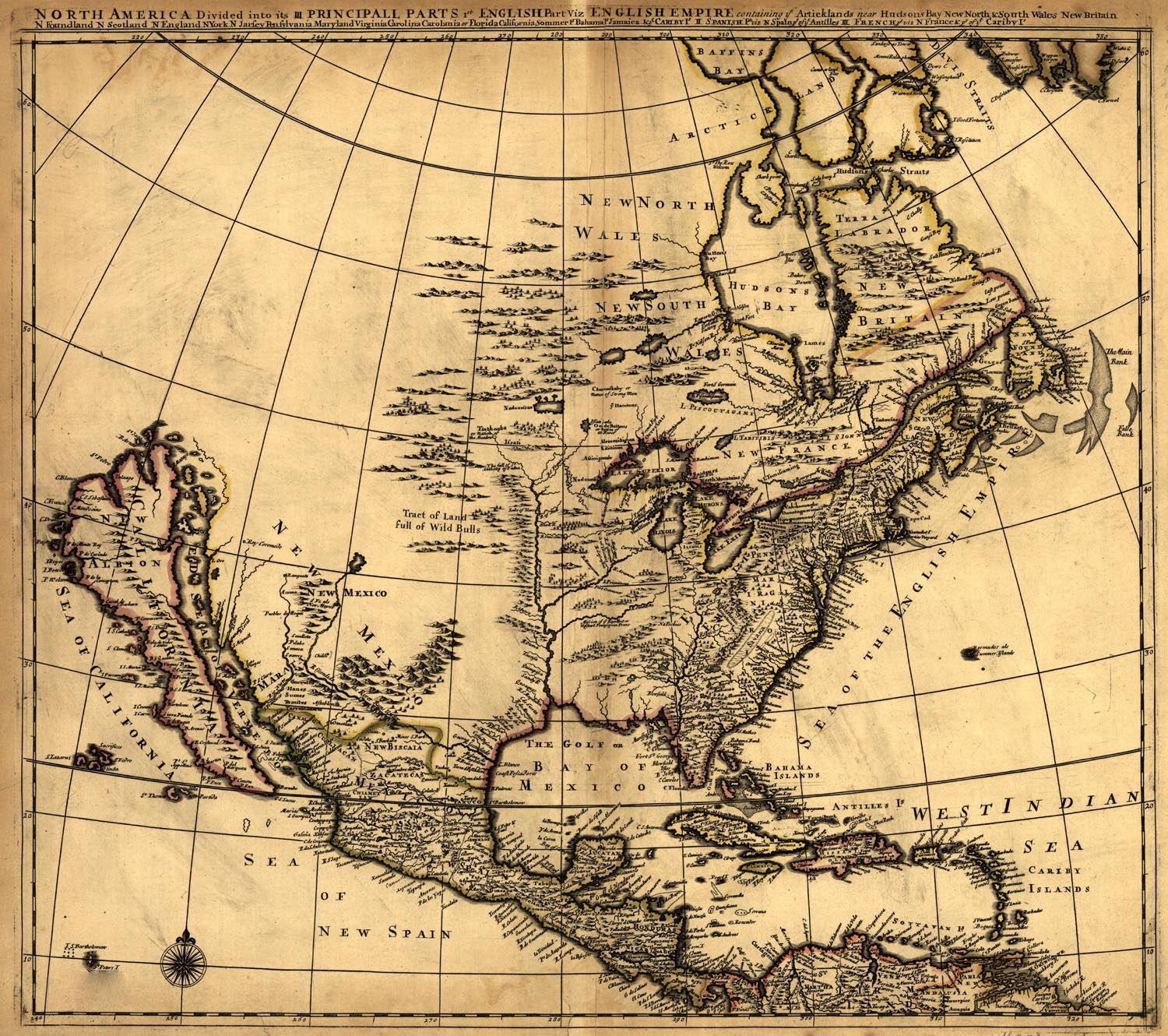
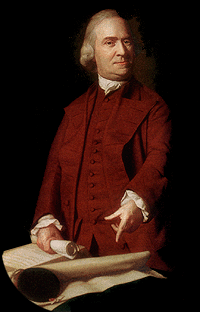
“If ye love wealth better than liberty, the tranquility of servitude better than the animating contest of freedom, go home from us in peace….We ask not your counsels or your arms. Crouch down and lick the hands which feed you. May your chains set lightly upon you, and may posterity forget that you were our countrymen.” ― Samuel Adams
“Democracy extends the sphere of individual freedom, socialism restricts it. Democracy attaches all possible value to each man; socialism makes each man a mere agent, a mere number. Democracy and socialism have nothing in common but one word: equality. But notice the difference: while democracy seeks equality in liberty, socialism seeks equality in restraint and servitude.”
― Alexis de Tocqueville, Democracy in America

“The American Republic will endure until the day Congress discovers that it can bribe the public with the public’s money.” ― Alexis de Tocqueville
While I was on Twitter, a few years ago, I would jump in on threads where socialism and capitalism were discussed (Better, the terms were tossed about.). The anti-capitalists would denounce capitalism as “unfair” and the rich as “greedy” while insinuating “equality” and “fairness” occurred naturally within the materialist realm of socialism. As an example, they pointed to Scandinavian countries (where, amazingly, none of them had the gumption to take up residence. That would take initiative and responsibility and money on their part.)
The anti-capitalists, assuming a superior moral position, never talked in-depth about the mechanics of socialism other than it being a redistribution of wealth from “rich” to “poor” via confiscatory taxation. And, whether they were oblivious to or welcoming of the growing soft despotism in America that gives people the illusion that they are in control, I could not determine.
On Twitter there were also those who proclaimed Jesus to be a “Progressive”. They offered a litany of “Progressive” attributes assigned to Jesus, among them “anti-rich”, their presumed antithesis to “Blessed are the poor” [“…in spirit”]. There were those, too, who said that the early church was an example of socialism because the early Christian shared everything in common. Apparently, these folks had never read that Jesus warned about the dangers of the love of riches and not that someone who was rich shouldn’t be. Did these folks also not comprehend that the early church did what they did out of love and not out of coercion?
In the current hopped-up milieu of socialism as social justice*, what is the mystique and lure of socialism, central planning, and top-down government when …
Above this race of men stands an immense and tutelary power, which takes upon itself alone to secure their gratifications, and to watch over their fate. That power is absolute, minute, regular, provident, and mild. It would be like the authority of a parent, if, like that authority, its object was to prepare men for manhood; but it seeks on the contrary to keep them in perpetual childhood: it is well content that the people should rejoice, provided they think of nothing but rejoicing.
For their happiness such a government willingly labors, but it chooses to be the sole agent and the only arbiter of that happiness: it provides for their security, foresees and supplies their necessities, facilitates their pleasures, manages their principal concerns, directs their industry, regulates the descent of property, and subdivides their inheritances – what remains, but to spare them all the care of thinking and all the trouble of living? Thus it every day renders the exercise of the free agency of man less useful and less frequent; it circumscribes the will within a narrower range, and gradually robs a man of all the uses of himself.
-from “Democracy In America” by Alexis De Tocqueville, Chapter VI: “What Sort Of Despotism Democratic Nations Have To Fear”
Long before social media came around fostering populist socialism, I inured myself against the idea of a free lunch. In the 80s I watched Milton and Rose Friedman’s Free to Choose Series on TV. The following video is part of that series.
Plain-spoken Milton Friedman, economist of the Chicago School of Economics, addresses the issue of social responsibility that seems to be the motivation behind a rejection of capitalism and the attraction of socialism. He also presents the fundamental difference between capitalism and socialism: capitalism – an economic market operating under the incentive of profit; socialism – the government market under the incentive of power. Included are his thoughts on collectivism, social justice, moral values, individual responsibility, the doctrine of social responsibility, and philanthropy.
For the many of you around the world who live in disparate circumstances and who read my blog, I pray that you will benefit greatly from this video.
A final word from our sponsors ….
It’s not an endlessly expanding list of rights — the ‘right’ to education, the ‘right’ to health care, the ‘right’ to food and housing. That’s not freedom, that’s dependency. Those aren’t rights, those are the rations of slavery — hay and a barn for human cattle.
― Alexis de Tocqueville
What good does it do me, after all, if an ever-watchful authority keeps an eye out to ensure that my pleasures will be tranquil and races ahead of me to ward off all danger, sparing me the need even to think about such things, if that authority, even as it removes the smallest thorns from my path, is also absolute master of my liberty and my life; if it monopolizes vitality and existence to such a degree that when it languishes, everything around it must also languish; when it sleeps, everything must also sleep; and when it dies, everything must also perish? ― Alexis de Tocqueville, Democracy in America
When I refuse to obey an unjust law, I do not contest the right of the majority to command, but I simply appeal from the sovereignty of the people to the sovereignty of mankind.
― Alexis de Tocqueville, Democracy in America
The liberties of our country, the freedoms of our civil Constitution are worth defending at all hazards; it is our duty to defend them against all attacks. We have received them as a fair inheritance from our worthy ancestors. They purchased them for us with toil and danger and expense of treasure and blood. It will bring a mark of everlasting infamy on the present generation – enlightened as it is – if we should suffer them to be wrested from us by violence without a struggle, or to be cheated out of them by the artifices of designing men. ― Samuel Adams
Let each citizen remember at the moment he is offering his vote…that he is executing one of the most solemn trusts in human society for which he is accountable to God and his country. ― Samuel Adams
The utopian schemes of leveling and a community of goods, are as visionary and impractical as those which vest all property in the crown. These ideas are arbitrary, despotic, and, in our government unconstitutional. ― Samuel Adams
* Pope Francis is Envisaging and Engendering an Open World:
“On the other hand, if we accept the great principle that there are rights born of our inalienable human dignity, we can rise to the challenge of envisaging a new humanity,” he proposes. “We can aspire to a world that provides land, housing and work for all.”
As one can surmise, Francis welcomes the populism of socialism and “for the good of all” envisages a communist version of Catholicism. For example, if you are a Catholic in China, (or the world for that matter) in his vision you’ll be provided land, housing and work provided that you are the Chinese Communist Party’s version of a “good citizen”.
The above helps explain why Pope Francis deplores the populism that elected Trump. A movement of “free people” is hostile to coercive top down rule and to non-democratic central planning and to the liberty-annihilating communism the Pope dreams of and so desires so as to reshape the world into his Let Us Dream image. The Pope/CCP desires the Ring of Power to conform all men to its will.
The Trump movement seeks to take back life, liberty, and country –identity – from the Ruling Class Obama-Clinton-Biden-Cuomo types who talk down to Americans, considering them “bitter clingers” and “deplorables” and rubes. The Trump movement detests the privileged elites (including Francis), and the unelected bureaucrats, and, essentially, those who are “more equal than others” and deign to tell them who they are and what they are to think and what they are to do. The Trump movement fights to keep America from becoming a third world country, as Democrat mayors prove it is possible with their “Open World” policies.

The Trump movement deplores the overreach and suffocating control of globalism. The movement seeks to remove the tentacles of the “Open World” beast that wants to devour the U.S. – our individual rights, our liberty, our Constitution and our identity – to feed its One World Fratelli tutti chimera. “We the people” reject the Great Reset.
The One World forces and the purple and scarlet dressed Whore of Babylon are gathering to fight against the Lord, as foretold.
“The board is set, the pieces are moving. We come to it at last…
The great battle of our time.”
Gandalf, The Lord of the Rings: The Return of the King
Added 11-26-2020:
Podcast:
Totalitarian Democracy Roger Kimball in conversation with Mark Bauerlein
Roger Kimball is Editor and Publisher of The New Criterion
Mark Bauerlein is a professor of English at Emory University.














 Cindy Wity
Under the Cover of Crisis
December 12, 2020 Leave a comment
For whatever is hidden is meant to be disclosed, and whatever is concealed is meant to be brought out into the open. -Jesus, Mark 4:22
I ain’t blind and I don’t like what I think I see. – Takin’ it to the Streets, The Doobie Brothers
“Moreover, he knew nothing yet well enough to see it: you cannot see things till you know roughly what they are.” –C.S. Lewis, The Space Trilogy
Having trouble seeing things today? Do you “know roughly what they are” – the dark forces at work in the world today? You and I should know them well enough to see to them for what they are – opportunists of evil. To wit, opportunist evil doers act according to the following scheme:
You hear and read about these opportunists every day. Ruling class elites, tech giant CEOs, Fortune 500 CEOs, Democrat pols, mainstream icons and gatekeepers – globalists all. They are the gods. We are the peons. They look down on us. They want us to look up and pray “Thy elite will be done on earth as it is boardrooms, college classrooms and political backrooms.”
The crisis has presented an opportunity. Social engineering. The globalist elites are testing the resistance of people to a One World authority. They are doing this under the rubric of mitigating a “public health crisis.” Healthy political and social immune systems are being worn down.
You know what the evil opportunists are doing. Power is being transferred from the people to the state. State licensing is gutting small business with threats of revocation. Wealth is being transferred from the middle class to the wealthy (who do not bear the financial brunt of the lockdowns). Civil liberties are being trashed. People are being forced to kneel to the will of the state. The state had help from evil opportunists – sheep in wolves’ clothing -to make it all-powerful.
Globalist health organizations (the CDC, the WHO, and the NIH) are lockdown enablers. (see video below)
The Progressive state media (the NYT, WaPo, CNN, MSNBC, and Fox News) are re-educating the masses. The public is now being subjected to a 24/7 exposure to case numbers, positivity rates, death tickers and PSAs. The useful idiots of these media orgs want you to believe that contracting COVID-19 is a death sentence.
You will not find reported the number of those who have recovered (the word on the street is 99.9%). You will not find the number of cases to mortality rate reported. You will not find year over year mortality rates and causation. The latter was analyzed, graphed and posted on the internet only to be quickly retracted and removed “The article may have contributed to the spread of misinformation about COVID-19.” You and I are not allowed the whole truth.
The following quote is from the posted Johns Hopkins News-Letter A closer look at U.S. deaths due to COVID-19
In other words, COVID-19 death counts replaced ‘typical’ causes of death counts. You and I are being manipulated by the media and health organizations.
The article noted that “in contrast to most people’s assumptions, the number of deaths by COVID-19 is not alarming. In fact, it has relatively no effect on deaths in the United States.” You and I are to be terrified and run into the arms of globalists. They are the gods who will save us.
(I am 68. I am not concerned about contracting the virus. If I do, my body will deal with it. My body will build immunity to the virus. I will not be taking the vaccine. In liberal parlance, “MY BODY, MY CHOICE!”
I am not a science denier. I am an engineer. I am also a Christian. I put my life in the hands of God and not in the hands of fortune-telling scientists who are subjects of Lucifer.)
You and I should know the evil opportunists well enough to see to them for what they are. Social media publishers are like the wardens of Europe:
As you are aware, there has been election fraud. Our Republic is now in crisis. Per Rahm’s tactic, media has taken control of free speech to manipulate your understanding of the crisis. Social media curators will edit you out. That is, if you post evidence of election fraud or about the communist china-compromised Biden family. Then, Twitter, Facebook, YouTube will ban you at their discretion. This is how censorship happens in a free-speech Republic. Media (and government) take control of free speech during a crisis. They publish their narrative – “consensus.”
Your evidence, opinions, values, and beliefs are stripped from their naked public square. Your voice is de-valued just as Democrats had no problem disenfranchising your vote with election fraud. Social media publishers have no problem dismissing election fraud evidence just as the mainstream media says “nothing to see here, move on”.
As you know, social media platforms have no problem inviting you into their world. They have commercial and political purposes. But you enter their world. You may be considered a virus if you don’t say the things that agree with their body politic. They may quarantine you. To remain in their world, you must be inoculated. The GroupThink vaccine works to inure one against the negative effects of censorship. The GroupThink vaccine causes one to react against actual journalism.
(A conservative blog was recently ‘de-platformed’ by WordPress for unknown ‘content’ violation. Questioning things and offering a countervailing opinion is apparently a ‘content’ violation. Is my WordPress blog next?)
Do you see the thinking behind censorship? It’s the logical relation of Orwell and Protagoras: some men are more the measure of all things.
You and I should be aware. Globalist-driven social media sites push to “obtain the future we want.” In other words, they want utopia. They curate to fashion the collective story of pluralism and peace. They promote the Great Reset.
I have heard opportunist evil doers blame President Trump for pandemic deaths. Why? Globalists connected with China don’t want you to point a finger at China. A media narrative was created to deflect blame.
You should listen to this whistleblower! Chinese ophthalmologist and virologist Dr. Lei Meng Yan put the lie to the Communist Chinese Party’s propaganda: the virus exists in nature; the nature origin theory. Her white paper (below) shows that the virus was generated by the CCP. The virus is a weapon.
Note: Dr. Yan has fled China. Her mother, still in China, has been arrested. The CCP is very angry with Dr. Yan.
Near the end of the above video (@21:00), a question is asked: “Why is there hesitancy in the science community …ten months into this, why does it take you Dr. Yan, to report on a bioweapon?”
There is a reason why there is a hesitancy in the “silence” community. In the next video, Dr. Shiva Ayyadurai, MIT PhD in biological engineering, talks about crisis opportunists. Big pharma and those in cahoots with them are pushing a vaccine mandate. You will find out why. Note: there are effective drugs already available, i.e., Ivermectin.
Did you know that Archbishop Viganò sent an open letter to President Trump about the globalist takeover? Here is an excerpt:
full text: Archbishop Viganò’s Open Letter to President Trump: GREAT RESET – Taylor Marshall
Under cover of crisis evil opportunists are becoming ascendant. The billionaire aristocracy, the technocrats, oligarchs and the “dark green” religionists are moving into place. The rich globalists and their foundations are setting up state capitalism and totalitarian control. You are to be serfs and worker bees in their programs.
Did you know? The growing resistance to globalism is not about Trump. It is not about populism. It is not about Republicans and Democrats. We are fighting against evil opportunists and the dark spiritual forces that employ them. Everyone who loves freedom, including the Chinese diaspora, is resisting. Join the fight. The world is watching.
Evil is crouching at the door. Arm yourself with the sword of the spirit – the word of God. (and check out these sites to avoid the globalist narrative and censorship.)
Citizen Free Press
Revolver
The National Pulse
Populist Press
Real America’s Voice
One America News
The Epoch Times
Alternate social media site:
Parler
Alternate video site:
Rumble
Added 12-16-2020:
Made in China
No more suppressing the truth, no more controlling the narrative…. China has caused coronavirus the deaths.
Josh Phillips of The Epoch Times w/a documentary about the CCP Wuhan virus, a synthetic (not naturally mutated) virus designed for cross species transmission.
Rate this:
Filed under 2020 current events, Globalism, Health Care, Human Rights, Political Commentary, Politics, social commentary, socialism, socialism Tagged with Big Pharma, CDC, Chinese Communist Party, COVID-19, Globalism, groupthink, NIH, pandemic, progressivism, The Great Reset, vaccination, WHO