The Antique Shop
July 19, 2020 Leave a comment
On a street known as Artifact Row, in the historic district of Langford, D&D Antiques offered vintage collectibles. The owners, Dale and Doris, lived in the small apartment above the shop. 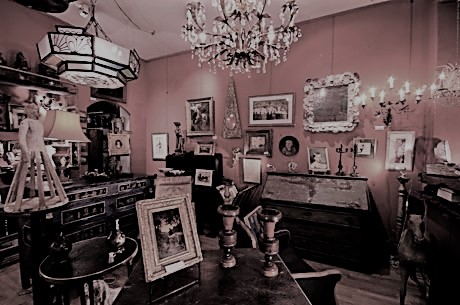
Per the rules of the town’s preservation committee, the shops and cafés of Artifact Row were required to maintain their 19th century façades. During the summer months, the lattice ironwork of the display windows and the frame of the double doors into D&Ds were coated with layers of black paint to keep them from oxidizing. Next to D&Ds, the Reitz Artifact Gallery, specializing in graphic arts, antiquarian maps and atlases, repainted its ironwork verdigris green and installed a new awning. On the other side of D&Ds, the wood framed windows and door of Dunwoody’s Furniture Restoration were repainted with a fresh coat of terra beige and brown.
Above D&D’s recessed doors were two transoms which, when lowered, gave the appearance with the doors of being the door’s black eyebrows. And above the transoms was a weathered green signboard with gold letters:
D&D Antiques
Things both Excellent and Rare
The shop’s windows displayed objects collected by Doris from estate sales. On exhibit, a menagerie of items passed down through generations of families including pottery, porcelains, vases, silver platters, a Tiffany lamp, jewelry, spelter candlesticks, figurines, watch fobs and watches, photographs and, postcards. A small banner with a gold star on a red and white field hung in the recessed window next to the door. Above it, a sign posting the shop’s hours. Beneath, a detachment of smartly uniformed nutcrackers that appeared to be standing guard at the door.
The shop now offered consignment, as Things both Excellent and Rare were no longer collected by Doris. A gaunt figure in her eighties, called a flower with a delicate stem by Dale, Doris could no longer attend estate sales. Her knees had become feeble, her gait wobbly, her strength gone. Dale noticed, too, that her mind had become wobbly. Doris no longer knew who he was. So, for a time, she remained with Dale in the shop.
During her days in the shop, Doris would sit listless in the spool-turned rocker. At times she would get up, hobble around and pick up pieces on display. She held them to her ear, as one would do with a sea shell at the beach. A dulcet smile would then appear on her face.
During fifty-five years of marriage, the two had worked hand in hand. Yet a time came to keep Doris upstairs. No longer active, Doris had grown weaker. Dale, also in his eighties, frail and hunched-over, could no longer help his wife up and down the apartment stairs. In the days that followed and at regular intervals, Dale would hang a “BACK IN TEN MINUTES” sign on his door. He would head up the shop’s adjoining stairs to their apartment to care for Doris, where she sat in her arm chair with a vacant stare.
On any given day, except on Mondays when the shop was closed, D&Ds was visited by women poring over each item and husbands who listened to Dale as he regaled them with his stories from his time in the Navy. The children who came along were directed to a corner of the store. There, Dale had set a small table, two chairs and a globe. On the table, Dale’s loose-leafed stamp albums. The children were enchanted by the colorful stamps Dale had collected from around the world. At Dale’s suggestion, they swirled the globe looking for each stamp’s country of origination.
It was now Sunday evening. The ageless sounding chimes of the grandfather clock and the sudden “koo-koo” of the Black Forest clock announced six-o’clock. It was time to close the shop. As was his habit, Dale placed the cash drawer and the antique jewelry in a safe. The coffee was shut off. The back door checked. The model train was shut off. The three weights of the grandfather clock were rehung. And, the two streetside lamps that shown down on the face of the shop were switched on.
After one last look around, Dale turned the door sign from “OPEN” TO “CLOSED” and stepped outside into stifling heat of the August night. As he turned the key in the lock, he noticed a thunderous commotion behind him. He looked around. Up and down the Row passersby stopped at window displays. Shoppers walked out of the closing shops. The tremendous clamor, clashes of curses and bellowing voices, seemed to come from the next street east. “Something is in the offing,” Dale thought. “There must be some confusion about the hour.” Tired, Dale trudged up the adjoining stairs.
11:10 and the shop was still. The inconsonant tickticktick of three mantel clocks the only sound.
11:11. The grandfather clock began a sonorous toll. The cuckoo exited with loud rousing “koo-koos”. The conversation began again.
“Let us use our time wisely,” came the booming voice of the grandfather clock.
“Here one minute. Gone the next,” chirped the cuckoo.
“What? We sit here, day after day. Nothing changes,” moaned the mantel clock.
“I do have my ups and downs,” noted the barometer.
“It’s all the same,” sighed the depression glass.
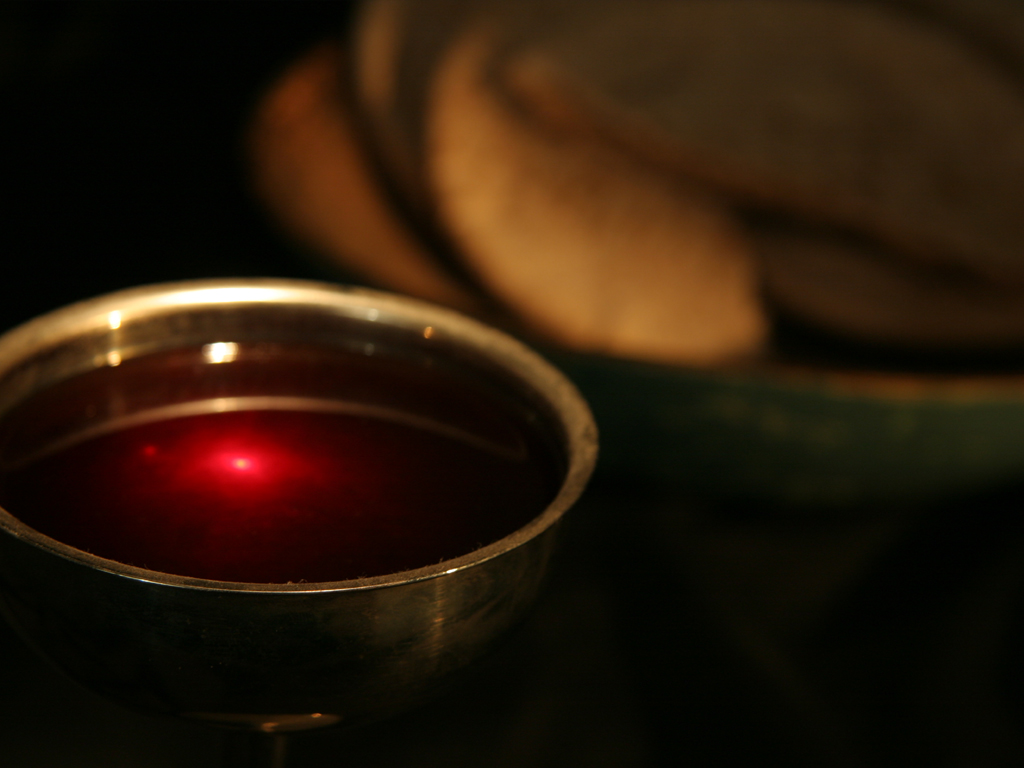
“But we’re not the same,” countered the silver chalice. “Some of us have a higher station in life.”
“I was tops in my class,” said masthead light.
“But I summoned the attention of all,” said the ship’s bell.
“No. It was I,” said the bosun’s pipe.
“I held the compass,” said the binnacle proudly.
“But you are not me,” said the compass. “I gave directions.”
“I was the admiral’s go to,” said the brass ship’s wheel.
“You couldn’t go anywhere without me,” replied the rudder.
“You don’t know the time of day,” replied the ship’s clock.
“I’m getting sea sick,” growled the gyroscope.
“Boys. Boys. Don’t make waves,” admonished the sextant. “Know your place.”
“It’s all the same. Night after night.” groaned the glass.
“But we aren’t!” said the painting pointedly.
“We are!” declared the silverware.
“We aren’t”, squealed the Chantilly porcelain terrine.
“We are. We aren’t,” the rocker hemmed and hawed.
“Things are heating up again,” the fireplace poker jabbed. “Just the way I like it.”
“You’re always stirring things up,” jabbed the ivory letter opener.
“Can’t we all just get along,” the fine china clattered.
“Let’s have a party,” the silver platter prompted.
“Yes, let’s!” shouted the silverware.
“It’s all the same.”
“We’re not the same.”
“The same. Not the same. The same. Not the same,” choo-choo-ed the tinplate model train.
“At least I don’t go around in circles all day,” remarked the rubber stamp.
“No. You just sit there with ink on your face,” countered the train.
“Don’t rub it in,” the stamp came back.
“Now we’re getting somewhere!” pounced the Murano glass paperweight.
“Look who’s talking,” remarked the art nouveau hand mirror.
“It’s all the same.”
“We’re not the same.”
“We are. We aren’t.”
“The same, Not the same. The same. Not the same.”
“I could shed some light on this,” laughed the Tiffany lamp.
“You’re not plugged in,” the flat iron spoke frankly.
“And neither are you,” countered the candlestick holder.
“You can’t hold a candle to me,” bragged the wash basin
“Keep a lid on it,” the tea pot protested.
“I’m with her,” tittered the tea cup
“Those who live in glass houses shouldn’t throw stones,” snorted the spittoon.
“Have you no taste? I am fine china!”
“Have some decorum,” pleaded the painting.
Tickticktick Tickticktick Tickticktick.
“Bor…ring. I’ve more important things to do,” brayed the brass bugle.
“He’s always blowing his own horn,” a nutcracker noted.
“It’s all the same.”
“You need to change your worldview,” the globe giggled.
“Get a hobby,” snickered the stamp album.
“The same, Not the same. The same. Not the same.”
“Let’s change the subject,” broached the book. “I am a first edition.”
“But I was here first!” shouted the Louis the XVI chair.
“And consigned to the dust bin of history,” scoffed the newly arrived brooch.
“I did not know you had come, and I shall not miss you when you go away,” replied the chair.
“I have served wine to kings and queens,” said the goblet. “I deserve better company.”
“Mais oui, bien sûr,“ came back the chair. “As do I.”
“Those two are broken records,” the gramophone pointed out.
“I am above all that,” said the annoyed candelabra. “I have looked down on royalty and heads of state.”
Not to be overlooked, the Victorian sewing table said proudly, “Not what I have but what I do is my kingdom.”
“Let’s face it. It’s all about me,” the cameo came back.
“You’re just another face in the crowd,” the mirror mocked.
“The lady picked me up. Held me to her ear.”
“And what did you tell her?” queried the quartz watch.
“If it’s true it’s not new.”
“Are you a philosopher now?” wondered the Wedgewood vase.
“Though Truth and Falsehood be Near twins, yet Truth a little elder is,” recited the limited-edition poetry book with a flourish.
“It’s all the same.”
“We’re not the same.”
“We are. We aren’t.”
“Well, you are all waiting,” remarked the rubber stamp.
“Waiting for what?” asked the tintype.
“Waiting to be taken to a home,” cooed the wood doll.
“Home is where the heart is,” replied the postcard.
“You’re just ephemera. Here today. Gone tomorrow,” tut-ted the dressing table.
“You have no utility,” snarked the silver platter.
“I’m a keepsake. A reminder of times past,” the postcard said proudly.
“What you are is what you have been. What you’ll be is what you do now,” exhorted the jade Buddha.
“Right on!” shouted the mantel clock.
“Progress!” The cuckoo poked his head out.
“Revolution!” fired off the fireplace poker.
“Diversity!” yelled the stamp album.
“Equality!” exclaimed the stamps in unison.
“Solidarity!” cried the flat iron.
“Can’t we all get along?” pleaded the fine china. “We can all serve humanity.”
“Hear! Hear! Shouted the silverware.
“Keep it together,” begged the bookends.
“It’s all the same.”
“We’re not the same.”
“We are. We aren’t.”
Tickticktick Tickticktick Tickticktick.
2 AM. Grandfather tolled and the cuckoo called. A loud crash.
“What was that?” questioned the quilt.
“A torch,” said one of the nutcrackers.
“I’ve seen this before,” said the fireplace poker.
“What’s it for?” wondered the watch.
“A torch is for light,” said the candlestick holder.
“But why is it on the floor?” asked the Oriental rug anxiously.
“Perhaps it is to be sold,” speculated the rubber stamp.
“I’ve read about this sort of thing,” stated the first edition. “It doesn’t bode well.”
“Some say the world will end in fire … Some say in ice,” warned the poetry book.
“The fire is coming closer,” fretted the lute.
“Shouldn’t it be on a candleholder where it belongs,” asked the candlestick holder.
“Fire goes where it goes,” replied the fireplace poker.
“It’s going up my leg,” said the Louis the XVI chair.
“How does it feel Mr. High and Mighty?” asked the rubber stamp.
“It feels … ohhhhh …familiar, …! …. like searing passion and raging anger.” The chair tried to maintain composed, but, “… now, ow! Ow! OW! …je suis d’histoire!. Aurevoir à mes amis.” The chair toppled down.
“What shall we do?” roared the rocker engulfed in flames.
“Maybe the shopkeeper will come,” said the cameo.
“Bugle do something,” shouted a nutcracker, his ranks now diminished.
The bugle, overcome by smoke, sputtered and coughed, “splurrrrtttt ….cuh cuh ….cuh cuh …someone get me some AIRrrrrrr …!”
“If I only had water,” said the basin.
“If only someone had taken us home,” cried the postcard.
The mirror, enamored by its reflection, proudly stated, “Look at the light I am reflecting. The whole room is lit up.”
“Don’t you see what is happening?” rasped the rocker. “We are being consumed!”
“I’ve done my job,” replied the mirror.
“I want out!” cried the postcard, the flames edging up his sides.
“We’re all in this together,” wheezed the stamp album with its last breath. The conversation ended.
3 AM. There was no ageless sounding toll and no sudden “koo-koo”. The second story had collapsed.
© Jennifer A. Johnson, 2020, All Rights Reserved
(aka, Lena de Vries)






 Cindy Wity
The Days of Cain
July 31, 2020 Leave a comment
In fourteen hundred ninety-two
Columbus sailed the ocean blue.
He had three ships and left from Spain;
He sailed through sunshine, wind and rain.
He sailed by night; he sailed by day;
He used the stars to find his way.
A compass also helped him know
How to find the way to go.
-Columbus Day poem
So, here we are. The summer of 2020. And we find, once again, activists without actualities, wandering through a universe circumscribed by themselves. That which stands in their way, whether human or representation, must be removed, cancelled, done away with. Only their likeness must stand.
The statue of Christopher Columbus was removed from Grant Park during the night. Chicago’s Mayor Lightfoot said the likeness was a “public safety issue”. So, to appease the raging horde who had emerged from their cramped safe spaces (perhaps a darkened basement in their parent’s home lit only by the glare of a computer monitor) Lightfoot removed the static and mute reminder of a discoverer who used fixed reference points outside of himself to voyage to a new world.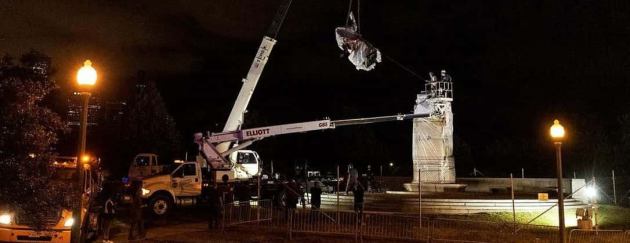
As we have come to witness in Chicago, Portland and, Seattle, wanderers with no reference point other than their own solipsistic compass create a world of lawlessness. There is nothing new or Progressive about the ways of the lawless wanderer. As House Speaker Nancy Pelosi remarked when hearing about the toppled statue, “People will do what they do.” The way of the wanderer is a return to the old world of Cain.
You remember the story of brothers Cain and Abel. Their relationship was removed, cancelled, done away with. The sibling dysfunction began with their mother Eve. After giving birth she declared “I have created a man with the Lord”. Her words go well beyond acknowledging God’s help in the birth of her son. She ascribes to herself equality with God as a source of life. And so, she named her first born Cain (translated in this context: “to create”), imparting to her firstborn the same delusional thinking, the same self-actualization and self-divination, that she and Adam had chosen when they ate from the forbidden tree and were kicked out of the garden for doing so.
(It is interesting to note that Eve named her second son Abel, meaning “breath” or breeze”. Perhaps Eve, after seeing herself in Cain, chose the name to acknowledge that man is ephemeral, transient and, mortal and not equal with God after all.)
Both Cain and Abel worked the land, exerting dominion over it as God had charged in the first chapter of Genesis. Both were aware of God’s presence. Both offer the fruits of their labor to him as a sacrifice. But there is an issue with one of their sacrifices. The issue is not so much the quality of the sacrifice. They both offer yields from God’s good creation. The issue lies beneath the surface.
Abel offers the best cuts from the first born of his flock. Cain offers portions of what’s growing. It cost him nothing to do this. Abel’s sacrifice is a recognition that the growth and flourishing of his flocks were gifts from God. His sacrifice is a recognition that God is God and therefore deserves respect and the best creation has to offer, no matter the cost. Cain’s sacrifice is a recognition that Cain is co-creator with God. He had worked the land and thought of himself as the one who made it grow and flourish. As such, Cain’s sacrifice is an attempt to bribe God into blessing him as caretaker, to make things go well for him.
When his sacrifice is rejected by God, Cain became angry. His face became downcast. Cain felt that he had rights by placing God in debt to him. He did what he felt was required and now God must do what is required and give him his favor. Freedom from anxiety, peace of mind and pleasure were of the highest priority to Cain. He traded some token of produce in order to receive back empathy for his epicurean life.
Cain’s quid pro quo religion – seeking to broker with the god/s for order and harmony in one’s life, would go on to become the religious practice for many in the world, old and new. But religion is mere formality. Doing what is right is more important than sacrifice before God. Doing what is morally and ethically right begins with the acknowledgement of and respect for God as God. So, God gives Cain a choice: do right and be the offering that is accepted or continue his self-divinization; rule over the works of God’s own hands or let the works of his own hands rule over him.
Then the Lord said to Cain, “Why are you angry? Why is your face downcast? If you do what is right, will you not be accepted? But if you do not do what is right, sin is crouching at your door; it desires to have you, but you must rule over it.” Genesis 4: 6-7
Cain made his choice. He brought Abel to a field and out of jealousy killed him. Perhaps he thought, “I shall have no other gods before me”. But what happens on the field does not stay on the field. Abel’s blood cried out to the Lord. And the just Lord came looking for accountability.
After Adam and Eve made their choice, God asked “where are you?”. Adam answered “I was afraid…” After the murder, Cain was asked: “Where is your brother Abel?” Cain answered “I don’t know. Am I my brother’s keeper?” Cain denies culpability. Perhaps he thought, “If I remove the competition the god will have to deal with only me. Besides, I did my due diligence and have nothing to show for it. So there!”. Maybe he said, “People will do what they do”.
Genesis 2:15 tells us that The Lord God took the man and put him in the Garden of Eden to work it and take care of it. Mankind’s vocation was to care for God’s creation, His Temple. That care would include God’s image bearers placed in the temple. Abel did the work of caring for creation and bringing its best back to God. Cain would have none of it. He evaded his responsibility with self-deception and denial. He canceled it. So, God dealt with Cain. Cain was cursed.
The curse God imposed on Adam, Cursed is the ground because of you is similar to but lesser than the curse imposed on Cain: You are cursed from the ground …When you work the ground, it will no longer yield its crops for you. You will be a restless wanderer on the earth. The land and now a man are cursed.
The form of justice to be imposed on Cain could have been a life for a life. Instead, Cain is exiled by God. He is to be a wanderer. But Cain decides to be a whiner and not a repenter.
Cain said to the Lord, “My punishment is more than I can bear. Today you are driving me from the land, and I will be hidden from your presence; I will be a restless wanderer on the earth, and whoever finds me will kill me.” Genesis 4: 13-14
In exile, Cain has a chance to repent and turn back to God. God will look after Cain. God put a mark on Cain so that anyone who came across him would not kill him. The mark of protection, not described in Gen. 4:15, reminds me of the Passover lamb’s blood put on the two doorposts and lintel of the houses of the Israelites in Egypt. Clearly, God is patient and merciful with Cain. He could have canceled Cain from the face of the earth. Yet, God watches over Cain; God does for Cain what Cain should have done for Abel.
But none of that matters to Cain. Cain will watch after Cain. The self-indulgent Cain goes his own way. Instead of wandering he builds a city. He wanted to make a name for himself and become the kingpin of his own domain, his own safe space. Cain’s descendants glory in their barbarism and in possessing women as objects (Gen. 4:19-24). The dysfunction that began in the garden continued in the line of Cain. He is the father of the self-reliant god-like superheroes who control their own destinies with force.
Genesis chapter 4 ends with the birth of Seth to Adam and Eve. Eve has had a change of heart after the tragedy of Cain and Abel: God has granted me another child in place of Abel, since Cain killed him. There is no talk of being a god-like superwoman. And the line of Seth does not go the way of autonomous Cain.
So, here we are. The summer of 2020. And we find, once again, activists without actualities, wandering through a universe circumscribed by themselves. That which stands in their way, whether human or representation, must be removed, canceled and, destroyed. These are the days of Cain.
It is easy to rail against the anarchists and their subjectivist view of morality. It is easy to condemn the barbarism and destruction of the wanderers. It is easy to denounce those who kneel to false gods before games. It is easy to deride the Democrat pols who appease and dismiss the angry mobs with “People will do what they do”. But what about the choices we each make to go our own way and to do what we do thereby creating dysfunction and havoc in our relationships? What happens when we cancel relationships by not forgiving? Some may thumb their noses at God under the guise of American Individualism and self-sufficiency. Some may have even offered some token to God (going to church, putting money in the plate, etc.) hoping to receive back the American Dream (a “Made in the U.S.” sticker placed on a cask of Greek Epicureanism). We make relational choices based on our relationship with God. We become what we do with God. Have you become a likeness of Cain?
In addition to the behavior describe above, Cain is impatient, short-tempered and, …
…self-referring.
…demands tokens of assurance, of victory, of winning.
…uses fear mongering to gain and remain in power.
…avoids all risk to obtain security and protectionism.
…seeks to replace the timeless with the temporal.
…obtains identity from tribal sources and denigrates all others
…is self-centered and narcissistic in his demand for self-preservation.
…makes everything personal.
…has no problem inflicting pain on others
…shuts down discussion and debate
…goes his own way; is his own man.
The choices presented to Cain are the same choices presented to each of us. But we don’t have to live the days of Cain. If someone has made wrong choices and has wandered far from God, they should know that God, as he had done with Cain, is asking, “Where are you?” God is ready to show mercy. He wants to bring the wanderer back from exile and to redeem his life from the garbage pit and crown him with love and compassion. God seeks to restore His likeness in His image-bearers. No other likeness will stand before him.
He delighteth not in the strength of the horse: he taketh not pleasure in the legs of a man. The LORD taketh pleasure in them that fear him, in those that hope in his mercy. Psalm 147:10, 11
Rate this:
Filed under 2020 current events, Christianity, Current Events 2020, Lawlessness, Political Commentary, social commentary Tagged with Antifa, Cain and Abel, Chicago, Chicago’s Mayor Lightfoot, Columbus statue, Portland, Protests, Seattle, social unrest