A Bad Place

The assumption that spending more of the taxpayer’s money will make things better has survived all kinds of evidence that it has made things worse. The black family- which survived slavery, discrimination, poverty, wars and depressions- began to come apart as the federal government moved in with its well-financed programs to “help.” Thomas Sowell

“We’re creating a large number of social misfits in the inner city which will prey on the larger community later on.” PBS Documentary about the Robert Taylor Homes

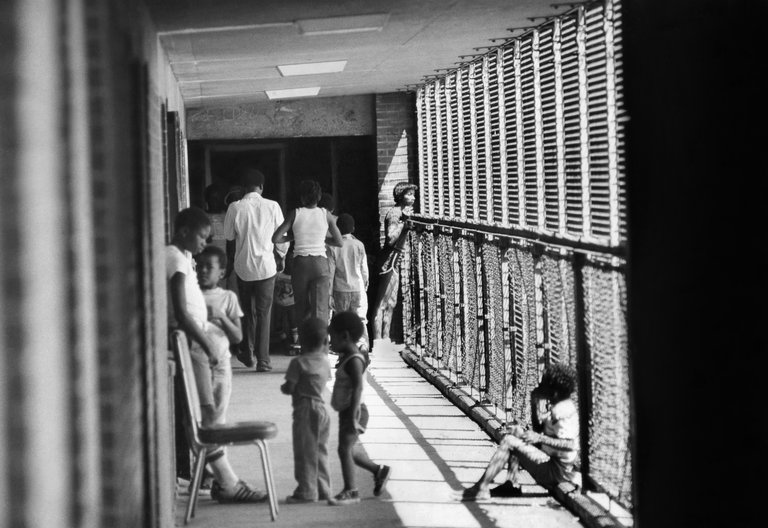
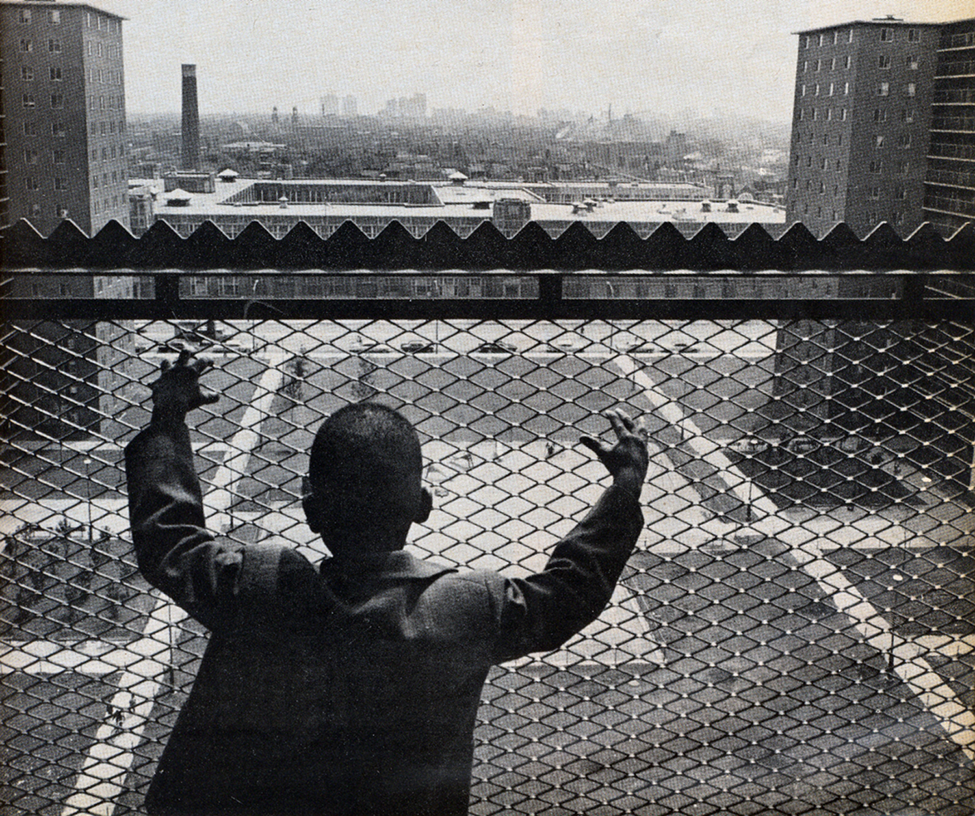
Your housing unit is one of 4,415 units in one of 28 identical 16-story buildings. The buildings stretch for two miles, north to south, in Chicago’s “black belt”. The site was selected by progressive-minded CHA and a Chicago City council member. You are one of 27000 residents in “The Projects”. You are poor. You are a government project.

The following video, the 1982 PBS Documentary about the Robert Taylor Homes in Chicago, offers an historical apolitical report of public housing flagged as urban renewal. You will want to watch the whole video to create your own assessment. I offer mine below.

There are those who see a good solution to a social problem. So, with untethered optimism and taxpayer dollars, they throw big money at the problem only for the recipients to receive the horrific unintended consequences: life in a bad place – dystopia.

There is the idea that Progressivism, with its humanist “Great Society” and “War on Poverty” rhetoric, equals empathy, equality and justice. Yet, the residents of “The Projects” once put in their place, endured the indifference of vending machine bureaucracy. They shared equally the human misery, squalor, degradation and, overcrowding of “The Projects”. They created their own justice within “their own little world”.

Welfare empathy means giving to, not suffering with. It means distancing policy and policy makers from the impoverished and hurting. It means one-on-one charity is to be replaced with the Marxist ideal of redistribution. Jesus’ words commanding us to love our neighbor as we love our self is the direct opposite of Marxism. Jesus gave us an example of a neighbor in his parable. The neighbor, the Good Samaritan, comes alongside to help the stricken man. The Samaritan follows through, ensuring the man’s wellbeing.

Government throwing money at problems does not create good. Government cannot create good. That is the work of individuals.

As one can see, government welfare is about the “containment” of a problem – people. Hence, the Robert Taylor Homes -“A Little World of Their Own”. (containment: see also COVID-19 lockdown; social distancing, the shuttering of businesses for months on end)

The welfare system is not about the poor. It is about making elites look good and feel good about themselves. It is about virtue signaling, votes and power.

The welfare state promotes infantilism, as people transfer responsibility onto the ‘guardian’ state to solve problems, social and personal. A reliance on the state is created. The state is expected to nurse the dependent to a happy and satisfied state. Adjunct to such dependence is the dissatisfaction with the state, as the state cannot solve social and personal problems or create happiness. So comes the whining, protests, riots and, destruction – reactions of unhappy children.

Welfare, as depicted, destroys human dignity. When people are penned in, fed from the welfare trough and, receive more money for giving birth to out-of-wedlock children – what does that do to a person’s dignity? What does a reinforced dehumanized existence do to one’s soul?

Individuals chose, by their own human agency, to submit themselves to the projects. They chose to bring up children, generations, within the projects and welfare. If they are victims, they were victims of their own choices.

You can see for yourself. Public housing does not foster dignity, initiative and stewardship as does private ownership. Stewardship is mankind’s vocation as stated in Genesis Chapter 1:

The Lord God took the man and put him in the Garden of Eden to work it and take care of it.


How much of the rioting, looting and destruction going on today is the result of the welfare system which created “social misfits”? How much of what is now called “social justice” was born out of the “The Projects” where lawless gangs, drug dealers and, thugs practiced street-justice?

The last Robert Taylor building was demolished in October 2006. How much of that bad place is still housed in the one-time contained and marginalized 27,000 residents of “The Projects” and their descendants?

Sam Castan, “Modern Design for a City Ghetto,” Look, 21 Sept. 1965

The Unmasking


As in a morning field. Was it a vision?
Or did we see that day the unseeable
One glory of the everlasting world
Perpetually at work, though never seen

-Edwin Muir, Transfiguration

Why talk about the transfiguration of Jesus during the time of COVID-19? For one, to provide a respite from the incessant fear-mongering pouring out from the 24/7 news cycle and with it the cloying and Orwellian “Heroes” pronounced upon us for submitting to anti-social behavior. A more important reason is to lift our sights above charts, graphs and, metrics that encapsulate our Pareto-ized lives at this time.

The gospels document Peter, James and John’s mountain top eye-witness account of the transfiguration: Matthew 17: 1-8, Mark 9: 2-8, Luke 9: 28-36. Peter recalls it in his second letter, 2 Peter 1: 16-18.

When we made known to you the power and appearing of our Lord Jesus the Messiah, you see, we were not following cleverly devised myths. Rather, we were eyewitnesses of his grandeur. For when he received honor and glory from God the father, a voice spoke to him from the Wonderful Glory, “This is my son, my beloved one, in whom I am well pleased.” We heard his voice, spoken from heaven, when we were with him on the holy mountain.

John alludes to the transfiguration in his gospel. (John 1:14):

And the word became flesh, and lived among us. We gazed upon his glory, glory like that of the father’s only son, full of grace and truth.

Recall that Moses, tasked by God to lead the people of Israel out of Egypt, wanted a handle on things. Overwhelmed, he wanted to know who will go with him to make the exodus happen. God replied:

My Presence will go with you, and I will give you rest.

Moses, anxious about new his vocation, wanted further clarity and security:

Then Moses said to him, “If your Presence does not go with us, do not send us up from here.  How will anyone know that you are pleased with me and with your people unless you go with us? What else will distinguish me and your people from all the other people on the face of the earth?”

God accepts Moses’ request, as God wants to reveal Himself to Moses (and the people of Israel).

 And the Lord said to Moses, “I will do the very thing you have asked, because I am pleased with you and I know you by name.”

Then Moses said, “Now show me your glory.”

And the Lord said, “I will cause all my goodness to pass in front of you, and I will proclaim my name, the Lord, in your presence. I will have mercy on whom I will have mercy, and I will have compassion on whom I will have compassion. But,” he said, “you cannot see my face, for no one may see me and live.”

Then the Lord said, “There is a place near me where you may stand on a rock. When my glory passes by, I will put you in a cleft in the rock and cover you with my hand until I have passed by. Then I will remove my hand and you will see my back; but my face must not be seen.”

Moses was not allowed to see God’s face. But the glory of God shone so much onto him during his encounters with God that his face was radiant. So radiant, in fact, that he had to wear a veil whenever he returned to the people (Exodus 34: 35).

The transfiguration –Moses and Elijah standing with Jesus in dazzling light (representing the Law and the Prophets and the New Covenant) – had an earth-shattering effect on the earthlings. Peter wanted to get a handle on all this. He began to speak, formalizing and institutionalizing what he sees (as many have done since). But then God spoke …

When the disciples heard this, they fell face down to the ground and were terrified. And Jesus came to them and touched them and said, “Get up, and do not be afraid.” And lifting up their eyes, they saw no one except Jesus Himself alone. (Matthew 17: 6-8)

An unmasking, a revelation, had occurred. God Very God could be seen in a glorified human form. The transfiguration happened once. But similar revelations happened throughout the gospels. It happened earlier when Jesus read Isaiah in the synagogue. And, later, at the time of Jesus’ crucifixion. The veil of the holy of holies was torn from top to bottom and a Roman Centurion, standing at the foot of the cross, said “This fellow really was god’s son.”

The same thing happened when the disciples “recognized” Jesus after his resurrection. And, when Paul encountered Jesus on the Damascus road. And it will happen when we see him as he is and all faces will look upon him. John makes a point in his gospel (and letters) about recognizing Jesus.

John’s only gospel reference to the transfiguration, we gazed upon his glory, could be seen as the theme of his gospel account. “Look! There’s God’s lamb!” “Come and see.” Remove your blindness. Look at Jesus. See in his human face the living God.

Do you think that Peter, James and John were radiant after they saw the human face of the living God? Do you think that they veiled their wonder and joy when they returned to the people? Do you think they came away with a whole new understanding of the infinite-personal God?


The transfiguration of Jesus is not a day on the church calendar or a cool yet detached-from-earth-reality event. No. Rather, it is God coming to his creation – his temple -and revealing Himself to us. What did God reveal to His image bearers, the keepers of His temple? He disclosed his glory, grace and truth – and not in generic theological terms. He revealed in person the character and personhood of God. He spoke. He is aware of his creation. He has a will. He is good.

The luminous transfiguration of Jesus allowed Peter, James and John a glimpse of ultimate reality. It also threw light onto where they lived: a world darkened by disease and evil. Yet, as the texts also reveal, the transfiguration offered no escape route (no Rapture) for Peter, James and John to leave this troubled world. No. Jesus comes down the mountain with them. In doing so, he reiterates without words what they had heard in the Moses account: My Presence will go with you, and I will give you rest.

So be it in the days of COVID-19.

Transformative Knowledge


The opening of the poem The Agony by George Herbert speaks of the modern way of knowing: the rational scientific mode (“philosophers” = natural philosophers). Herbert says there is so much more to take into account; there is so much more to knowing. He seeks to balance, heal and re-inform our ways of knowing. To radically transform our ways of knowing, Herbert invites us to turn to Christ at the intersection of sin and love – Christ’s Passion.

Closer to home, have you noticed that churches have ways of presenting sin and love? There are churches that speak about sin and damnation. They are ready to point out sin and make love conditional. And, there are churches that speak of unconditional love and inclusion while making sin conditional. Herbert reminds us that transcendent love can only be fully understood when we come to a knowledge of our sin and the meaning of cross.


The Agony

Philosophers have measur’d mountains,
Fathom’d the depths of the seas, of states, and kings,
Walk’d with a staff to heav’n, and traced fountains:
But there are two vast, spacious things,
The which to measure it doth more behove:
Yet few there are that sound them; Sin and Love.

Who would know Sin, let him repair
Unto mount Olivet; there shall he see
A man so wrung with pains, that all his hair,
His skin, his garments bloody be.
Sin is that press and vice, which forceth pain
To hunt his cruel food through ev’ry vein.

Who knows not Love, let him assay
And taste that juice, which on the cross a pike
Did set again abroach, then let him say
If ever he did taste the like.
Love is that liquor sweet and most divine,
Which my God feels as blood; but I, as wine.

“There Is a Solution …”


Lent in the Time of Coronavirus

“I’m telling you a solemn truth: unless a grain of wheat falls into the earth and dies, it remains all by itself. If it dies, though, it will produce lots of fruit. If you love your life, you’ll lose it. If you hate your life in this world, you’ll keep it for the life of the coming age.” -the gospel according to John, 12: 24-25

These words of Jesus were in response to Andrew and Philip. They came to Jesus saying that some Greeks would like to meet him. It seems to be a strange response for a simple request. But Jesus, noting that the “world” was coming to him for answers and for salvation, speaks of his coming death and the means to a resurrected life by following the same vocation. His words define the essence of Lent.

From the earliest days of the church, times of self-examination and self-denial have been observed. The origin of this practice may have been for the preparation of new Christians for Baptism and a reset of their lives. 2020 and the Lenten season is upon us and with it the government recommended “Stay in Place” until April 30th. Easter (April 12th), resurrection day, is the celebratory end of Lent and a restart to new life dependent on what takes place during Lent.

In the midst of the coronavirus pandemic, there is a worldwide intense focus on physical and financial well-being, As we each hunker down and remain sequestered away from the coronavirus, anxiety is compounded: we want to know if we’ll be OK; we want to know where all of this is going and how it will end. The Greeks who wanted to meet Jesus and first-century Jews with their age-old anticipation for a Messiah to set the world to rights had similar concerns.

It is said that Luke, writer of a gospel account and the Acts of the Apostles, was a Greek physician. This being the case, he would testify, if present today, to the infirmities leading to vast numbers of death in the first century. He would recount that there were all manner of infectious diseases, smallpox, parasitic infections, malaria, anthrax, pneumonia, tuberculosis, polio, skin diseases including leprosy, head lice and scabies and, more. Dr. Luke would be the first to tell you that first-century remedies were ineffectual against the afflictions mentioned.

Paul, the apostle to the Gentiles, would tell us how Stoic and Epicurean philosophers dealt with grim reality surrounding them.

The Stoics, around the same time as Epicurus, posited a grim fatalist outlook. Considering themselves cogs in life’s machinery, their response was to lead a virtuous life in spite of “it all”. Materialism and passions were of no interest to them. “No Fear” and apathy towards life’s randomness were the attitudes they wore on their shoulder to appear non-self-pitying. They also advocated for suicide -the ultimate form of self-pity.

The philosophy of Epicureanism, posited by the Greek philosopher Epicurus (341-270 BC) a few centuries before the birth of Christ, offered mankind self-pity with license. Per Epicurus, there was no God or the gods were uninvolved with men. And, for him, there was no life after death. So, mankind had to make the best of the atoms he was dealt. Man was to do so by avoiding pain and seeking pleasure in the company of like-minded friends. Self-pity could be dealt with in intimate and safe surroundings.

Around the first century Epicureanism and Stoicism were evident in Greek, Roman and Pagan life. These philosophies gave words to what was inherent in man from his days in the Garden – a narrative of mis-trust in God. During the first century these philosophies were already fused with pantheism and the zeal to worship pagan deities.

To seek relief, paganism, an early form of Progressivism, enjoined pagans to offer the distant gods sacrifices to secure their well-being. Israel, called to be the people of God, chose to lament – asking God to respond to dire circumstances according to revealed His nature. Many of the Psalms are worship-infused petitions invoking remembrances of God’s ability to save and vows to praise Him as he does so again.

Psalm 13

How long, O Lord? Will you forget me forever?
    How long will you hide your face from me?
 How long must I take counsel in my soul
    and have sorrow in my heart all the day?
How long shall my enemy be exalted over me?

Consider and answer me, O Lord my God;
    light up my eyes, lest I sleep the sleep of death,
 lest my enemy say, “I have prevailed over him,”
    lest my foes rejoice because I am shaken.

 But I have trusted in your steadfast love;
    my heart shall rejoice in your salvation.
I will sing to the Lord,
    because he has dealt bountifully with me

In the news reports we hear “unprecedented” many times over. Yet, this pandemic is no Black Swan event. History records pandemics, plagues, earthquakes, famines and, all manner of tragedies affecting mankind. In my previous post I mentioned weathering last century’s Asian flu pandemic. And though our response to the current pandemic is “unprecedented” mankind will continue to suffer from unexpected devastating events. Mankind will continue to ask, as did the psalmist (Psalm 22), “My God, my God, why have you forsaken me? Why are you so far from saving me, so far from my cries of anguish?” We read above that the psalmist has put his trust in God’s unfailing love. He awaits God’s salvation knowing that God has acted to save a remnant of the faithful before.

Lent, this Lent in particular, is a time to lament. We want to know if we’ll be OK; we want to know where all of this is going and how it will end. Asking God to consider the dire circumstances and to answer according to his nature, is a conversation to foster during Lent. It is a time to consider that there is an advocate – the Word Incarnate – who pleads for us before the throne of God. He does so with ‘real-world’ experience.

The Son of God entered the unsanitary disease-filled world described above. He is fully aware of the pain, suffering and groaning of his creation and of man’s philosophies, with its grains of thought which produce no fruit. He did not come to give us social justice platitudes. He did not come to create a Progressive party and overthrow the establishment. If, as God-man, he had not made the sacrifice to redeem his creation, then he would have “remained alone” as a philosopher with platitudes. He came instead, as he stated to Andrew and Philip, to be a grain of wheat that falls into the earth and dies in order to bring forth much fruit in his creation.

Per Jesus’ example, Lent is a time to become a grain of wheat that falls into the earth and dies, dies to the flesh on the world’s self-preservation life-support. It is a time to cultivate healthy spiritual habits, habits that produce the fruits that Jesus spoke about when his time of sacrifice was approaching.

As a season for Christians to mark time and to “Stay in Place”, apart for a time from the world’s pervasive influence, Lent is a time for Christians to hunker down, revise routines, and to focus on what matters. It is a time of reflection, repentance and, renewal. It is a time for fasting, growth and, a return to silence and simplicity.

As we do so, we may find that the silver lining we had purchased in the moment, in the midst of dark days of stress and difficulty, was in exchange for thirty pieces of silver. We may learn that the investments we have made – time-wise, financially and morally – are insufficient to carry us forward. We may find that we have greatly leveraged ourselves to control larger and larger positions in life, positions that are more than we can handle. We may have done so to gain acceptance and security from the world. But now there are margin calls we are unable to pay. This may cause us to look to for more security from the world or to God. During this time, we may also learn that our God-given discernment has been used to criticize others and their “sins” and not for intercession on behalf of them.

In the midst of the coronavirus pandemic ‘exile’, we may be wishing “If only someone would push RESET and we could get on with our lives as before”. A RESET button has been pushed. Jesus of Nazareth, very God of very God and the Word made flesh, came into the world to reset all narratives, including the historical Judaic narrative, by keeping his covenant promises. The epigraph, words to both Greeks and Jews, tells us how.

The resurrection of Jesus is the greatest RESET and the only one that really matters. With it, the power of death had been defeated. Remember Jesus telling Martha at the time of Lazarus’s death, “I am the resurrection and the life. And anyone who believes in me will live, even if they die.” (John 11: 25-26) Yes, Jesus wept at the overwhelming sorrow caused by Lazarus’ death. But he knew that he would overcome death and that there would be rejoicing in the new-life fruit his death and resurrection would produce.

Lent in the Time of the Coronavirus is a time for Christians to plant the grain-of-wheat RESET and to be ready to go on with their lives as never before.

Coronavirus in the Dock


By now you are aware of the CDC guidelines to stave off the spread of the Chinese import – the Wuhan coronavirus. (“COVID-19” is the socially sterile PC term.) I want to offer three perspectives: mine, one from a gentleman who survived a pandemic and the third from a doctor in Lombardi, Italy. I will start with mine, the most strident:

Up until Friday night, I was working at my company’s remote office as usual. Then the Illinois governor ordered “shelter-in-place” for everyone in the state with the exception of those in “vital occupations”. Our company is now following the order. I start working from home tomorrow. I had a limited time yesterday to gather up my laptop, monitors, drawings, etc. before the remote office was closed.

Up until Friday, I had been working out 4-5 times a week. But now, the health club is closed. I would think that maintaining your health would be of maximal import right now. But things have gone berserk. You can maintain social distancing in a health club. The hours can be shortened to allow for sanitizing of the equipment.

No doubt there are legal aspects that businesses consider in shutting down. No business wants to be sued for spreading the coronavirus. We live in a litigious society where many do not want to take responsibility for their own actions and finger pointing is promoted.

The grocery stores have changed their hours to 8 AM till 6 PM. This has resulted in a hoard of people lining up before 8 AM so that they can get in to pillage the shelves. I went to a grocery store yesterday after eight. I picked up a couple of things: a bottle of water and a newspaper for the crossword. I then found that the checkout line was extended from the cashiers back through the frozen food aisle to the back end of the store and continued to the left past the meat deli counter. So much for “social distancing”. And, many of the shelves were empty. The lockdown and the lines are insane for many reasons, including the imposed reliance on the information systems in place – the 24/7 pandemic-obsessed media, with its constant log of coronavirus cases and deaths and shortages. What are you to do with this information?

On a news program just now, I heard that 5 million people could lose their jobs because of the lock-down of businesses – a number that tells you, in effect, that our economy will not recover anytime time soon. The yield curve, the relationship between the short and long-term interest rates of fixed-income securities issued by the U.S. Treasury, is indicating a pending recession. I predict that the lock-down will be withdrawn when the government cannot receive the revenue it needs to function. The Democrat state of Illinois is already in a huge financial mess. Before this happens, though, there will be a nascent outcry from those in lock-down – “Enough Already!” For they will see that the cure is worse than the disease. While there is much talk of flattening the pandemic curve, the economy’s health curve is now inverted and will not begin to flatten until “Enough Already!” or a vaccine is produced.

The federal government’s response – handing out checks to those earning $99K and less – is absurd. This shotgun approach will not help a long-term lockdown. Many are still working and maintaining. Those who lost jobs will go on unemployment. The amount the unemployed receive is around fifty-percent of their previous paychecks. The federal government should provide the balance of that income through the unemployment system already in place. The money provided by the federal government could replicate H. R. 4584: money paid out now would be in exchange for delayed eligibility for Social Security benefits. The focus for citizens should be to maintain income through the imposed lock-down. The focus for small business and corporations should be to keep them afloat with no-interest long term loans, reduced regulations, and a delay in taxation. (A word to Democrats in Congress: you continue to hate on corporations. You continue to deny economic reality. Corporations along with small businesses provide the common man a job. Corporations provide millions of jobs. Corporate profits work to create more jobs (and money for your political campaigns). Corporations provide the infrastructure of supply and demand. Corporations provide your “Precious”: toilet paper.)

The taxpayer’s money should be spent primarily on securing the equipment and means to fight the virus. Such a vaccine will bring an end to quarantine much quicker. I have every confidence in America’s biotech companies. They will find a vaccine that will stop the virus.

Our church will not be open during this lock-down. Though there is an obvious physical component – the virus – affecting everyone’s behavior, there is also a spiritual component at work. It’s as if the Evil One, through the world system, wants to deprive Christians of the Eucharist and gathering in the name of the Lord. It’s as if the Evil One, through the same system, wants the media with its fear-mongering news, its prescription drug commercials and its prurient depictions of life – to be the sole source of how to think and feel during the lock-down. What will you be doing during your shut-in time? Watching TV. The media is a constant reminder that there is a spiritual battle going on, a battle for your heart, mind and soul. The media virus will have its negative effects.

As a church community we are right to obey the authorities. But there is also this to consider:

“A scared world needs a fearless church.”

-A. W. Tozer

At times like this one looks for a reference point from the past. Here’s mine: In 1957 I was five-years old. I became very sick. I had a burning fever and chills. Our doctor made house calls then. He took my temperature: over 103! He said that I had the Asian flu. He gave my mother a script for something. I recovered after a week. I do not recall any lock-down or social madness at that time. I have never been germ-obsessed. So, somewhere along the line, I must have developed antibodies to stave off illness. If I came down with something the kids brought home, I just worked through it. I have never had a flu shot and I can’t remember a time when I had the flu.

Here’s another perspective, a more reflective one. I recently came across an article written by an older man who also had experienced the Asian flu:

Say Your Prayers and Take Your Chances

And another perspective, a sobering one, sent to me from my brother, a hospital chaplain in Indiana:

Testimony of a doctor in Lombardy, Italy:

Never in the darkest nightmares did I imagine I could see and live what’s happening here in our hospital for three weeks now.

The nightmare is flowing, the river is getting bigger and bigger.

At first some came, then tens and then hundreds.

Now we are no longer doctors, but we have become classifiers on tape and decide who lives and who should be sent home to die, although all these people have paid taxes all their lives.

Until two weeks ago, my colleagues and I were atheists; it was normal because we are doctors and learned science and science was told to exclude the presence of God. Always laughed at my parents going to church.

Nine days ago a 75 year old pastor came to us. Gentle man, had big breathing problems. He had a Bible and we were impressed that he read it to the dying and they grabbed his hand. Being all the new doctors tired, discouraged, psychologically and physically exhausted, when we had time we listened to the pastor. Now we have to admit that we, as humans, have reached our limits; more we cannot do, and more people die daily. We are exhausted, we already have two colleagues who have died and others are standing. We realized that where what man can do ends, we need God and we start wondering things when we have some free minutes. We talk to each other and we cannot believe that of fierce atheists we have become believers to find our peace, asking the Lord to help us to resist so we can care for the sick.

Yesterday the 75-year-old pastor died, who until today, even though we had more than 120 dead in 3 weeks here, we had all ended up wanting; we are destroyed because the old pastor managed, during his stay, to bring us a peace we no longer expect to find. The shepherd went to the Lord and soon we will follow him. I’ve been home for 6 days now, I don’t know when I last ate, and I realize my futility on this earth and I want to dedicate my last breath to helping others.

I am happy to have returned to God while surrounded by the suffering and death of my peers “…


Prior to this current pandemic, haven’t each of us avoided becoming infected via social interactions prior to the pandemic? Haven’t the elderly and pregnant women avoided friends and family when things seemed iffy? Haven’t we tried to stay healthy? Haven’t you been helping your neighbor? If these things are true of you, then “Stay the course”, as my doctor told me at the end of my yearly checkup on Friday.

Homestead Reset: Avoid the media. Play games. Try new recipes. Challenge your mind. Spend time learning a new trade. Take online classes. Learn how to trade stocks. Read classical literature. Read to invoke your imagination. A healthy imagination is life-sustaining. Read to see how others deal with adversity. Read to take your thoughts to new places. Don’t let your thoughts fester on the “Island of Despair”.

And, pray.

O God, the source of all health: So fill my heart with faith in your love, that with calm expectancy I may make room for your power to possess me, and gracefully accept your healing; through Jesus Christ our Lord.  Amen.

…..

This is another day, O Lord.  I know not what it will bring forth, but make me ready, Lord, for whatever it may be.  If I am to stand up, help me to stand bravely.  If I am to sit still, help me to sit quietly.  If I am to lie low, help me to do it patiently.  And if I am to do nothing, let me do it gallantly.  Make these words more than words, and give me the Spirit of Jesus.   Amen.

Watershed at the Well


This day began like all other days in Sychar. The man that stayed with me last night left my side early, while it was still dark. I turn over and wait. I go out when the sun is highest over Mount Gerizim so as to not rankle the locals.

You see, I have a reputation in this town. It has to do with the men who have come and gone from my life. I keep going back to the well for a different man. Those I’ve been with have been dull, uninteresting and not satisfying at all. The one I’m with now: ehh! I could do better …

No matter. I am supremely self-reliant, like my people the Samaritans. We don’t need the Jew’s affirmation. We have our holy mountain, our Pentateuch and the true religion of Israel. And, I have my ways …

It is time for me to go for water. There is a spring way off in that direction, but I much prefer the water from the well of Jacob our patriarch. Come with me and I will tell you about my people. Cover your head, for the sun is scorching, and carry this water jar. We will fill two water jars today …

My people remained in the land of Israel and were not carried off to Babylon like those of Judah. We are the true remnant of Israel. We are guardians of Israel. We have preserved the true religion of our fathers. Our ways were not altered and distorted by the Babylonian captivity. When the Judahites returned to Israel, they presumed their ways to be true Israel. They presumed their own holy place …

Look at blessed Gerizim. Mount Gerizim is our holy mountain. It has been the true holy place for Israel since the time Joshua conquered Canaan … It is the mountain designated by Moses for our place of worship …

There, at its base is Bir Ya`qub, the well of Jacob our patriarch. That is where we are headed. It is near a crossroad for those traveling north or south … that well is where our father Abraham sent his servant to find the future wife for his son Isaac. The servant was to ask for water. If offered water by a woman there then that was the sign that she would be Isaac´s future wife …

Those who returned from Babylonian captivity despise us. According to the Jewish polemic Ben-Sira, we are “the foolish people that dwells in Shechem” and an enemy of Israel. Over one-hundred years ago a Jewish king, John Hyrcanus, destroyed our holy city of Shechem and our temple on Mount Gerizim. I suspect that the Jewish authorities didn’t like us trying to stop their rebuilding of the walls of Jerusalem when they returned. They also don’t like that we married foreigners and took on their ways. They call us half-breeds! …As you can imagine, there has long been religious and ethnic enmity between us and the Jews …Why, they even have hatred against their own people and prophets. They kill them! … So, I want nothing to do with them …

The well is to the right of the road where it bends from the great plain of Makhneh into the pass of Shechem. The well is deep. The water is clear and pure. You must taste it ….

If you haven’t realized it yet, I am fiercely independent like my people, the Samaritans. I support myself. I own property, earned through my dealings with men. I am fiercely independent like my people, the Samaritans. And we are an open-minded people. We have welcomed criminals and refugees and the excommunicated – the violators of the severe Jewish laws. They have found safety with us from the Jewish authorities … I am comfortable living as I do among the rejected …

It is good that we go to the well now, while the sun is hot and the chatter cooled. The women of Sychar have all drawn water early this morning and have returned home. We will be left alone …

I am not only a Samaritan but also a woman of the world. When the Greeks came and conquered Samaria, we took on many Greek ways while keeping our traditional ways. We called our sanctuary Zeus Hellenios to honor God in the language we became familiar with. And, why shouldn’t we acknowledge their gods as being the same as our God. We are open-minded and not like those uppity Judeans who returned from exile with their Judaism. They refuse to associate with foreigners and us Samaritans. They keep their distance and we keep our distance. They have their land and we have ours. They have their ways and we have ours. And when the Messiah comes, he will put things right. The Messiah will show those Judeans that we were right all along …

Just a little further. I can almost taste that cool water …wait! Who’s that? A Jew? Why is he alone? Is he a running from the Jewish authorities? One doesn’t come through these parts alone for fear of being robbed and left to waste. Remember those men we passed earlier? Maybe he is with them. He must be passing through … Look! This ‘foreigner’ has nothing to draw water with. We will ignore him and pretend that he isn’t there in our space. Those Judeans have nothing to do with us Samaritans. They think we are all demon possessed. We will have nothing to do with them….

Give me your water jar. I will lower it into the well … there, water cool and clear.

“Give me a drink.”

(Whispering: This is odd. Why is he asking me for water? He is not my husband. Doesn’t he know that women and men don’t keep company? Doesn’t he know that Samaritans and Jews don’t associate? He is crossing a line. I’ll deal with him.)

“What! You, a Jew, asking for drink from me, a woman, and a Samaritan at that?”

“If only you’d known God’s gift and who it is that’s saying to you, ‘Give me a drink,’ you’d have asked him, and he would have given you living water.”

“But sir, you haven’t got a bucket! And the well is deep! So how were you thinking of getting living water? Are you greater than our father Jacob, who gave us the well, and drank from it himself, with his sons and his animals?”

“Everyone who drinks of this water will get thirsty again. But anyone who drinks the water I’ll give them won’t ever be thirsty again. No: the water I’ll give them will become a spring of water welling up to the life of God’s new age.”

“Sir, give me this water! Then I won’t be thirsty anymore, and I won’t have to come here and draw from the well.”

“Well then, go and call your husband and come here.”

“I haven’t got a husband.” (Whispering: Where is he going with this?)

“You’re telling me you haven’t got a husband! The fact is, you’ve had five husbands, and the one you’ve got now isn’t your husband. You were speaking the truth!”

(Whispering: Hmmm. This guy is perceptive. Let’s see what he does with this!)

“Well, ahem…Well, sir, I can see you’re a prophet …Our ancestors worshipped on this mountain. And you say that in Jerusalem is the place where people ought to worship.”

“Believe me woman, the time is coming when you won’t worship the father on this mountain or in Jerusalem. You worship what you don’t know. We worship what we do know; salvation, you see, is indeed from the Jews. But the time is coming – indeed, it’s here already! – when true worshippers will worship the father in spirit and truth. Yes: that’s the kind of worship the father is looking for. God is spirit, and those who worship him must worship in spirit and truth.”

(Whispering: OK, I’ll try this.)

“I know that Messiah is coming, the one they call ‘the anointed’. When he comes, he’ll tell us everything.”

“I’m the one – the one speaking to you right now.”

(Whispering: Did you hear that? Did you hear him tell me everything about my life? He told me what was true about me and did it without patronizing me. How can someone know me who doesn’t know me except if he is from God? Could he be the ‘anointed One’? …Now, who are these guys? Judean Jews? They must be with him. They are looking at us and whispering. C’mon let’s go back home. I want to tell everyone and bring them here …What’s that? The water jars? Leave them. They will draw water and refresh themselves. They will be here when we come back with everyone. C’mon. Let’s hurry! …I forgot to ask his name! I’ll call him Joshua. C’mon! Let’s run. My community will want to meet him! This man has a new way of looking at things! A new reality we need to hear more of! My people know me well enough to know that I am no fool! ….

… … …

“Everyone! Everyone! C’mon everyone! Come and see a man who told me everything I did! You don’t think he can be the Messiah, do you? …I hear what you’re saying …you’re saying that you already know everything I have done. But listen. He doesn’t know me and yet he told me everything about me. You don’t have to believe me. Come and see for yourselves! He has a different way of looking at things, things you need to hear for yourselves! Come! Hurry, before they leave the well!”

… … …

My friend, thank you for coming with me this day. This day began like all other days in Sychar but ended like no other. My people were amazed at Yeshua’s words. They believed in him, some based on what I had said and others on hearing him for themselves. Now they want to be baptized by his disciples in the Jordan river.

I must go. We have invited these Judean Jews, the ‘anointed One’ and his disciples, to stay with us before they head to Galilee. We created space for them in our homes. Yeshua has much to teach us … We are learning how to love God and our neighbor with “spirit and truth” righteousness. I thought I was clever, but I’ve had to rethink many relationships today …. I am abandoning my pluralistic and sectarian ways. I am embracing Yeshua and his ways. There is no one like Adonai among the gods. Those old ways now seem foolish and childish and full of carnality and resentment. I was like the Dead Sea, always taking and never giving. Now, I want “living water” to flow through me, to refresh and satisfy those who ask me for water.

Before today, my people had no use for the Jewish prophets. But now, because of the anointed One, I will quote his reciting of Isaiah the prophet:

“And the LORD will continually guide you,

And satisfy your desire in scorched places,

And give strength to your bones; And you will be like a watered garden,

And like a spring of water whose waters do not fail.”


… adapted from the Gospel According to John, chapter 4

In My Element


How could I forget the passing of my father and mother? My father had become terribly sick. My mother cared for him day and night and soon became sick herself. I cared for both until they died days apart. How could I forget those days of loss and the burden put on me at that time? I am Martha and the oldest of three children.

As was our custom, the three of us – my brother Lazarus, my sister Mary and I – mourned for seven days. We did no work; we did no cleaning or cooking. Friends and relatives brought us food and sat with us and mourned with us as we sat barefoot on the floor. When that time was over, I felt isolated and overwhelmed. I felt the weight of the world suddenly on my shoulders. I was only 13 years old.

Before all this happened, I felt carefree. Life was an uncomplicated joy. When our family went to the synagogue, mother, Mary, and I would sit with the women. Father and Lazarus would sit with the men. Everything was as it should be. We were together in our element. But since, the remaining three of us have felt out of place, as if we were illegitimate children. It didn’t help that older women whispered between themselves when they saw us.

And, celebrating Passover was not the same without father and mother. Father would say, “Mary, ask the question”. Mary would respond “Why is this night different from all the other nights?” Then, we each had to give our answer as she asked it four times. I miss them most during these times.

Without father I felt cut off from the community and the events of the day. Father would come home and tell us all that was going on as we ate our evening meal. In his circle of friends there was much talk of the Romans and their taxes and about Caesar’s image on the denarius. (Father told us that he paid the temple tax in Tyrian shekels because those coins didn’t contain any earthly ruler’s image. This meant he had to deal with greedy money changers.)

Father became especially animated when he talked of a Messiah, one anointed by God who would smash the enemies of God and reign over the earth. Everyone he spoke with thought his appearing was imminent. When father talked about the Messiah he would recite the synagogue reading of the prophet Isaiah:

The Spirit of the Sovereign Lord is on me,
because the Lord has anointed me
to proclaim good news to the poor.
He has sent me to bind up the brokenhearted,
to proclaim freedom for the captives
and release from darkness for the prisoners,
 to proclaim the year of the Lord’s favor
and the day of vengeance of our God,
to comfort all who mourn,
     and provide for those who grieve in Zion—
to bestow on them a crown of beauty
instead of ashes,
the oil of joy
instead of mourning,
and a garment of praise
instead of a spirit of despair.
They will be called oaks of righteousness,
a planting of the Lord
for the display of his splendor.


As the oldest I took charge of caring for my younger brother and sister. Who else would do this? I fed them, cleaned their clothes and taught them the ways of our people as I had been taught by father and mother. Thankfully, father left his affairs in good order. We lacked for nothing and lived in a spacious home in Bethany.

At our home I tried to maintain order, as my mother had done. She watched over the affairs of the household and did not eat the bread of idleness. She was a woman of noble character and I wanted to be like her. So, I did what was needed.

As I busied myself at home, Lazarus and Mary would go to the marketplace to buy food for our daily meal – fish, vegetables, fresh herbs and the like. At the market they also gathered up the recent gossip and news from travelers about the events of the day. One day it happened that they came home and could talk of nothing else except Jesus.

Mary couldn’t contain herself. She swirled as she spoke in her lilting voice: “He healed … a man … of a terrible skin disease! He healed … a Centurion’s … servant! He raised … a widow’s son … from the dead! Unclean spirits … are cast out! The daughter of Jairus … the ruler of the synagogue … healed! A woman … sick for twelve years … healed! A lame man … made to walk…on the Sabbath! Jesus fed thousands … with a few … fishes and loaves! A storm … was calmed … on the sea of Galilee … “

As Mary spoke, Lazarus paced back and forth. When he finally stopped, he said that Jesus had been in the synagogue in Nazareth … that he had been handed the scroll of the prophet Isaiah … that he had read the same words that father recited to us so often!

“His words are the words of life!” Mary exclaimed half-twirl. Lazarus wondered out loud: “Could this be the Messiah that father talked about?”

They both tugged on me. “Come and hear what people are saying!” But I had to remind them of the hour.

“It is almost sundown and the beginning of the Sabbath. We must prepare for this. Help me do this. Mary, sweep the house. Lazarus, take these fish bones out to the refuse pile.” After the sabbath, I told them, we will go and hear what is being said about him.


Soon after, it happened that Jesus came to where we were. He arrived with twelve men who followed him intently and some seventy others. The three of us overheard many of their conversations as they gathered in our village. There was excited talk of Jesus being the long-awaited Messiah. “But what good is a dead Messiah?”, was a response we heard over and over. Many were questioning the direction Jesus was taking – going up to Jerusalem. The rumors were that the authorities there were wanting to do away with him.

The disciples discussed and puzzled over what Jesus had said when they were alone: “The Son of Man must suffer many things and be rejected by the elders, the chief priests and the teachers of the law, and he must be killed and on the third day be raised to life”. “What could this possible mean?” they asked each other, “Why must he be killed? And “Isn’t the resurrection on the last day?”

Several spoke of Jesus sending them out in his name. They had the authority to cast out unclean spirits in his name! They were sent to proclaim the kingdom of God. There were villages where they were welcomed and were given food and drink. And there were places where they were not welcomed. In response to these places they wiped that town’s dust from their feet and said “Gods’ kingdom has come close to you! It will be more tolerable for Sodom than this town”.

When I heard this, I immediately welcomed the Master and his followers – all of them – to our home. Who else could do this with all of these? And, of course, the house was clean and empty and ready for guests.

The courtyards were soon overflowing – men gathered on the upper courtyard and women gathered on the lower courtyard. I loved the commotion after so many quiet days – days since father and mother passed away. Like my mother, who had received and served many guests, I was in my element. I took charge.

I sent Mary and Lazarus to the market for cured fish, cumin and coriander, vegetables, figs, grapes and almonds. With seventy plus mouths to feed I needed plenty of provisions and plenty of help.

While they were gone I set about baking bread on the hearth, making lentil stew, and roasting a goat on a spit. I went about offering my guests wine, water and goat’s milk to drink. After a time, Mary and Lazarus came back with everything I asked. They said that the whole town was outside waiting for Jesus and they gave us what we needed!

And Jesus was in my home at the center of a group of men. I set down bowls of figs, dates and almonds before them where they sat and talked. At this point, I was coming and going, from kitchen to room to kitchen to courtyard to kitchen. With so many, there was such a din. But I did hear one ask Jesus to tell them a story.

Jesus affirmed that he would. “Hush!” rippled through the gathering. The courtyards grew quiet. Lifting the sound of his voice so that many could hear, he began:

“Suppose you have a friend, and you go to him at midnight and say, ‘Friend, lend me three loaves of bread; a friend of mine on a journey has come to me, and I have no food to offer him.’ And suppose the one inside answers, ‘Don’t bother me. The door is already locked, and my children and I are in bed. I can’t get up and give you anything.’ I tell you, even though he will not get up and give you the bread because of friendship, yet because of your shameless audacity he will surely get up and give you as much as you need.

“So I say to you: Ask and it will be given to you; seek and you will find; knock and the door will be opened to you. For everyone who asks receives; the one who seeks finds; and to the one who knocks, the door will be opened.

While Jesus spoke, I went back to cooking and preparing and wondering what happened to Mary. She was not helping me feed all these people. I needed her help. I was shorthanded and getting more flustered by the minute.

I returned the room where Jesus was with more bread and lentil stew. And, there she was! I was shocked! Not only was Mary sitting around distracted from her duties, but she was sitting with the men …and right at Jesus’ feet! O, the impudence!

Right then and there I wanted to say, “Mary, that is not your place. Come and help me.” But I had a better idea – invoke someone with authority to deal with her. There is someone in this room that she will listen to and who will sympathize with me. He will put her in her place. I stood before Jesus.

“Master, don’t you care that my sister has left me to do the work all by myself? Tell her to give me a hand!”

Jesus looked at me and must have seen the distressed look on my face. Certainly, I thought, he must know all that us women do, especially when we are hosting. He has a mother.

“Martha, Martha, you are fretting and fussing about so many things. Only one thing matters. Mary has chosen the best part, and it’s not going to be taken away from her.”

Well, that wasn’t the response I was expecting. I stood there looking at him and then at Mary who hadn’t moved and then at a room full of faces. Was the kingdom of God staring back at me waiting for my reaction? There was nothing left for me to do but to sit down, eat and join the conversation.


In the days following, Lazarus and Mary invited many into our home. I’ve hosted hundreds of people! Those who came were eager to hear about Jesus. I fed them. I sat with them. And, I taught them – men and women alike – about the words and ways of Jesus. I serve the kingdom of God and that is all that matters. I wish father and mother were here to see me in my element.


Adapted from the Gospel According to Luke, chapter 10

You’ll Never Be the Same


Daybreak. The village of Bethsaida. The air is hot and dry and still. And something is astir. Jesus has come to the “house of fishing”.

You hurry down to the shore of the Sea of Galilee. Your husband and his brother have been fishing long before daybreak. You carry with you a clay jar full of water and a cloth.

Along the shore are baskets of fish. The village women and merchants have come to purchase the salted tilapia. You know that your husband will reserve some for his family and for the widows. And though there over two hundred boats on the water, you spot your husband’s and his brother’s boat.

At the edge of the water you hear “The time is fulfilled! God’s Kingdom is arriving! Turn back and believe the good news!” Jesus, walking along the shore, is coming toward you.

Trying to get your husband’s attention, you wave. He and his brother are busy casting nets. You shout. “Look! Jesus is coming this way!” Your husband finally hears your voice and turns toward you.

Jesus walks up to you. From the same vantage point he calls out to your husband and his brother, “Follow me! I’ll have you fishing for people!”

At once, your husband and his brother let go of their nets and bring the boat to shore. At once, they begin to follow Jesus along the shoreline. You follow them, two steps to their one, with the clay jar of water. You soak the cloth in the water. With it your husband proceeds to wipe his brow and then his beard to remove the crusted salt – sweat from his brow. You hand him the clay jar. Dehydrated, he gulps half the water down and then hands the jar to his brother.

Further down Jesus calls “Follow me!” to two men mending their nets. You know them – James and John, the sons of Zebedee. The brothers leave their boat and their father and the hired servants behind.

At this point, you’ve run out of breath and are not able to keep up. You call to your husband, “I’m going home. My mother is not feeling well.” Your husband acknowledges but goes on, determined to keep his eyes on Jesus.

As you watch him and the fellowship of fishermen continue down the shore, you remember the words of the prophet Isaiah that were read in the synagogue last Shabbat:

The Lord God helps me;
therefore I have not been disgraced;
therefore I have set my face like flint,
and I know that I shall not be put to shame

Zebedee calls to you. “I will have my hired hands take care of your boat. I will sell the fish you husband caught and bring you fish for you and the widows.” You thank him. Carrying the clay jar and the cloth you head home pondering all that has happened. Every woman in Bethsaida knew what Mary had said about Jesus. Something begins to stir in your heart.

An hour or so later your husband and his brother are at the door. They tell you that they are going to Capernaum with Jesus and are not sure when they will return. You give them some bread to take with. Before your husband takes off, you stop him at the door. “Could he be the one? He’s talking about a kingdom. I don’t want you getting killed. What’s his plan?”

Your husband responds. “Woman, there is only one way to find out.”

Sweat runs down his temples to his beard. The midday sun is blazing. You hand him his mantle, which he throws over his shoulder. He races off with his brother Andrew. He calls to John and James who are already fifty paces ahead of them and Jesus is ten paces ahead of them. He wants them to wait up. Your husband is a big man with a big heart and is impulsive to a fault. He takes strides in all directions. And today, you wonder what will become of him and the fishing business as he takes off in a new direction.

On your way home you stop and give the widows the salted fish and to hear rumors. You learn that many were repenting and were being baptized in the River Jordan by John the Baptist, Jesus among them. And that when he came out of the water there was a dove and a large booming voice that said “You are my son! You are the one I love! You make me very glad!” There is so much more for you to ponder.

At home you prepare for Shabbat which begins just before nightfall. You sweep and clean your home from top to bottom. You cover the sales money so it is out of sight. You make sure there is oil in the two lamps.

The night settles in. You eat food prepared earlier. You care for your mother who now has a fever. As you wipe her head with a damp cloth you talk with her about Jesus until you can’t stop yawning. You go to your bed. You are glad that you and your husband sleep in separate rooms, for when your husband sleeps, he snores – a nightly ritual even on Shabbat. Tonight, there will be the moaning of your delirious mother.

As you fall asleep you imagine your husband walking to Capernaum. He would walk two hours in the hot sun. Did he have water? Maybe the journey would take less time with the strides Jesus takes. When will he return …?


Your husband and his brother and James and John return the next day. They are all at the door with Jesus. He had been told about your mother and her illness. Jesus goes in, takes your mother by the hand, and raises her up. At once, her fever is gone and she was well enough to feed them. How is this possible, you ask yourself? But there is no time to wonder as you want to feed them all. Your heart is brimming with thanksgiving.

Outside your home there is large crowd – people from all over Galilee have followed Jesus. Jesus goes out to them. People with all kinds of diseases are brought to him and he heals them. Inside, the four fishermen sit down on the floor. You place bread and fish and water before them. As you do you ask them for details of what happened in Capernaum. They all begin to talk at the same time, but your husband has the loudest voice and so the rest wait their turn:

“We went into the synagogue and Jesus began teaching from the scrolls….’

“None of us had heard anything like this teaching before. He has his own authority, “John interjected. The other three agreed. Your husband continues.

“We are sitting there looking at each other astonished by what he is saying. You see that crowd out there. There was a large crowd around the synagogue. The people were pressing in from all sides trying to hear him. Anyway, we are sitting there when all of a sudden this guy starts shrieking “What business have you got with us, Jesus of Nazareth? Have you come to destroy us? I know who you are: you’re God’s Holy One!”

“He had an unclean spirit living in him,” James tells you. As he says this they hear another shriek outside. And another. Andrew got up to see what was happening. “Jesus is casting out those spirits right outside our door!” Your husband continues.

“You know what he said to that unclean spirit in the synagogue?” Wide-eyed, you ask, “What?”

“He says, ‘Be quiet! And come out of him! The man jerked and writhed like a snake and then screamed and then the unclean spirit came right out of him!”

“We were all shocked, “John continued. “Jesus not only speaks with authority, he even tells unclean spirits what to do, and they do it! The demons talk like they know who he is. He tells them to shut up.”

“We know who the unclean spirits are, where they come from,” Andrew added. “They are from Belial, the kingdom of Belial.”

Noticing two centurions keeping an eye on the crowd, your husband asks, “Do you think that the coming kingdom Jesus talks about will rid us of the tyranny of the Roman dogs?

James is quick to respond, “I hope so. Right now, he appears to be overthrowing the kingdom of Belial.”

“I’m good with that!” John chimes in. “Look around. Those spirits wreak havoc on everyone and everything. The Essenes at Qumran have been battling them for years.”

Nodding in the direction of the two centurions, James wondered out loud, “If Jesus has power over the kingdom of Belial, shouldn’t the Romans be shaking in their caligae?”

Your mother, upon hearing this, went out and offered the two centurions water from the clay jar, which they guardedly accepted. She then offered Jesus some and invited him in for a meal and a place to sleep for the night. He accepted.

Very early – the middle of the night, actually – Jesus got up and went out. You woke your husband and he roused Andrew and James and John. They went looking for Jesus. When they found him praying, they said, “Everyone is looking for you!”

“Let’s go off to the other towns around here,” Jesus replied, “so that I can tell the news to people there too. That’s why I came out.”


The next morning you hurry down to the shore of the Sea of Galilee. Men have been fishing long before daybreak. You carry with you a clay jar full of water and a cloth. You want to do what you can to prepare the way of the Lord.


Adapted from Mark Chapter 1

The Dead Can’t Help (Or Hurt) You Now

Having some time off of work this holiday season, I was able to watch the “ghost” TV programs on the Discovery and Travel channels. In doing so, I wanted to see how the supernatural was being depicted. The fact that there are paranormal themed TV programs with many viewers tells me that the metaphysical is still of great interest to people despite the logical overrides handed down from the Enlightenment. With this post I will present my impressions of these programs and offer my perspective.

Impressions: There are several ghost-hunter programs. The hour-long programs show a group of paranormal investigators using electronic devices to track down ghosts. They assume that the phenomena their clients are experiencing are the dead interacting with the living. They will interview those experiencing paranormal activity and search historical records to make their case and to explain what they capture electronically in terms of the dead. Historical records are used to lend ‘credence’ to their assumption – if dead, then ghosts and the phenomena witnessed.

Another show, The Dead Files, goes a step further than the ghost hunter shows while using the same assumptions. Per the IMDB blurb:

An investigative series that pairs Steve DiSchiavi, a retired Homicide Detective with the New York City Police Department with more than 21 years of active service with psychic communicator Amy Allan who has an established sixth sense and an affinity for channeling the dead. In order to not influence the other, the partners initially explore each case on their own. Steve interviews the residents/employees and investigates the history behind the property (prior ownership, murders or other crimes that occurred at or around the property, etc.) to verify the veracity of the claims, and Amy does a walk-through of the building and expressing any feelings, emotions, or other impressions she feels, with any leading items such as photos, personal items, religious items, etc., having been previously covered or removed, so as not to influence her impressions. She also works with a forensic sketch artist to sketch any entities she claims to witness. They then link up at the end to compare notes with those they are trying to help.[i]

The Dead Files would have the viewer believe that Amy Allan has special knowledge and ability. The show opens with her stating “I see dead people. I talk to dead people”. In the Reveal ending of the show, Amy’s findings are ‘corroborated’ by the detective, whose background findings, of dead people and past events, lead the viewer to accept the reality they have laid out. The detective’s findings are always curiously aligned with Amy’s walk-through physic findings, as are their clients. I have never heard her predict the future other than saying to the clients that the dark force she ‘sees’ will kill if them if they stay in the house.

This show, like the others ‘ghost’ shows, attempts to bring resolution to those experiencing paranormal activity. But, again, The Dead Files goes a step further. The detective will turn to Amy for the resolution. Amy will suggest that the clients move or bring in a medium or a shaman or a reiki master psychic to deal with the dark forces.

My perspective: Despite the use of historical records and despite the use of a former homicide detective and investigators, these shows provide no evidence, no causal link, whatsoever that dead people are interacting with the living. These shows deal in assumptions, in circumstantial evidence: if dead then ghosts; if ghosts then the phenomena witnessed (always negative). Evidentiary support is immaterial – literally.

The noises, voices, objects moving, etc. are presumed to be the activities of dead people making themselves known. Paranormal activity on these shows, as I have said, is attributed to the dead and rarely to demonic activity. The premise of these shows is to solve unexplained paranormal phenomena in haunted locations across America … and attribute it to the “familiar spirits”.

That there is no evidentiary support for the dead interacting with the living, a misleading disclaimer is posted during the show. It says, in effect, that nothing depicted in the show constitutes evidence of a crime that would hold up on court. During my viewings I heard no crimes being discussed. The revealing disclaimer tells us that the bad guys, the dead – the shadow figures – provide no material support for their existence (and their maleficent behavior) that would then allow them to be pinned with a crime. I see the disclaimer as manipulation of the viewer, to get him or her to suspend their reason and to accept that there are deeper and specially divined things going on in each episode. What’s more, Amy has studied psychology.[ii] She would understand manipulation using the fear appeal technique[iii].

Manipulation is what is behind The Dead Files. The viewer is led to assume that the dead interact with the living. The viewer is led to assume that Amy Allan has psychic ability to communicate with the dead. The viewer is led to assume that the involvement of a former homicide detective brings credibility to both of the above even though no bit of credible evidence is provided to substantiate the claims made by Amy Allen. As I watch, I am reminded of a shell game that uses psychological tricks to convince potential players of the legitimacy of the game. The three cups set before the viewer are the client’s experiences and the case work of the detective and Allan’s impressions. The ball, the susceptibility of the viewers, is placed under a cup. The cups are shuffled back and forth for almost the whole hour and then, during the Reveal, the ball is found under the Allen’s cup, as the viewer was ‘convinced’ by closely watching the shells. TV entertainment works only if you feel playing the game is rewarded in the end.

As the title of the show predicates, the dead are making themselves known. So, when people contact the show for help, they already assume (and are setup to go along with the scheme) that dead people are doing just that.

Can’t see the forest for the flimflam. During The Dead Files opening the former homicide detective tells us what he knows: “Every home has a secret … every person has a secret”. And the show has a secret. It Is not inconceivable that the detective is wearing a microphone and is recording the interviews he conducts with the spooked clients. This deception would allow the caveat at the show’s opening – that Amy and the detective never speak before the Reveal – to be true while setting up the viewer with a pretense of legitimacy. The two don’t have to communicate when a tape recording, another type of medium which receives ‘impressions’, is recording the phenomenon experienced by their clients. The Amy Allan sketch by a forensic artist could be easily created via the tape-recording impression. The detective details out loud the locations and experiences of their clients during his interviews.

Dead men tell no tales. Why would the dead communicate with Amy or the clients? And what have they been saying? It would appear that the dead are up to no good. In every show I’ve watched, Amy’s repetitive ‘impressions’ from the dead are disturbing and negative – this and that entity wants to unsettle and terrorize the client and may harm them. This show is the New Age version of the Walking Dead.

Based on the words of Jesus, in his story of the rich man and Lazarus[iv], the dead want the living in the heavenly realm to interact with the living in the earthily realm. But that is not going to happen.

In this account, the poor and afflicted man Lazarus died and “was carried by the angels into Abraham’s bosom”. The rich man also died, was buried and was now being tormented in hell. The rich man wanted Abraham to have pity on him. He asked Abraham to send Lazarus to “dip the tip of his finger in water and cool my tongue! I’m in agony in this fire!”

Abraham makes clear that their situations are now reversed: the poor once-suffering man who was aware of his great need during his earthly life is now being comforted. The rich man who knew all the comforts of the world and was not aware of any need during his earthly existence was now suffering and in great need of relief. The balance sheet of good and evil received by these men had been has reversed. And there was no way the rich man could reconcile the books in his favor, as Abraham tells him:

“Besides that, there is a great chasm standing between us. People who want to cross over from here to you can’t do so, nor can anyone get across from the far side to us.”

The rich man, no longer trying to ply Abraham for mercy for himself, wants his five brothers to be warned so that they will repent and stay away the torture-chamber he is experiencing. Abraham tells the rich man that they have Moses and the prophets. “Let them listen to them.”

Apparently, the rich man, though a Jew and a believer in the God of Abraham, had avoided taking to heart the words of Moses and the prophets during his earthly existence and ended up in torment. So, knowing what he now knows, he thinks a supernatural visitation would do the trick.

“No, Father Abraham” he replied, “but if someone went to them from the dead, they would repent.”

Abraham, again, sets the record straight:

“If they don’t listen to Moses and the prophets neither would they convinced, even if someone rose from the dead.”

Even if the dead were raised and went about issuing warnings nothing would change in the brother’s attitude or with their sense of need. They would only be entertained, like the viewers of ghost hunter shows.

(Let the reader understand: The story of the rich man and and Lazarus is not about God favoring the poor and condemning the rich. It is not about materialism or lack of charity or about assigning the poor to heaven and the rich to hell based on their life situation. Rather, it is about each one, whether rich or poor, understanding what they truly need and what is the fulfillment of that need. A great chasm is created when one chooses the righteousness of God, as revealed in Moses and the prophets and ultimately in Jesus and when another presumes a form of righteousness based on a blessed life. Both the rich and the poor have the same challenges as posed by Jesus: “What use is it to win the whole world and lose your life?”[v] and “Blessings on the poor in spirit! The kingdom of heaven is yours”.[vi])

The dead will have their day to speak before the throne of God. They won’t be speaking on TV.

I don’t doubt that what the client’s experience as related in these ghost shows is real. What is not real and has no supporting evidence is the assumption that the dead interact with living. There is a sense of sentimentality and humanism in assigning the poltergeist phenomena to the dead. And, a sense of dealing with someone your own ‘size’.

If the dead do not communicate with the living, then what does?

Unclean spirits, the Sons of Deceit, have been around since after God called creation good. They know what we know and they have been around to know about the dead. With that knowledge they can play all kinds of mind games with humans. The show’s correct title should be The Demon Files.

The dead are not poltergeists – lost souls caught between this life and the next. The dead do not produce phenomena. Poltergeists are the things that produce the phenomena witnessed by the clients. Poltergeists are the unclean spirits that have existed all around us since the beginning of mankind. They interact with humans, as witnessed by the clients in the shows mentioned above. The Kingdom of the Occult by Dr. Walter Martin provides incite into these unclean spirits:

Poltergeists (demons masquerading as humans) are usually imaginative in creating their manifestations: they slam doors, walk up steps, throw objects around a room, moan, cry, touch people, and materialize as dark clouds, red eyes, figures, or colorful moving orbs of light. If they succeed in catching someone’s attention, they often speak to the targeted individual audibly or through digital recorders, Ouija boards, or automatic writing, crafting tales of tragedy and woe designed to foster sympathy in the hearts of listeners. In some cases, foul smells or ice-cold temperatures manifest along with other phenomena.[vii]

Amy Allan’s impressions and ‘ghost’ phenomena are not from the dead but from demonic spirits. So, Amy Allen’s (and the ghost hunter’s) attribution of poltergeist phenomena to the dead is not helpful. In fact, it is incredibly harmful to the clients and to the viewers as are Allen’s ‘remedies’ to resolve the paranormal activity, discussed at the end of the show.

As mentioned above, Amy’s recommends that members of the psychic community – shamans and reiki masters and the like – be summoned to clear the house of the dark forces. Per Amy, emancipation comes through gnosis – the gnosis of the psychic. Yet, no one should ever invoke those who are in touch with unclean spirits to clear their house. Why would the satan destroy his own work?

Jesus, after casting out a demon from a man, was accused by some in the crowd that day of doing so with the aid of Beelzbul, the prince of demons.[viii] Jesus made it clear that if this was so, if the satan drives out the satan, then the satan’s kingdom would be split down the middle and come to ruin. “But,” Jesus told them, “if I’m casting out demons because I am in league with God’s spirit – well, then, God’s kingdom has arrived on your doorstep!”[ix]

Jesus knew their thoughts. Those who had accused Jesus of working with the satan wanted to rid the house of Israel of him. In this context, Jesus told a parable about the “strong man” – the satan – and the stronger man – Jesus – coming to plunder his kingdom on earth:

“Look at it like this. Suppose you want to break into a strong man’s house and steal his belongings. How are you going to do it unless you first tie up the strong man? Then you can plunder his house to your heart’s content If you’re not with me you are against me. Unless you’re gathering the flock with me, you’re scattering it.”

Why would Satan destroy his own work especially when he can use psychic mediums, shamans and the those who communicate with the ‘dead’ to increase exposure to his kingdom and scatter the flock? And, why use those involved with unclean spirits to clear the house of …unclean spirits? Jesus, in the same Matthew passage above, warns those listening that cleaning their house (the house of Israel) of unclean things and not filling it with God’s spirit will cause them to be worse off.

“When the unclean spirit goes out of a person,” Jesus continued, “it goes wandering through waterless places looking for somewhere to rest, and doesn’t find anywhere. Then it says, ‘I’ll go back to my house, the one I left.’ When it gets there it finds it standing empty, clean and tidy. Then it goes out and collects seven other spirits to join it, spirits worse than itself. They go in and take up residence there. The poor person ends up worse off they were to start with! And that’s what will happen to this wicked generation.”[x]

Satan’s forces may retreat for a time because of some newly found resistance of the owners but repossession comes if the space it left is not filled with Gods’ spirit. What the satan loses one way he may gain another way if we do not react to the situation in the correct way. All hell may break loose.

From a previous post:

“…these spirits are restless and never sleep. These disembodied spirits are able to dwell in humans and animals. We learn that they cause havoc: “the spirits of the giants afflict, oppress, destroy, attack, do battle, and work destruction on the earth, and cause trouble”. They are the ones Jesus casts out (again and again) as he begins His kingdom on earth.[xi]

The unclean spirits – the Sons of Deceit – play tricks. They can appear as angels of the light, making icons weep and troubling the waters. They seek to scatter the flock. They will do anything to keep one’s eyes off of Jesus, the King of the Universe.

Unclean spirits are the demons in democracy, motivating people into wild excesses and having them demand that others be controlled. They revel in taking what is good and perverting it as in the constant and pervasive noise (so-called music) in so many venues today. Read C.S. Lewis’ classic The Screwtape Letters to get a sense of how the demonic spirits work.

From my reading of The Revelation of John, I see demonic activity increasing just before the Lord returns, just as it did in the years before he was incarnated. Anti-Christ forces will increase as they see their day of reckoning coming on. All of the forces of evil, those dark forces in the spiritual world and those who have embraced evil and want nothing to do with God, will do battle against the Lord.

If you are experiencing poltergeists and demonic activity then do not seek paranormal investigators. Don’t play the demonic spirits game. You will only make matters worse. Instead, get a priest and holy water involved. Surround yourself with prayer. And make sure to get rid of Ouija boards, tarot cards and the like that invite in the darkness. The strong man’s armor can be removed but you will have to put on the armor[xii] of the stronger man and be filled with God’s spirit. The dead can’t help you now.


[i] https://www.imdb.com/title/tt2012511/?ref_=ttep_ql

[ii] https://puzzups.com/amy-allan-bio-career-childhood-net-worth-body-measurements-boyfriend-marriage-divorce-children/

[iii] https://www.psychologium.com/7-ways-to-manipulate-someone-to-do-anything-you-want/

[iv] Luke 16: 19-31

[v] Mark 8: 34-38

[vi] Matthew 5:3

[vii] Dr. Walter Martin, The Kingdom of the Occult, Psychic Phenomena, (Thomas Nelson), 244.

[viii] Luke 11: 14-15

[ix] Matthew 25-28

[x] Matthew 12: 43-45

[xi] The Serpent’s Apprentice(s)

[xii] Ephesians 6: 10-18