These traits aptly describe what comes out of the Lord-of-the-Flies Left in all of its manifestations – Democrats, Progressives, Democratic Socialists of America, ANTIF, BLM, NGOs, NGO paid protestors, MSM, and Globalists. These characteristics also describe a good many Islamists. The most recent examples of what comes out of the Left has been exhibited by Democratic governance in Minnesota, by ICE protestors, and by Somalis.
What Comes Out of Them is Deliberate Deception:
Don’t buy what comes out of the MSM (CNN, MSNOW, NYT, WaPo, ABC, CBS, NBC, etc.) about the ICE protestors and the Somali fraudsters. The so-called journalists on these ‘news’ sites are wanna-be script writers who push the content of their character onto everyone with their narrative. And like street gang members, they have a no-snitch code for their comrades in arms who go about breaking the law at every turn. It seems that the MSM’s purpose these days is to make the world bleed so it can lead with the story.
The media will deceive by framing both the law and the good guys as bad. Instead of taking in what comes out of MSM, see what you see.
And, don’t go by what comes out of the mouth of Democratic pols (Waltz, Frey, Ellison). With the aid of mother media, they cover their asses just like anyone under investigation on the real-life crime shows.
To wit: Minneapolis Mayor Jacob Frey, on ABC’s “This Week” characterized the violent confrontations – the riots, assaults, and lawlessness – targeting federal immigration agents in his city as an expression of “love.”
Minneapolis. January 7. Renee Nicole Good, as an expression of “love” and encouraged by what came out of the mouth of her lesbian lover, directed her vehicle into an ICE agent. She was shot as the agent defended himself against being crushed. (MADD would certainly agree that a vehicle is a deadly weapon.) Sponsored activist mob mayhem followed as an expression of “love.”
Minneapolis. Sunday, January 18th. More organized mayhem. A mob, led by Black Lives Matter organizers and encouraged by a video posted on social media, stormed into an area church during a service. Inside the sanctuary of Cities Church, agitators loudly chanted “Justice for Renee Good.”
BREAKING – Anti ICE agitators, led by failed CNN host Don Lemon, stormed a Minneapolis church this morning, halting services and holding members hostage because they believed the pastor was ICE affiliated.
On Sunday, Don Lemon and a group of radical, anti-ICE left-wing extremists stormed a Minneapolis church. They barreled into a house of worship while families with young children were praying and proceeded to harass and intimidate congregants based on supposed “intel” that someone connected to the church had ties to ICE.
With displays of ersatz moral sanctimony, the Machine politics of Left destroys people and their place in the world and their past and their sacred space, their house of prayer. What comes out of the Left is not “love”. What comes out of the wild boar Left is grunting, posturing, and bristling followed by picking fights to see who is the stronger.
What Comes Out of Them is Stupid
When the Pharisees confronted Jesus about his disciples eating with unwashed hands, he responded to their desire to harass him and his disciples about the performative ritual purity they were so concerned with. He got under their skin when he said . . .
“What makes someone unclean,” Jesus went on, “is what comes out. Evil intentions come from inside, out of people’s hearts – sexual immorality, theft, murder, adultery, greed, wickedness, treachery, debauchery, envy, slander, pride, stupidity. These evil things all come from inside. They are what make someone unclean.” Mark 7:20-23
Note that stupidity is on the list of evil intentions. The stupid act without sense. In the matter at hand, the stupid ramp up their violence-instigating rhetoric because they simply are not able to discuss or persuade – they lack sense. Force is all they have left, and they will use it. And so it is that the NGO paid army of activists, agitators and provocateurs – useful idiots all – descend into savagery that a mayor describes as acts of brotherly “love.”
Rory Miller, “a corrections officer and sergeant working booking, maximum security, and mental health units” and “trained corrections and enforcement officers, primarily in force-related skills… and force policy” wrote in his book Force Decisions: A Citizen’s Guide that . . .
“If you have to be defiant, don’t be stupid about it. Argue, if you absolutely have to, but show the officer your hands. If the officer says, “Show me your hands!” and you say, “No,” you have given the officer no choice but to assume that you have a weapon ready to deploy. This is so stupid—right up there with checking for gas leaks with matches—it shouldn’t even need to be said, but it happens. Being defiant about something stupid can escalate a verbal situation to deadly force for childish, immature ego.”
“If the officer ever uses the magic phrase, ‘For your safety and mine, I need you to…’ do it. That is a solid signal that the officer perceives this as an issue of safety, and the officer will absolutely use force if you do not comply.” (Emphasis mine.)
Federal law makes it a crime to “encourage” illegal immigration, which is exactly what Tim Walz and Jacob Frey are doing.
The Supreme Court recently clarified that federal law is violated when a person provides “assistance to a wrongdoer with the intent to further an offense’s commission.” It is also unlawful to knowingly act in support of illegal aliens residing in the U.S., or even to conspire to help them remain here.
“Agitators aren’t just targeting our officers. Now they’re targeting churches, too,” the U.S. Immigration and Customs Enforcement agency stated. “They’re going from hotel to hotel, church to church, hunting for federal law enforcement who are risking their lives to protect Americans. (Emphasis mine.)
The ordained reverend “Nekima Levy Armstrong, who participated in the protest and leads the local grassroots civil rights organization Racial Justice Network, dismissed the potential DOJ investigation as a sham.
“When you think about the federal government unleashing barbaric ICE agents upon our community and all the harm that they have caused, to have someone serving as a pastor who oversees these ICE agents, is almost unfathomable to me,” said Armstrong.
ICE should not back down one iota no matter the threats or moral posturing against them. All illegal invaders must go home. President Trump will be justified to invoke the Insurrection Act.
The Trump administration is working to clean up the horrible mess the four years of the illegitimate Biden regime created. That mess includes the 20-30 million illegal invaders that are taking jobs and taxpayer money and bringing in the content of their character.
Understand, the invasion was done on purpose to destroy the U.S. There is much more going on here than meets the fixated eye. You won’t get this understanding from the talking heads of MSM. They are in on it. The immigrants were sent here to destroy the U.S.
No Christian should be swayed by MSM or by Progressive Christianity’s “Welcome the stranger” social justice tactics. No Christian should be muddled in their thinking about legal mass deportations.
~~~
In the world you will have . . . the content of their character – fraudulent Islamists enabled by Democrats.
The amount of fraudulent billing in Minnesota’s Medicaid programs could be as high as $9 billion, Assistant United States Attorney Joe Thompson said Dec. 18.
The ADL’d – the Machine combine of America and Democracy Last – don’t seem to care that the Minnesota Somali fraudsters stole billions of taxpayer dollars to spend on themselves and to send to Somalia. The Somalis were enabled by Democratic governance with its (purposeful?) lack of oversight in Minnesota and other Blues states.
What struck me most about the Minnesota case was not only the scale of the theft but the silence surrounding it. The fraud appears to have operated in plain sight within tightly knit circles, yet few people spoke out. . .
According to federal indictments, the stolen money flowed through networks bound by kinship and loyalty. The theft was large, coordinated, and sustained. What stood out was not only who took the money, but who stayed silent. In societies with strong civic norms, whistleblowing is often praised, or at least protected. In tightly bound clan systems, speaking out can mean punishment.
High-trust societies solve this dilemma by extending cooperation beyond family and tribe. Laws, institutions, and norms reinforce the idea that cheating ultimately harms everyone, including oneself. Low-trust societies work differently. Trust is reserved for kin. Outsiders are assumed to cheat. In that environment, cheating is not necessarily immoral. It is often rational, expected, and even applauded.
Out of them comes taxes, more taxes and more oppression:
🚨 HOLY CRAP. Many Virginia voters are developing buyer's remorse after Democrats are pushing a TIDAL WAVE of tax surges on citizens following the most recent election
Concerned about the content of his older brother’s character, Russian playwright, short-story writer, and doctor Anton Chekhov (26), wrote a letter of advice to Nikolai (28), a talented painter, writer, and alcoholic. In 1886, Chekhov writes:
“To my mind, civilized people ought to satisfy the following conditions:
1. They respect the individual and are therefore always indulgent, gentle, polite and compliant. They do not throw a tantrum over a hammer or a lost eraser. When they move in with somebody, they do not act as if they were doing him a favor, and when they move out, they do not say, “How can anyone live with you!” …
2. Their compassion extends beyond beggars and cats. They are hurt even by things the naked eye can’t see. If for instance, Pyotr knows that his father and mother are turning gray and losing sleep over seeing their Pyotr so rarely (and seeing him drunk when he does turn up), then he rushes home to them and sends his vodka to the devil….
3. They respect the property of others and therefore pay their debts.
4. They are candid and fear lies like the plague. They do not lie even about the most trivial matters. A lie insults the listener and debases him in the liar’s eyes. They don’t put on airs, they behave in the street as they do at home, and they do not try to dazzle their inferiors. They know how to keep their mouths shut and they do not force uninvited confidences on people. Out of respect for the ears of others they are more often silent than not.
5. They do not belittle themselves merely to arouse sympathy. They do not play on people’s heartstrings to get them to sigh and fuss over them. They do not say, “No one understands me!” or “I’ve squandered my talent on trifles!” because this smacks of a cheap effect and is vulgar, false and out-of-date.
6. They are not preoccupied with vain things. They are not taken in by such false jewels as friendships with celebrities, handshakes with drunken Plevako, ecstasy over the first person they happen to meet at the Salon de Varietes, popularity among the tavern crowd….
7. If they have talent, they respect it. They sacrifice comfort, women, wine and vanity to it….
8. They cultivate their aesthetic sensibilities. They cannot stand to fall asleep fully dressed, see a slit in the wall teeming with bedbugs, breathe rotten air, walk on a spittle-laden floor or eat off a kerosene stove. They try their best to tame and ennoble their sexual instinct…
And so on. That’s how civilized people act. If you want to be civilized and not fall below the level of the milieu you belong to, it is not enough to read The Pickwick Papers and memorize a soliloquy from Faust. It is not enough to hail a cab and drive off to Yakimanka Street if all you’re going to do is bolt out again a week later.
You must work at it constantly, day and night. You must never stop reading, studying in depth, exercising your will. Every hour is precious.”
Why are poets and storytellers being drawn towards Christ? In this bonus episode Justin Brierley speaks to two adult converts to Christianity whose stories overlap in remarkable ways.
Celebrated poet and author Paul Kingsnorth, and mythologist and storyteller Martin Shaw, both had unexpected conversions that have led them into the Orthodox church.
Paul Kingsnorth & Martin Shaw: A poet and mythologist convert
In past articles I have tried to plead with conservatives to recognize that these activists are NOT sincere fellow citizens engaging in legitimate protest. They are a mercenary army paid to go to war. I’ll say it once again: WE ARE AT WAR. We need to start acting like it.
When there are no consequences for bad behavior, bad behavior will escalate into violence and chaos. It’s important to understand that the political left is made up largely of people who are emotionally stunted. They are toddlers trapped in adult bodies. And, like spoiled children, they act the way they do because they have never been spanked.
Approximately 3,000 federal agents are currently deployed in Minnesota, as part of an immigration operation dubbed “Operation Metro Surge.” The Department of Homeland Security (DHS) announced on Monday that the operation has resulted in the arrests of 3,000 criminal illegal aliens, “including vicious murderers, rapists, child pedophiles, and incredibly dangerous individuals.” (Emphasis mine.)
So, what was already disturbing now looks downright corrupt. It turns out that one of the men caught on video inside the church, pumping his fist while terrified children cried, isn’t some random left-wing extremist. He actually works for the local (Soros-backed) prosecutor’s office.
"We are trying to arrest a child s*x offender" ICE agents say as activists honk to alert to their presence in St Paul Minnesota. pic.twitter.com/TmL3DlZZ8F
🚨 Tucker Carlson reveals the Offer the Trump Administration made to Minnesota Officials that hasn’t been made public yet — MN Officials said no
1. Local Police have to answer 911 calls from federal agents —— as of now, if an agent is in danger and requests assistance, they… pic.twitter.com/4wmcAo1Dli
I heard about him. A man who healed a man with a horrible skin disease. The healed man went and told everyone. So much so that the healer had to go out to the open country because of the crowds. But now people are saying that the healer has returned to Capernaum.
I’m in a bad way, you see. A bad way. I am a stiff ruin of a man. I constantly need the help of others. I move when others move me. I live only as others take care of me. I dress, eat, go to the bathroom, seek alms – all with the help of others. I am paralyzed.
I heard that my neighbors are being healed. I needed help, transport, to get to the healer. Four friends are carrying me to him.
But the crowd! Oh, the crowd outside the door where he is! We can’t get through to him! I plead with my friends and they improvise. They carry my stretcher to the roof over where the healer is. They’re digging a hole right over him.
As they dig, pieces of the roof and clay dust fall down into the room below, landing on heads and beards.
A group of us, legal experts in the Law of Moses and in Jewish traditions and practices, came here today to hear what this Jesus guy is saying. He’s gotten a lot of attention lately. We’ve heard all kinds of rumors about this carpenter that some are calling a prophet. We must keep an eye him. We don’t want false prophets and would-be messiahs running around stirring up the people. And, we sure don’t want a Roman Legion coming down on us.
There is a large crowd standing outside. Inside, the room is full. Dust is flying everywhere making it hard to breathe. People are coughing. While we are sitting here, some crazy people are up on the roof breaking through it to gain access to this guy. Why destroy a roof? What is this all about? Hush, we tell people, so we can hear.
Now a stretcher is being lowered through the roof. On the stretcher is man who looks almost dead. He must have sinned or his parents must have. Isn’t that how these things happen?
Jesus looks up at the four people looking down through the hole in the roof and then he looks down at the paralyzed man and says “Child, your sins are forgiven!”
The nerve! How dare that guy talk like that! “It’s blasphemy!” we mutter to ourselves. “Who can forgive sins except God?”
The carpenter must have sensed that we were protesting him going too far. He turned to us and asked “Why do your hearts tell you to think that?” Well, we knew why. Then he says . . .
“Answer me this. Is it easier to say to this cripple ‘Your sins are forgiven,’ or to say, ‘’Get up, pick up your stretcher, and walk’?
Perplexed, the legal experts stroked their dusty beards and remained silent.
You won’t believe what happened next. But you should. The healer asked the experts “You want to know that the son of man has authority on earth to forgive sins?” He looked down at me and said “I tell you, get up, pick up your stretcher, and go home.” And just like that I was able to get up, pick up my stretcher in a flash and go out before them all.
When everyone saw me bounce off the stretcher, grab it and run out, they were utterly astounded. They began praising God saying, “We’ve never seen anything like this!”
~~~
Astounding things occur in (this amplified retelling of) Mark’s gospel account (2:1-12). No doubt, the newly-called-to-follow Simon (Peter) was in the room when these things occurred and that he later related them to Mark for the gospel account. And that is how we have the inside story about a man imprisoned in body and soul paralysis being released by forgiveness and healing.
Forgiveness, as used by Mark in this account – (αφεωνται)- recognizes that a debt exists. Forgiveness here is not a demand for rightful retribution. It is not an expunging of a fault. It is a reaction to a fault, not for payback, but to cause growth away from that which generated the fault. I understand this forgiveness as a response to one’s metanoia (turning around) from that which created the debt and wanting to operate differently. In other words: “We both see where things went wrong and I forgive you. Now go forward in a new direction.”
This was the case for the cripple. Transformed, the forgiven and healed paralytic can walk back to family and community restored in body and soul. Knowing forgiveness and healing, he can now impart the same to others and seek reconciliation with those he wronged.
Before these astounding things occur in the account above, Mark writes at the beginning of his gospel of a foretold messenger who will clear the way for the arrival of Good News – of Jesus, the Messiah, the son of God.
John the Baptizer appeared in the desert announcing a baptism of repentance, of metanoia, for the forgiveness of sins. The voice of one calling in the wilderness, ‘Make straight the way for the Lord’ drew a lot of attention. All of Judea and everyone living in Jerusalem came out to him.
Those baptized by John decided to metanoia (turn around). They decided to confess their sins, to be plunged beneath the water of the river Jordan as a sign of repentance and forgiveness, and to be lifted back up.
I wonder. Did the paralytic hear about John the Baptizer? Did he want to go out to him and be baptized but couldn’t? Did he hear what John said about Jesus: “See! The Lamb of God Who takes away the sin of the world!?
Did the paralytic hear about Jesus saying “The time is fulfilled! God’s kingdom is arriving! Turn back and believe the good news!”? (Mk. 1:14)
What we do know is that the cripple is brought to Jesus, lowered down into a room into the presence of Jesus and is then raised up forgiven and healed.
Forgiveness spoken by John and by Jesus is a present-tense action of something that has been completed and has effect now as opposed to a situation that might be or is wished for, or is commanded to be. That should encourage everyone to come to Jesus.
~~~
The way of the Lord is the way of forgiveness. It is the way of lifting off a burden, the way of lifting up from a state of stagnation and morbidity.
One of the primary Hebrew terms translated as “forgive” is ‘nasaʾ which means “to carry, lift up, or to bear away.” That is what occurs in the above account, first in the actions of four determined people showing what it means to bear another’s burden and then with the proclamation of forgiveness.
The four, bearing the weight of the paralytic across town, lift him up to a roof top and then down through a hole to a place of healing. With utter resolve they bring the paralytic to Jesus. Jesus recognizes the sureness of their trust in him to lift the man’s burdens and proclaims “Child, your sins are forgiven.” The burden you carry, the burden others carried on your behalf, has been lifted away. Get up and walk a new way.
~~~
Another utterly astonishing thing occurs but its context is not immediately apparent. Remember the Tower of Babel, the ziggurat built for someone to be able to climb up to the heavens and access God? In the above account, people climb up to a roof top to lower a stretcher into a room where God is on ground level.
The Victorian style houses on Rosy Hill Street, adorned earlier in the year with roses, hydrangeas, and ornamental grasses, were now festooned with glowing Christmas light bulbs. Passers-by would also behold Santas, reindeer, snowmen, candy canes, nutcrackers, candles, and festive garlands and wreaths. Looking inside, they could catch a glimpse of the stir of Christmas morning. Except at the Arts and Crafts Victorian house near the top of Rosy Hill Street. The Healey family – Tom, Cheri and their two young children, Alan and Angeline – was five hundred miles away at the bedside of Donna, Tom’s sister.
Two days before Christmas Tom received a call from Haven Hospice Care in Brent telling him that his sister was near death. This was a shock to Tom. He didn’t know that his sister had been ill. He knew her to be an independent sort. She lived alone and said little about herself when asked.
The day before Christmas, the Healey family arrived at the hospice. Tom’s sister was unresponsive to his voice and the presence of anyone in the room. Tom asked the attending nurse about his sister and was told that her condition had been decreasing rapidly. The doctor had ordered tests. He would be there in the morning and would have the details.
That night, at the motel, Tom called Roger to ask about Foster. Before making the trip, Tom asked his neighbor Roger Graybill if he would take their dog Foster out for walk and feed him while they were away. Roger agreed. Tom said he didn’t know how long he would be gone. He would call.
“Hi neighbor. How did it go today with Foster?” Roger said he and Foster went for a couple of walks and Foster was fed. Roger asked about Donna.
“It looks like she has rapidly progressive dementia. They’re telling me she doesn’t have much time left. I’ll talk to the doctor tomorrow.”
Christmas morning Tom drove over to Haven Hospice. Cheri stayed at the motel with the kids. They wanted to go swimming and have hot chocolate in their room and some vending machine candy.
Tom met with the doctor who told him how it happened that Donna was brought to the hospice.
“A neighbor had seen Donna walking down the sidewalk in her nightgown and cursing. The neighbor walked Donna back to her house, found her robe and purse, and then brought her to the hospital. Donna’s ID bracelet had your phone number. That’s how we knew to call you.”
“When I met her, her muscles were twitching and she was having trouble with coordination. Her health and her nervous system were swiftly deteriorating. We had no medical history on her but we did run seDonnal tests. EEG, MRI, a spinal tap to check the level of proteins in the spinal fluid, and a new test that detects abnormal proteins, known as prions, that damage the brain, that cause CJD.”
“CJD?” Tom asked.
“Donna has a rare neurodegenerative disorder called Creutzfeldt-Jakob disease or CJD. That’s why we brought her to hospice care.” The doctor then asked Tom if he had noticed any memory loss, confusion, personality shifts and coordination issues with Donna.
“I live five-hundred miles away. She never mentioned anything in her occasional emails. I didn’t receive a reply to my last email.”
“It is likely,” the doctor replied, “that she wasn’t able to respond.”
Tom was stunned by the report. Donna lay before him as if asleep. She occasionally moaned and when she opened her eyes for a few moments she stared at the ceiling and didn’t notice Tom in the room.
He stayed seDonnal hours at his sister’s bedside holding her hand and hoping for a response. He later returned to motel and told Cheri all that he had learned as they sat on the edge of bed together.
“The hospice will call if anything changes.”
“What do we do?” Cheri asked. “Do we wait there?”
“We wait for now. Tomorrow, I’ll go over to her house and see what’s what.”
~~~
The next day Tom went over to Donna’s house. A neighbor woman came out and called to Tom when she saw him at the door. After Tom explained who he was, she explained that she was the one who found Allsion walking down the street.
“I walked Donna back home, grabbed her purse and the house keys and a robe, locked the door and took her to the hospital.” She handed Tom the house keys.
“These things happen you know,” Janice began. “My father has the same thing going on. He’s at a memory care center with dementia.”
Tom said that he had no idea that his sister was living like this. “She never said anything and I live so far away from her. How could I know?”
“I checked on her a couple of times,” Janice said. “I could see mail piling up. I’d knock and she’d come to the door and I’d ask how she was and if she needed help and she’d look at me as if I was from another planet like my father does. She never said anything when I handed her the mail and that was that until a couple of days ago.”
Tom thanked Janice for helping Donna. He gave her a hug and she returned home.
Before going in, Tom grabbed all of the mail in the box and on the step. Many were past due notices.
Inside, he found disorder and a need to clean but nothing terrible. Books were the only that thing Donna hoarded.
He threw out old food, cleaned, did laundry and put the house in order. He went to work sorting out all of the financials his sister hadn’t been able to handle. He called the mortgage company and all her creditors, told them situation, and said that he will settle what she owes. He asked each for more time. That night he returned to the motel to be with his family.
After spending three nights at the motel – staying there so the kids could go swimming as a Christmas gift – Tom moved the family to Donna’s house. From there he would go see Donna during the day.
The first night in the new place, Alan and Angeline were tucked into their new sleeping bags. Tom read from Hans Christian Andersen’s Fairy Tales. He found the book on the over stacked bookshelf.
After reading The Steadfast Tin Soldier, Tom thought the kids were asleep. But four-year-old Alan sat up in his sleeping bag, rubbed his eyes, looked all around and asked his father if they were in a story like the Tin Soldier. His father thought for a moment and said “We are in a story, alright. In a story where curious things can happen. We must be like the Steadfast Tin Soldier no matter what.”
Tom continued to sit with Donna each day. He would take her hand and squeeze it. She would gasp and then return to her dormant state. The nurse continued to monitor her vitals. There was no sign of what was next, of what to do.
Tom called Roger. Roger said that all was well with Foster. “He’ll stay with us until you return.” And, “to not worry about things here. I’ll collect the mail and give it to you when you return.” Tom thanked Roger. He had forgotten about the mail. And he told him that Donna’s condition hadn’t changed.
~~~
New Years Eve, Roger and his wife went out for brunch with some friends. Jack, their sixteen-year-old son, was asked to feed and walk Foster while they were gone.
After his parents left, Jack finagled the lock on the liquor cabinet and was able to get in. He poured some Vodka into a plastic cup, grabbed a pack of cigarettes from the carton and a lighter, and closed the cabinet. He wanted to sneak a smoke before walking the dog. So, he grabbed the key to Healy’s garage.
Outside, the wind was stiff and icy cold. He turned up his jacket collar and walked over to the one car garage holding the cup of Vodka. He unlocked the door and stood inside, out of the wind, to smoke a cigarette. He didn’t want anyone, especially his parents, to see him.
He downed the Vodka and it burned his throat. He tossed the cup into a can by the garage door, lit the cigarette, and grumbled to himself about having to deal with the little beast. After one last long drag on the cigarette, he flicked the butt into the can, locked the garage door, and headed back to his house. He leashed Foster and went out for a long walk down the block looking at Christmas lights.
Twenty minutes into his walk, Jack came up to a man with his dog. Jack said hello and the man pointed behind Jack and said “Look! There’s a smoke over there. I don’t think it’s fireplace smoke. It is black.” Jack turned around and saw smoke billowing above the Healy garage. He hurried back up the street and froze when he saw flames shooting up around the garage door.
He didn’t know what to do and he knew what he had to do. He didn’t want anyone to find out that he was the one that caused the fire and he didn’t want the Healy’s garage and house to burn down. He knew about the wooden trellis connecting the detached garage with the house. He passed through it earlier.
Neighbors were gathering on the sidewalk and cars began to stop. A man was knocking on the Healy front door. Someone must have called 911. He heard sirens off in the distance. He wouldn’t dare go near the house now.
He wondered what the neighbors were thinking when they saw him with Foster. Would it look like he wasn’t around when the fire started. He wondered what his father would think. Would he believe that the fire could have started on its own? Don’t things just happen to catch fire because of some spark? These things happen, don’t they? Standing in his driveway, he rehearsed his cover story.
The fire was now engulfing half of the old garage and half of the trellis. And he had a terrible thought. What if the fire came was blown over to his house. Fire trucks pulled up.
He ran behind his house, took the cigarettes and lighter out of his pocket, and buried them in the trash can by the back door.
~~~
Roger and his wife came home and saw fire trucks in front of their neighbor’s house. Roger parked down the street and he and his wife rushed up as close as they could to see. They saw that the garage, Tom’s reupholster and furniture repair workshop, was burning to the ground. Firemen were shooting water across what was left of it and spraying the side of the house. The wind had swept the fire across to the house.
The painted facade of sage green and reddish-brown, the decorative gables, the wide, welcoming front porch on the east side of the house was being eaten away by the fire. In the front yard, the small nativity scene that Tom set out before Christmas – the manger, the straw, baby Jesus, Mary, Joseph, the shepherds and angels – had been knocked over. Hosed down, the figures began to ice over.
People were wondering if anyone was at home. Roger told a fireman that the family was out of town dealing with something else that happened. He was going to find out about the dog.
He went inside. Foster was waiting for him at the door. “Jack! Jack! are you here!”
Jack came out of the kitchen. “Isn’t horrible what happened next door. Something must have set off that fire. Maybe some Christmas lights. Things like that happen all the time.”
“Jack, tell me you didn’t start that fire.”
“How could I dad?”
“You were over there, weren’t you?”
“I walked Foster. Down the street.”
“You didn’t start the fire somehow?”
Jack looked away and shook his head.
“You are lying. I can tell.”
“You don’t know me.”
“I know you are lying, so fess up.”
“Something in the garage must’ve sparked.”
Roger called Tom and told him the awful news. Tom received the call as he was sitting at Donna’s bedside.
Hearing that his garage workshop and half the house was burning down, Tom tried to gather his thoughts for a response. But they raced everywhere. After a minute of looking out the window, he said that he would fly back home. He didn’t know when he would be there. He then asked about Foster. Roger assured Tom that Foster was with them and OK.
When the call ended Tom looked over at Donna and wished for her numb state of mind. He clutched her hand, squeezed it, kissed her forehead, and then got up and began pacing the hospice hallway. He called his wife and told her the bad news. She was crushed.
They talked about what to do next. Tom said that he would fly home to assess the damage and speak to the fire marshal and the insurance adjuster. He would pick up Foster. The family would stay at Donna’s house for now. The kids were home schooled so they didn’t need to register at a new school. But all their school materials were likely lost in the fire. Tom would talk to his boss and tell him what had happened.
The next morning Tom flew home and drove to Rosy Hill Street. He parked in front of his house and gasped when he saw the charred remains. Roger saw him and came out. Jack came out behind him with Foster.
Roger didn’t know what to do and he knew what he had to do. But before he said anything, he waited for Tom to say something.
When Tom got out of the car, Foster ran up to him wagging his tail wildly. Tom bent down, picked up Foster and gave him some loving. Tom’s expression of joy changed to one of reluctant acceptance. He took in a long deep breath and sighed “Apparently, these things happen. . .” Jack began nodding “Yes.”
Tom looked over at Jack. “These things happen. . . somehow.” Jack bit his lip and turned to look down the block as if the cause of the fire was somewhere out there.
“Let me know, Tom,” Roger looked over at Jack, “what the fire inspector and the insurance adjuster say. We need to know for certain what caused the fire . . . especially with all the old Victorian houses on this street.”
The fire marshal pulled up in front of the Healy house. As Tom walked over to meet him, he whispered to Foster “One thing is certain, Foster. It’s not easy being steadfast in the curious story we’ve been cast into.”
“The Steadfast Tin Soldier” by Hans Christian Andersen was published in 1838 and is in the public domain, meaning it is no longer under copyright protection.
2025. Those of us striving to maintain the good, the true, the beautiful, and our precious homeland felt a hard-to-name force displacing us from the “past, people, place, and prayer” (Kingsnorth).
That force, soon to be coupled to Deterministic AI, is moving us in the direction of History deemed as an evolutionary process called Progress, as if later was better. Paul Kingsnorth, in his book Against the Machine, calls the force “The Machine.”
This year, The Machine’s red in tooth and gear displacement process included Charlie Kirk being shot in the neck and killed in front of the whole country in daylight. Kirk, as everyone knows, was a Christian and spoke in terms of the “past, people, place, and prayer.” Since the murder, the growing response is the rejection of what The Machine did to Kirk and is doing to them – the Process of Dehumanization.
People want the values Kirk spoke about and represented. They want to invest in precious lasting values – the good, the true and the beautiful – and they no longer want a modern Machine culture that generates everything the way central banks generate money: fiat morality, fiat identity, fiat community, fiat justice, fiat politics.
It is no surprise that in 2025, people and countries, sensing a constant state of flux, uncertainty, and manipulation in the fiat USD, were buying precious metals. The go-to values of physical commodities such as gold or silver increased in 2025.
At the beginning of 2025, gold was $2,640/oz. Recently, it was $4,550. Gold will likely hit $10k/oz. in 2026.
Silver, at the beginning of 2025, was $29/oz. Now, it’s over $77/oz.
Going Forward, a Few Recommendations:
The U.S. needs to uncouple from any involvement with the corrupt money-laundering country of Ukraine. We should not provide any security agreements to Ukraine. We should walk away and let Europe deal with Europe. Ukraine can become part of the EU (money-laundering system).
The U.S. needs to uncouple from its involvement with Israel. Israel can go off and do its own thing.
There should not be one-size-fits-all federal AI regulations. Better, keep AI out of our lives.
Americans should resist all attempts in their state to build energy-hoarding data centers and more 5G (spy on us) towers.
At a minimum and no more, the U.S. should establish, by law, one day voting on paper ballots with a secure chain of custody.
Americans should resist all attempts to ID them digitally.
Americans should resist all attempts to go cashless and converting to a digital currency that will track all of purchases and decide who’s in and who’s out.
The U.S. should deport all illegal invaders. They are not refugees. They are economic and criminal opportunists. The open borders “compassion” behind “Welcoming the stranger” is exactly like a judge applying ad hoc justice to multiple offence criminals because they are minorities and because of their “circumstances.”
A Few Obvious Predictions:
Democrats will continue presenting themselves as saving the world while doing everything they can to tear it down using massive fraud, abortion, assisted suicide, anarchy, and more. The Left will continue with its Trump Derangement Syndrome (TDS). The deep-state media tells them what to think about everything.
Globalists will continue to globalize. They will continue to try to amass power over people and make them worker bees with a hive mind. Unless Kingdom Christians say “No More!”
The Islamification of the West will continue its takeover of U.S. communities and states unless Kingdom Christians say “No More!” Why repeat “Thy will be done on earth as it is on heaven” if it has no meaning here and now? Mamdani to use Quran for swearing in ceremony.
Trans-cultists, Islamists and the mentally ill will continue to kill. The media will continue to say that guns kill.
Humans will continue to lose their humanity with associations and applications of things that move them away from the good, the true, and the beautiful in the name of novelty and efficiency.
Literary life:
This year, beside the books shown on the side bar under Goodreads, I read:
I recently purchased the Criterion Collection DVD of Babette’s Feast. I watched this last weekend. What a blessing!
Babette’s Feast, based on a Karen Blixen story, is a delightful tale of generosity in 19th century Denmark. A lavish feast evokes the transformative power of God’s grace. “Mercy and truth have kissed.”
~~~~
The Right Brain Needs Your Support
Dr Iain McGilchrist is a psychiatrist, neuroscientist, philosopher and literary scholar is the author of The Master and His Emissary and The Matter with Things. His work on the divided brain has helped millions of people find wisdom, meaning, and guidance for living in the modern world.
Iain and Demetri [Kofinas] begin their conversation exploring McGilchrist’s core thesis about the divided brain, how the left and right hemispheres attend to the world in fundamentally different ways, where we see evidence of an increased preponderance in left-brain thinking, and how this has impacted the way we conduct science, reason through problems, use our imagination, and apply wisdom to the world.
Iain believes that our civilization is caught in what some have described as a metacrisis, exacerbated by the encroachment of the left hemisphere onto more and more areas of lived experience. We see it in the procedurally abysmal manner in which modern medicine goes about formulating diagnoses, the ever-increasing obsession with process over outcomes, the commodification of writing, the rise in depression, the policing of language, and the reverence for machine-like efficiency and profit maximization at the expense of almost everything else.
The Metacrisis: Finding Reality & Meaning | Iain McGilchrist
One time of the year the new-born child is everywhere, planted in madonnas’ arms hay mows, stables in palaces or farms, or quaintly, under snowed gables, gothic angular or baroque plump, naked or elaborately swathed, encircled by Della Robia wreaths, garnished with whimsical partridges and pears, drummers and drums, lit by oversize stars, partnered with lambs, peace doves, sugar plums, bells, plastic camels in sets of three as if these were what we need for eternity.
But Jesus the Man is not to be seen. We are too wary, these days, of beards and sandalled feet.
Yet if we celebrate, let it be that he has invaded our lives with purpose, striding over our picturesque traditions, our shallow sentiment, overturning our cash registers, wielding his peace like a sword, rescuing us into reality demanding much more than the milk and the softness and the mothers warmth of the baby in the storefront creche, (only the Man would ask all, of each of us) reaching out always, urgently, with strong effective love (only the Man would give his life and live again for love of us).
Oh come, let us adore him- Christ–the Lord.
~~~
Kenosis
In sleep his infant mouth works in and out. He is so new, his silk skin has not yet been roughed by plane and wooden beam nor, so far, has he had to deal with human doubt.
He is in a dream of nipple found, of blue-white milk, of curving skin and, pulsing in his ear, the inner throb of a warm heart’s repeated sound.
His only memories float from fluid space. So new he has not pounded nails, hung a door, broken bread, felt rebuff, bent to the lash, wept for the sad heart of the human race.
~~~
Mary’s Song
Blue homespun and the bend of my breast keep warm this small hot naked star fallen to my arms. (Rest… you who have had so far to come.) Now nearness satisfies the body of God sweetly. Quiet he lies whose vigor hurled a universe. He sleeps whose eyelids have not closed before.
His breath (so slight it seems no breath at all) once ruffled the dark deeps to sprout a world. Charmed by dove’s voices, the whisper of straw, he dreams, hearing no music from his other spheres. Breath, mouth, ears, eyes he is curtailed who overflowed all skies, all years. Older than eternity, now he is new. Now native to earth as I am, nailed to my poor planet, caught that I might be free, blind in my womb to know my darkness ended, brought to this birth for me to be new-born, and for him to see me mended I must see him torn.
At ten o’clock on a dark September evening six-year-old Andrey, the only son of Dr. Kirilov, a Zemstvo physician, died from diphtheria. The doctor’s wife had just thrown herself upon her knees at the bedside of her dead child, and was giving way to the first ecstasy of despair, when the hall-doorbell rang loudly.
The death of a child is one of the most difficult and traumatic events a husband and wife can experience. Coping and getting on with life after the loss of a child seems almost impossible. The death of a spouse is also tragic.
Anton Chekhov, in his short story Enemies, brings together both tragedies and their effects on the two main characters.
The epigraph is the opening to the story. Husband and wife are devasted by the loss of their only son. Reeling from the loss of his son, Dr. Kirilov can barely function:
. . . in this moment he had no intentions, no wishes, thought of nothing; and probably had even forgotten that in the anteroom a stranger was waiting. The twilight and silence of the hall apparently intensified his stupor. Walking from the hall into his study, he raised his right leg high, and sought with his hands the doorpost. All his figure showed a strange uncertainty, as if he were in another’s house, or for the first time in life were intoxicated, and were surrendering himself questioningly to the new sensation.
The narrator describes the deathplace:
In the bedroom reigned the silence of the grave. All, to the smallest trifle, spoke eloquently of a struggle just lived through, of exhaustion, and of final rest. A candle standing on the stool among phials, boxes, and jars, and a large lamp upon the dressing-table lighted the room. On the bed beside the window lay a boy with open eyes and an expression of surprise upon his face. He did not move, but his eyes, it seemed, every second grew darker and darker, and vanished into his skull.
But in the anteroom a stranger was waiting. Dr. Kirilov’s deathplace is soon invaded by another’s cry for help.
Can one’s all-consuming grief cross over into emotional conflict and animus? Can the egoism of the unhappy shut down dialog and be the alibi for the poison of resentment? The story ends with another loss, another tragedy.
Before reading further, please take a few minutes to read the short story. As you do, see how Chekhov mirrors inner turmoil with nature, as at the beginning (above) and at the end:
It was dark, much darker than it had been an hour before. The red half-moon had sunk behind the hill and the clouds that had been guarding it lay in dark patches near the stars.
What draws me to the writers of Russian realism (Tolstoy, Dostoevsky, Turgenev, Solzhenitsyn, Chekhov) is how they reveal human nature in everyday situations and under the relentless oppression of totalitarian regimes. You can hear a thousand sermons about human nature in theologically abstract terms but in a story like “Enemies,” the characters are straightforward you-and-me.
Chekhov, a doctor, had many opportunities to observe human nature. His description of the effects of a tragic loss is true to life. (I experienced the death of a step-son – his car crashed. That was 25 years ago. And though life goes on, his deathplace remains in my heart.)
Chekhov’s description of using one’s suffering, unhappiness, and perceived victimhood as an alibi for treating others unjustly as justice is also accurate.
Once Abogin, the one who was knocking on Dr. Krilov’s door At ten o’clock on a dark September evening, finds out the trick played on him by his wife, he tells Dr. Krililov, who was rushed to Abogin’s house to revive his wife. Reeling in his emotions from his own loss, Abogin, tells the doctor that he is “deeply unhappy” about the loss of his wife.
The miserable Dr. Krilov cannot relate at all to Abogin’s unhappiness.
While Abogin spoke, the insulted doctor changed. The indifference and surprise on his face gave way little by little to an expression of bitter offence, indignation, and wrath. His features became sharper, harder, and more disagreeable.
Dr. Krilov, in the midst of his own grief, feels insulted and extremely put out by the well-to-do Abogin. “Be so good as to tell me … where is the patient?”
Soon after, Dr. Krilov says Am I a lackey who will bear insults without retaliation?
The narrator:
The two men stood face to face, and in their anger flung insults at one another. It is certain that never in their lives had they uttered so many unjust, inhuman, and ridiculous words. In each was fully expressed the egoism of the unfortunate. And men who are unfortunate, egoistical, angry, unjust, and heartless are even less than stupid men capable of understanding one another. For misfortune does not unite, but severs; and those who should be bound by community of sorrow are much more unjust and heartless than the happy and contented.
A tragedy of poisonous resentment plays out one night between the two men, each with a tragedy of their own.
Egotism that says “Your loss and your grief are nothing compared to mine. I’m the victim here” can lead to resentment, revenge, misplaced anger, exclusion and not embrace.
~~~~
Professor Gary Saul Morson cites Chekhov’s Enemies story in Wonder Confront Certainty, Russian Writers on the Timeless Questions and Why Their Answers Matter. (See my previous post for information regarding Morson and his book.) He does so in Chapter 8 of Part Three Who is not to Blame? The Search for an Alibi, in the subsection titled The Consolation of Suffering.
Morson writes[i] “The Russian experience demonstrates the danger of ideologically based alibis.”
“The appeal of moral dualism represents a still greater danger for those who class themselves as belonging to the good group of oppressed people endowed with the right to attack their oppressors. Victim psychology, indeed, constitutes another of the great themes of Russian literature.”
The moral dualism he refers to is that which divides the world into two groups: the good belong to one group and evil in another. This, he says, “absolves people of individual responsibility. It also offers the heady feeling of moral superiority.”
Morson again: “Here then is another reason Dostoevsky, and Dostoevsky alone, foresaw in detail what we have come to call totalitarianism. He detected in intelligentsia ideology a systemization of victimhood psychology which licenses unlimited harm and provides a preface alibi for those who inflict it.”
While “lying on rotting straw in prison,” Solzhenitsyn “realized the moral truth that precludes spurious alibis: “Gradually it was disclosed to me that the line separating good from evil passes not through states, nor between classes, nor between political parties either – but right through every human heart – and through all human hearts.”
~~~~~
Can our suffering, real or imagined, turn into hostility and then murder? Can a devastating loss and the ensuing grief make us both egotistical and cruel, incapable of understanding another’s suffering? Can legitimate suffering lead to crossing the line of good and evil in the human heart?
Jesus: “You’re familiar with the command to the ancients, ‘Do not murder.’ I’m telling you that anyone who is so much as angry with a brother or sister is guilty of murder. Carelessly call a brother ‘idiot!’ and you just might find yourself hauled into court. Thoughtlessly yell ‘stupid!’ at a sister and you are on the brink of hellfire. The simple moral fact is that words kill. –Mt. 5:21-22
When we hear someone say crazy things, we might say “Yeah, right” and shrug it off. But when a group of people say crazy things and a group of people agree with said crazy things, we wonder “What in the world is going on?”
Objective reality – the existence of things as they are – is obvious to everyone. And so are the values, accumulated over several millennia, of what is true and of what works and what hasn’t. But not everyone accepts the obvious and the values based on time proven objective reality. Some see themselves as Progressive in rejecting both.
Today’s academic, artistic, media, and political elites, a vanguard of Progressive Groupthink, reject the existence of things as they are and do so within the safe space of their ranks thereby creating an illusion of invulnerability and inherent morality. Members of this vanguard suppress dissenting opinions and avoid critically evaluated alternatives so as to maintain the group’s shared illusion of unanimity.
The vanguard’s conformity is maintained with mind guards – the media reports “right thinking” about a matter – and with self-censorship of deviations from shared beliefs and with shared views of the enemy – those who present a reality contrary to the groups’ notion of reality.
When we hear the vanguard’s irrational take on what is going on in the world, its roiling Doublethink, its name calling and shunning of voices outside its collective choir, and its dysfunctional decision-making which objective reality tells us will result in disastrous, dehumanizing, and even deadly outcomes, we ask “Where is this coming from and where is this going?
Those of us who keep an ear to the ground in order to hear what is approaching will answer “History is repeating itself.”
The objective reality of the murderous totalitarian regimes of the last century, which Progressives willfully ignore to promote their glorious future of equality via the same means, will help us understand the denial-of-reality collaboration of today’s intelligentsia – those who hold to one way of thinking – and their quest for total domination of the body, mind, and soul with Progressive Groupthink.
Specifically, Russian Soviet history will help us understand the conformity dynamic behind today’s intelligentsia. For this understanding I turn to one of the most informed scholars of the Russian history of ideas as communicated in its literature: Northwestern Professor Gary Saul Morson.
He describes Soviet thinking that rejected the realism and the real people depicted in nineteenth-century Russian fiction and required that reality be written to include “not only of the observable present but also the inevitable future in the making” and with Socialist Realist heroes – utopianism made flesh.
Writers of Russian realism – Tolstoy, Dostoevsky, Chekhov, Solzhenitsyn, and others – wrote about what they saw and experienced. They are the “wonder” in the title. They represented the world as it was in their writings about the Gulag, mass starvation, torture, unspeakable violence, about how people thought about and dealt with what was going on, and about how many succumbed to the imposed Soviet mindset.
Russian realist authors confronted those of the “certainty,” those who wrote redefined reality in terms of the “observable present and the inevitable future in the making” and in terms of “positive heroes.”
The “positive hero” was to set an example for the reader’s behavior. A Soviet cosmonaut, for one example, became a “positive hero.” A cosmonaut’s space trip was seen as science, materialism, and atheism triumphing over the transcendent values held in the U.S., the enemy of the Soviet Union.
The “certainty” writers followed the lead of the embodiment of “certainty” – Vladimir Lenin. Lenin mocked his opponents’ self-characterization as ‘seekers’ of truth. He held that dialectical materialists do not seek truth; they already possess it. And so, the party-minded “positive hero” refused dialogue, refused to see any alternatives to the Marxist-Leninist-materialist-atheistic “truth” espoused by the party, the representatives of Karl Marx’s class-struggling proletariat.
From Wonder Confronts Certainty:
“The Soviets would label fidelity to present facts “bourgeois objectivism.” It was the best that could be expected from the age of realism, but must give way to socialist realism, which shows the ideal world inevitably coming. The socialist realist author was expected to focus on the people of the future, “positive heroes” exhibiting complete “Party-mindedness.” True positive heroes do not have bring their thinking into accord with the party, a process requiring effort; they exhibit Party-mindedness so thorough that no effort is required”
“Party-mindedness”, we learn from the writings of Russian realist authors, was propagated through the means of propaganda, show trials, random arrests, and the constant terror that there might be any hint, any innuendo, any false statement that would convict one of not being party-minded.
The “party-mindedness” of the 20th century Russian intelligentsia, its conformity to only one way of thinking, is replicated today.
“I happened to witness two professors waiting for an elevator. To make conversation, one voiced an opinion on some political question to see if the other agreed. When she did, they chattered away on a dozen other topics with perfect assurance that they agreed on those, too. Evidently, their beliefs came as a package. Subsequently I noticed this way of thinking many times, as I imagine many of my readers have.
The process works something like this: a person first chooses the group with whom he wishes to identify and then adopts its opinions. He believes as strongly in gun control, let us say, as he does in supporting Planned Parenthood, defunding the police, and banning fossil fuels. It is evident that no arguments or evidence can shake his opinions on any of these topics because arguments or evidence had nothing to do with why they were adopted.
To be sure, a person who thinks this way can cite facts and reasons to justify his opinion, but they have been acquired in the same way as the opinion itself. They are the same reasons others in the group have learned to give. I used to find it eerie to hear repeatedly the same arguments expressed in the same phrases, as if I were listening to a recording rather than to highly educated people who imagined that, unlike their intellectual inferiors, they had arrived at opinions rationally and would change them as evidence warranted. I thought of Jonathan Swift’s observation that no one was ever talked out of an opinion he was not first talked into.”
***
Reading Morson’s article, I was reminded of the easy-going liberal mindset of the Stiva Oblonsky character in Tolstoy’s Russian realism novel Anna Karenina.
Behind Stiva’s smile, his self-possessed mannerisms and hedonism is what Tolstoy described as “the liberalism of the blood.”
From the novel:
“Stepan Arkadyevitch took and read a liberal newspaper, not a radical one, but one advocating the viewpoint maintained by the majority. And even though neither science, nor art or politics held any particular interest for him, he firmly maintained the same views on all these subjects that were maintained by the majority and by his paper, and he changed them only when the majority changed them, or, better put, he did not change them at all; they imperceptibly changed within him . . .
“And so liberalism had become a habit of Stepan Arkadyevitch’s, and he liked his newspaper, as he did his cigar after dinner, for the slight fog it diffused in his brain.”
Stiva, we learn in in the novel, does not recognize his conscious when it speaks to him. And that is aided by his living-in-the-moment forgetting. He did not want to remember any unpleasant thing.
Self-deception and romantic ideology play key roles in Anna’s life.
***
Czeslaw Milosz, Polish American poet, novelist, translator, critic, and diplomat, is best known for The Captive Mind (1953). His essay collection focuses on intellectuals, specifically poets and other writers.
As Charles Haywood writes in his 2019 article The Captive Mind (Czeslaw Milosz), [Milosz’s] “book shows how mental gymnastics, rather than coercion, caused writers under Communism to adhere to Communism. Thereby, indirectly, it congratulates writers who believe their minds free from such, or other, contortions.
“The West incorrectly sees “might and coercion” as the reasons those in Eastern Europe submit to Communism. But, rather, unwilling to face either physical or spiritual death, many choose instead to be “reborn” through taking these metaphorical pills, because “[t]here is an internal longing for harmony and happiness that lies deeper than ordinary fear or the desire to escape misery or physical destruction.” Intellectuals, and artists especially,do not want to be “internal exiles, irreconcilable, non-participating, eroded by hatred.” So they swallow the pills and adopt the “New Faith” (a term Milosz uses throughout the book) which offers the intellectual the certainty he is both correct and virtuous, and therefore gives him a sense of belonging, gives him a feeling of being “warm-hearted and good . . . a friend of mankind—not mankind as it is, but as it should be.”” (Emphasis mine.)
Returning to Morson’s article about package thinking, Morson relates
“What really matters, [Czeslaw} Milosz explains, is “the intellectual’s feeling of belonging.” His defining “characteristic is his fear of thinking for himself.” For this reason, as well as to prosper, he must root out all the old ways of thinking. Milosz describes a phenomenon with which university people are all too familiar, the always incomplete process of teaching oneself to say the right things (in the right words), and avoid saying the wrong ones, so that one never makes a slip entailing ostracism or worse. Of course, the best way to do this is to get oneself actually to share the prescribed views. Milosz describes how
after long acquaintance with his role, a man grows into it so closely that he can no longer differentiate his true self from the self he simulates, so that even the most intimate of individuals speak to each other in Party slogans. To identify self with the role one is obliged to play . . . permits a relaxation of one’s vigilance. Proper reflexes at the proper time become truly automatic.”
***
One obvious feature of our culture’s downward trend toward mindless conformity is critical thinking’s easy alternative: clicking on a machine to receive packaged thoughts.
Why think when packaged thoughts are there for the clicking? And why expand one’s personal bandwidth when you can reaffirm your tribal identity with a click?
Why research and consider a range of ideas and thoughts when clicking on machine AI is ready to do away with mystery and your curiosity, wonder, and impatience? And why think outside package thinking when life is short – shortened by every minute clicking on a machine.
Why read classic literature to gain wisdom, insight, and understanding from other people in other places and in other times, when you can click on a remote for package thinking entertainment.
Have you bought into the globalist, academic, secular and progressive (GASP) package (a feature of Wikipedia) that censors alternative views as “extremist” or “fringe theories” or “conspiracy theories” or “racist?”
Did you buy into the globalist open borders “welcoming the stranger” package where millions of unvetted illegal invaders entered the country as simple or criminal or terrorism opportunists? Did you accept the package thinking that allows third world invaders into our country to replace American workers and American values and do all manner of harm to its citizens as empathy, as what Jesus would do? Take a look at the strangers welcomed: Arrested: Worst of the Worst | Homeland Security And, there’s this: They Called It ‘Compassion’ — But it was Child Trafficking – American Thinker
Are you buying into the central planning democratic socialism package where everyone, except certain individuals who hold more power and privilege, must be made equal no matter the human cost? Are you buying into the central planning democratic socialism package and willfully forgetting the objective reality of the horrors of socialism/communism? Are you willfully handing over your life, your thoughts, to “Party-mindedness”?
Did you accept the “don’t question the science” COVID package thinking of mandates, masking, social distancing, vaccine passports, isolation camps, vaccine efficacy, and of COVID’s origin lies? America’s COVID Response Was Based on Lies
Likewise, did you not question the package thinking of “climate experts” who announced their verdict that the world would end if we didn’t act now. Not long ago, woven into almost every weather report on local and mainstream media when major weather events (floods, tornadoes, hurricanes, droughts, and wildfires) occurred was the narrative that climate change was behind them – without ever mentioning large-scale natural phenomena such as solar cycles, ocean currents and volcanoes that have been affecting weather for many millennia.
Do you go along with the package thinking of the [John] Rawlsian theory of ad hoc justice that, for example, releases someone arrested 40 times, is not considered a “criminal” because of their minority status, and is released by a judge back onto the street where he sets a woman on fire?
Do you buy philosopher Jean-Jacques Rousseau’s notion that “Man is born free, and everywhere he is in chains” – the package thinking that says that people are entirely products of their environment, of their society, of their age, and that’s why they do what they do. Therefore, they are not responsible for what they do because of external influence. That’s the package thinking behind the Rawlsian theory of justice and behind the executions and horrors of the French revolution working to change social environment.
Have you agreed with the insurrection thought package being espoused by The Seditious Six imploring military service members to “refuse illegal orders” thereby implying that orders coming out of the Trump administration are considered illegal by them and therefore military service members should disobey their commanding officer and join the club of the “Party-minded.” Remember, package thinking has only one train of thought – gaining and maintaining power over reality.
Have you agreed with the insurrection package thinking espoused previously by NYT’s op-ed columnist David Brooks? Do the values of your party-minded package thinking allow you to hamstring a DEMOCRACY! elected president with the rulings of party-minded federal court judges that will be overturned. Do the values of your party-minded package thinking justify the deep state, in the labyrinth of government, to sabotage the efforts of a Democratically elected President?
Do the values of your package thinking allow you to call for uprisings by any means necessary, to burn down buildings, to destroy property, to destroy businesses, to steal, do violence on others, to defund the police, to create pipe bombs, to assassinate? To ignore your conscience?
Did you accept the “Danger to our Democracy” thought package the media delivered during the last presidential election cycle? It should be obvious from the likes of David Brooks, that the “guardians of democracy” are the ones who want to tear it down.
Have bought into the diversity, equity, and inclusion (DEI) playbook that conforms and coerces everyone to identify with Soviet style party-mindedness package thinking?
Have bought into viewing everything including humans through the lens of materialism?
Have you bought into package thinking so as to not be considered an outsider? Have you bought into conformity for conformity’s sake?
Is censorship the worst thing that can happen to a people? Or, is it “Party-mindedness?”
When we hear someone say crazy things, we might say “Yeah, right” and shrug it off. But when a group of people say crazy things with the smug air of certainty and people agree with said crazy things, we wonder “What in the world is going on?” and “Where is this coming from and where is it going?”
What happened in Russia didn’t stay in Russia. And a mind is still a terrible thing to hand over.
You can put your ear to the road and hear what is quickly approaching. Download and listen to the following podcasts:
London is falling – or has it fallen already?
Liz Truss, the 56th prime minister of the United Kingdom, in her very first episode of The Liz Truss Show discusses how bad things are in Britain with a mass migration and economic doom loop – and how to defeat the deep state who have let this happen
Interview with Professor Gary Saul Morson on Tolstoy, Faith, Package Thinking, and The Importance of Critical Thinking
Professor Gary Saul Morson shares his thought-provoking definition of an intellectual—someone who seeks truth independently, values ideas for their own sake, and stands apart from identity-driven thinking. Whether discussing classic Russian Literature or analyzing modern society, Professor Morson is one of the most insightful and consequential scholars of our time. Discover how this interview, and its exploration of timeless topics, can inspire bold, principled leadership and innovation within today’s business environment.
Gary Saul Morson on Tolstoy, Faith, Package Thinking, and The Importance of Critical Thinking
Vladimir Lenin’s ideas are alive and well today: Party-ness, politics as win-lose, zero-sum game, Who-Whom, rejection of truth, ideology, violence, philosophical materialism, adherence to lying.
Is Hope Naïve in a World Like Ours? | Esau McCaulley & Gary Saul Morson at Northwestern
~~~~~
Quotes:
In the long run my observations have convinced me that some men, reasoning preposterously, first establish some conclusion in their minds which, either because of its being their own or because of their having received it from some person who has their entire confidence, impresses them so deeply that one finds it impossible ever to get it out of their heads. Such arguments in support of their fixed idea … gain their instant acceptance and applause. On the other hand whatever is brought forward against it, however ingenious and conclusive, they receive with disdain or with hot rage – if indeed it does not make them ill. Beside themselves with passion, some of them would not be backward even about scheming to suppress and silence their adversaries. I have had some experience of this myself. … No good can come of dealing with such people, especially to the extent that their company may be not only unpleasant but dangerous. Galileo Galilei
If the Brave New World cannot insert a square peg into a round hole, it will redefine “roundness” until a perfect fit results.
-Jerome Meckier, from Aldous Huxley: Satire and Structure
…a sense of unity is opposite of a sense of uniformity. Uniformity, where everyone “belongs”, uses the same cliches, thinks alike and behaves alike, produces a society which seems comfortable at first but is totally lacking in human dignity. Real unity tolerates dissent and rejoices in variety of outlook and tradition, realizes that it is man’s destiny to unite and not divide… Unity, so understood, is the extra dimension that raises the sense of belonging into genuine human life.
-Northrop Frye, from The Bush Garden
Wise men speak because they have something to say; fools because they have to say something. -Plato
“The past is our always-available counterculture, and it’s a rich one. Every minute you spend attending to something not-immediately-present, you are helping to build a counterculture.” ― Alan Jacobs
~~~~~
Links:
Why are intellectuals — those whose thinking is supposed to be most refined — so susceptible to totalitarianism? Gary Saul Morson offers three explanations from the treasury of Russian literature.
Anti-Communism Week has been marked for November 2025. Writer-producer Julie Behling’s documentary “Beneath Sheep’s Clothing” warns of communism’s devastation: “Globally, communism claimed the lives of approximately 150 million people in the 20th century.”
Totalitarian governments cannot afford that its citizens remain autonomous persons. This poses a threat to their quest to consolidate power. Individual liberty threatens the theoretical, utopian foundations of promising the re-distribution of goods, and equality; communism ultimately fails to re-distribute the essence of human nature.
Brooke was not one to go looking for treasure among the trash, but the sight of a huge yard sale where unwanted items were offered for a second or third chance at redemption, she could not pass up. She parked her car and joined the dozen or so couples walking among the array of tables each presenting a collage of things once valued, then set aside, then remembered and revalued, and now priced for sale. The once attached were up for adoption.
Photo by Greg Ruffing
Atop one table sat a black 1926 electric singer sewing machine. Beneath it, against the leg of the table leaned a B & W photograph – a coastal landscape. Brooke bent down to look at it. The seller, an eighty-something woman got up from her chair and leaned across the table.
“You see something, don’t you dearie? Hang it where you will see it every night.”
The woman went on to say that she was selling her things because her son was putting her in a home “where memories walk the halls.”
A tall man with winsome blue eyes and a half smile walked up to her side. “Mom, that’s not so.” He spoke with a voice that, for some reason, reminded Brooke of a vanilla latte.
The woman grabbed his arm. “This is my son Chet.”
Brooke was curious. “Chet? I’ve not . . .”
“My father liked Chet Baker, you know, the jazz trumpeter and vocalist.” He showed her the Chet Baker Sings and Plays LP also for sale.
“Here,” proposed Chet, “this LP and this book of poetry go with the photograph.” He placed them in front of her.
Brooke held up the framed photograph. Unable to read any signature in the lower right-hand corner, she asked the woman who the photographer was.
“My late husband. Henry took up photography after he retired. He was a romantic soul with a wanderlust about him. He loved to drive back roads to new places and take pictures. This was taken when we were along the coast in northeast England.”
“It has a certain charm to it,” Brooke remarked.
“It has charmed me for years. Looking at it, I hear his sweet husky voice. But you don’t need to know all that. See for yourself.”
This last comment seemed odd to Brooke but it did lend to the photograph a certain mystical attraction. After imagining the photo hanging in her new studio apartment in the city, Brooke paid the woman and brought the three items home.
That afternoon she measured, nailed, and hung the framed 24 X 36 framed photograph in the middle of a white wall that held nothing else. She stood back to look at it.
The shoreline divided the sea on the left and cliff terrain on the right. Above the water, clouds blotted out the sun but rays of light streaked down from their edges. On the beach stood a woman. She was not looking at the water but back toward the land. What she sees is not in view. Her shadow is stretched out before her.
Brooke’s studio apartment was on the fifth floor, above the street lights. At night, the glow of the city, manufactured moonlight, immersed the small studio and the futon where she slept.
~~~
The next weekend, Brooke’s boyfriend Alex arrived to take her to dinner. He sat down on the futon to wait for her as she finished getting ready. On the side table was a book with a worn cover. He picked it up and thumbed through it and put it down.
“You reading poetry now?”
“I got it a yard sale last weekend. I bought the photo on the wall and the woman who sold it to me gave me the book.”
Alex looked over at the photo. “It’s kinda bleak. You know they make color photos these days, don’t you? And what is that woman looking at?”
Alex picked up the book again and turned to one of the dog-eared pages.
“Let’s see what Lord Byron says . . .”
“There is a pleasure in the pathless woods, There is a rapture on the lonely shore, There is society where none intrudes, By the deep Sea, and music in its roar:
“I love not Man the less, but Nature more, From these our interviews, in which I steal From all I may be, or have been before, To mingle with the Universe, and feel What I can ne’er express, yet cannot all conceal.”
“Brooke, did I tell you that I wrote limericks when I was a kid?”
No, you didn’t,” Brooke responded from the bathroom.
“There once was a man from Tijuana
Who had a pet Iguana,
He played the trumpet
And so did his pet,
But don’t ask me if I wanna.”
“Want to hear another?
“If you must.”
“There once was a man named Paul
Whose name he couldn’t recall,
When the time came to sign on the old dotted line
The old man just had to stall.”
“Brooke, did I tell you that I’m reading a novel?”
“Oh yeah, which one?” Brooke walked into the living room.
“A Tom Clancy novel.”
“I’m ready. Let’s go.”
That night they dined at Cooper’s Tap, a pub that served beer and sarnies and big screen soccer. Brooke ordered a smoked gouda and apple melt sandwich and Alex a rosemary roast beef and brie sandwich.
During their weekend outings to Cooper’s, Alex, after a few pints, would be outgoing to the point of talking to everyone at the bar. He’d slap a guy on the back and place his hand on the back of the woman next to him, as if old friends. Brooke saw something endearing about that aspect of Alex but also something needy.
The evening ended as it had the last six months of dating – at the door. Brooke was not going to make any overnight commitment until she felt something substantial to hang her heart on.
With the futon opened and the bed made, Brooke nestled in for the night. She grabbed the book from the side table and looked for a poem. She settled on A Daughter of Eve by Christina Rossetti and read it aloud.
“A fool I was to sleep at noon,
And wake when night is chilly
Beneath the comfortless cold moon;
A fool to pluck my rose too soon,
A fool to snap my lily.
“My garden-plot I have not kept;
Faded and all-forsaken,
I weep as I have never wept:
Oh it was summer when I slept,
It’s winter now I waken.
“Talk what you please of future spring
And sun-warm’d sweet to-morrow:—
Stripp’d bare of hope and everything,
No more to laugh, no more to sing,
I sit alone with sorrow.”
She put the book down and looked over at the photograph before turning out the light.
~~~
In the coming weeks her father, mother and sister would each make separate visits to see her new apartment, ask about her new job and meet Alex. Her father was the first to visit.
When Roland arrived, he stood in the middle of the 500 square foot studio apartment scratching his head over the amount of rent his daughter paid for such a small place. “You don’t even have room to have people over for a meal.”
Brooke said it was what she could afford and the apartment was just a few blocks from her job. She didn’t have a car payment.
Her father sat down on the futon and asked about her job.
“I’m an ER charge nurse now in the Level 1 trauma center. I oversee 15 nurses. We see about 35 patients a shift.”
“Do you like your job? Are you OK seeing all that gore?” her father asked.
“Well, I never ever get used to seeing someone without a face or massive amounts of hemorrhaging or exposed brain matter. Burns – especially severe ones- are gruesome. But I do what I have to do knowing that those brought in need patching up.”
“What about this Alex guy? You like him?
“He’s nice. He’s kinda like Joey, the guy I was dating in high school. He makes me laugh. But he is a bit too much, dad, so, I dunno. Maybe that will change over time change. You’ll meet him tonight.”
That evening Brooke and her father met up with Alex at Cooper’s. After a few pints and a couple games of darts, the two men wandered around the pub talking up those sitting at the bar. Alex introduced Roland to his bar-mates.
Brooke watched her father in his element. He could read a room and invite himself into it. As a sales rep, he wined and dined many clients. Tonight at Cooper’s, he was her father and someone’s sales rep and his everyman self.
It was her father’s out-of-town trips that were behind Brooke’s mother divorcing her father ten years before. That and the affair she had with Douglas while her father was not around. This, Brooke felt, left her father bitter and anxious to regain what he lost – a major customer.
When the evening ended, Brooke and her father said goodnight to Alex. On the way to the apartment Brooke asked her father what he thought about Alex.
“He’s a good egg. Fun to be around.” He paused. “Is your mother still seeing that creepy sweater-wearing guy?”
“Yes, dad.”
Brooke offered her father the futon for the night. He protested and said the air mattress he brought with would do. He spent a half-hour blowing into it, his face turning beet red. With a sheet, a pillow, and some blankets, he made his bed and settled in.
“Nite Brookes.”
“Nite dad.” Brooke turned off the light. The room took on the city’s silver glow.
“You can sleep with this garish light?”
“Garish? I’ve never heard you use that word before.”
“Janinne used it.”
“Who is Jannine?”
“I met her tonight. She’s a high school English teacher. She gave me her number.”
The next morning, Brooke awoke to find her father sitting in a chair taking antacid pills. His heartburn was bothering him again.
Brooke wanted to sleep longer as her father was up several times to the bathroom and when he was asleep he snored. But she got up to make some coffee for herself and toast for her father.
“I had a dream last night,” her father began. “I saw Janinne on the beach. She was looking for me.”
Brooke pointed to the photograph.
“Yeah, that’s what I saw.” He walked up and looked it over. “That’s what I saw. That is Janinne.”
“C’mon.”
“That’s her.”
“You only met her last night. And how could she be in a photo taken by some guy on a trip to the northern coast of England?”
“That’s her. She told me to come to her on the beach.”
Brooke smiled. “Are you taking anything else besides those antacid tablets?”
“Kismet. I’m taking kismet,” her father replied.
“Is that another word she taught you?”
“Yeah. She knows a lot of fancy words.”
That day Brooke took her father to the hospital where she worked. She introduced him to the RNs on her staff. Later they ate a sandwich at a bistro and then took in a movie her father wanted to see: “a shoot-em-up with car chases and women who liked bad boys.”
That night they returned to Cooper’s. Her father was hoping to see Janinne. He called her earlier that day but had to leave a voice mail. Father and daughter played several games of darts and went home early.
Back at the apartment, Roland sat in the chair feeding himself antacid tablets and looking at the photograph. He called Janinne’s number again and left a message again asking if everything was OK and if she had ever been to England’s northern coast.
“How about a poem dad?”
“Huh? A poem? Do I look like I need a poem?”
“This is Love Sonnet XI by Pablo Neruda.”
“Oh, boy.”
“I crave your mouth, your voice, your hair.
Silent and starving, I prowl through the streets.
Bread does not nourish me, dawn disrupts me, all day
I hunt for the liquid measure of your steps.
“I hunger for your sleek laugh,
your hands the color of a savage harvest,
hunger for the pale stones of your fingernails,
I want to eat your skin like a whole almond.
“I want to eat the sunbeam flaring in your lovely body,
the sovereign nose of your arrogant face,
I want to eat the fleeting shade of your lashes,
“and I pace around hungry, sniffing the twilight,
hunting for you, for your hot heart,
like a puma in the barrens of Quitratue.”
“That’s what Kismet does to a person. Makes their stomach ache.”
When Brook turned off the light, the cool reflected light of the city filled the room. Her father complained again about the light and then slept and snored and got up three times. In the morning, he kissed his daughter on the forehead as she lay in the bed and said goodbye.
~~~
Two months later, Brooke’s mother Shirley arrived for the weekend. Douglas stayed home.
Her mother, an interior designer, brought potted chrysanthemums and a bowl of oranges to “feng shui up” the apartment. “The flowers,” she said, “would bring positive energy and the oranges would enhance the level of energy and promote peace, luck, wealth, and prosperity.”
Looking over the studio apartment, Brooke’s mother commented that she liked the space and what her daughter had done with it. She loved the photograph. Brooke told her how she came by it.
“You can find such interesting things at yard sales,” her mother said. “That’s where I met Doug. He was looking for vintage wine glasses.”
In the evening, the pair went to the Hope and Cheese Wine Bar. Shirley talked about Doug’s palate for wine tasting, his love for pinot noir, and his recent divorce. Then she talked about her yoga classes and the clients she meets there. Brooke talked about her job.
“Is your father still belting down the beers and taking those Rolaids?”
“Yes, mom.”
Shirley swirled the wine in her glass, then picked it up and sniffed the aroma. “This wine reminds me of chocolate chip cookies baking.”
When they returned to the apartment, Brooke set up the futon for the night. Her mother would share the bed with her. Before turning out the lights, Brooke showed her mother the book of poems.
“Poems. Oh, how charming.”
“Listen to this, Annabel Lee by Edgar Allen Poe . . .
“For the moon never beams,
without bringing me dreams
of the beautiful Annabel Lee;
And the stars never rise,
but I feel the bright eyes
of the beautiful Annabel Lee;
And so, all the night-tide,
I lie down by the side of my darling — my darling —
my life and my bride,
in her sepulchre there by the sea —
in her tomb by the sounding sea.”
“Lovely dear. Please turn off the light.” Her mother turned over and Brooke turned off the light.
That night, rain pelted the large street window. Each droplet became a small rivulet that with the city lights gave the room an animated other world feel.
In the morning, Brooke awoke to find her mother sitting in the chair holding up her phone.
“Listen to this poem Doug sent me . . .
“How can I keep my soul in me, so that it doesn’t touch your soul? How can I raise it high enough, past you, to other things? I would like to shelter it, among remote lost objects, in some dark and silent place that doesn’t resonate when your depths resound. Yet everything that touches us, me and you, takes us together like a violin’s bow, which draws *one* voice out of two separate strings. Upon what instrument are we two spanned? And what musician holds us in his hand? Oh sweetest song.”
“Who wrote that?”
“Ah,” she scrolled down, “Rilke. Rainer Maria Rilke.”
“I talked to Doug this morning. I told him about your apartment and the wine bar. He said he thought of me last night as he sat drinking a glass of pinot noir. He imagined me standing on a beach waiting for him. Can you believe it. I didn’t even tell him about your photograph. Isn’t that coincidence or karma or whatever they call it?
“Kismet.”
“Yeah. Kissssmet. Dougie made reservations for the two of us at Do Tell Inn. It’s right on the Do Tell Vineyard in California. We will spend the week tasting wines.”
“How nice. I was planning to go to church today. Wanna come?”
“You go to church now?
“Yeah, ever since I moved here. I . . .”
“You need a good man in your life, Brooke. And church. Isn’t that for old folks on their way out. I was hoping to go see that furniture store on fourth avenue.”
“How about we go to church together, then go to the furniture store if it is open on Sunday, then to Hope and Cheese and then later you can meet Alex and booze it up with him.
“Brooke! That’s not me!” she huffed. “Alright, I’ll go to church with you and we’ll do the rest.”
They went to church. The priest gave a sermon about the hope for new creation and hope requiring imagination to see beyond one’s immediate circumstances. He ended by reading a poem.
After the service, Brooke and her mother found the furniture store to be closed so they headed over to Hope and Cheese.
With two Chardonnays poured and a plate of cheese, Brooke asked her mother what she thought about church.
“He’s hot. I love his sweet husky voice.”
Brooke looked at her. “What? You mean the priest?”
“Yeah. Is he married? You should find out.”
“I meant about what was said.”
“Yeah, well, your father could use some of that down-to-earth stuff. Who knows what planet he’s on.”
With that Brooke decided to end that conversation and let her mom go back to talking about Doug. Later, after a nap, the two met Alex for dinner at Cooper’s.
The evening began with introductory conversation and several pints for Alex. Shirley didn’t like the house wine so she began drinking pints with Alex when he showed her how to play darts. Brooke watched Alex and her mother having a good time and couldn’t picture her father and mother ever having fun together.
Later that night back at the apartment, Brooke asked her mother about this.
“Oh yes, we had some good times, but things, things, well, you know, things change. He treated me like equal friends when we began our marriage. I loved that but after I had you and Bailey, I realized that I had different needs. I was taking care of you and your sister and pursuing my interior design business and your father needed to be on the road to sell. Then I met Doug at the 2020 Interior Design Expo and I couldn’t see myself the same way. Things change, Brooke. One day you’re a soccer mom in a van driving kids to activities and the next, kisskarma, someone sees you as a creative artist and drives you to wine tastings.”
The next morning, they got up early, hugged, and said their goodbyes. Brooke had to go to work and her mother had to catch a train.
~~~
A month later, Brooke’s younger sister Bailey arrived at the airport. Before heading to Brooke’s apartment, they drove over to Sense of Bean for coffee.
There, Bailey talked about her job as an HR manager and asked Brooke how it went seeing mom and dad.
“Ah, well, you know them. The same as always. Dad starts conversations with everyone he meets and mom finishes everyone’s conversations. It’s weird seeing them with someone else.” Brooke went on to talk about the time spent with them.
“Are you still seeing Alex?” Balley asked.
“Yeah, we still going out. But . . .”
“Why?”
“I dunno. He’s likable, but . . .”
“Have the two of you . . .?”
“No. I want to see who he is without it.”
After coffee, they walked down the street to Off the Hook clothing resale shop. Bailey bought a plaid flannel shirt and Brooke, a paisley sherpa jacket and a vintage coral bracelet. They headed to the apartment with their purchases.
Inside, Bailey gave the studio a quick look. “It’s small but you don’t need much.” She went over to the large window. “Buildings everywhere you look. And grey everywhere you look.” As she stepped back from the window, a bird glanced off the glass.
“Mom would say that is a sign,” said Bailey. “Some force in the universe is trying to get in touch with you about your future, your romantic future.”
“I think the bird took it as a sign to not fly into a solid wall of glass in the future,” replied Brooke.
Bailey turned and saw the photograph. “That photo. Is that you?” She walked up for a closer look.
“That’s . . . I bought it at a yard sale. Chet . . .”
“Chet? Who’s Chet?”
“He was at the yard sale helping his elderly mother sell her things. He offered me this book of poetry,” she held up the book, “and an LP along with the photograph.” Brooked pulled the LP out from the closet and showed Bailey.
“Is Chet the guy on the album?” Bailey asked.
“No, his father named him Chet after,” she looked at the record jacket, “Chet Baker.”
“Don’t know him or his music.”
“I have no way of playing this.” Brooke replied. “Alex doesn’t either.”
That evening Brooke and Bailey went over to Cooper’s so Bailey could meet “dentist Alex.”
Inside, pints were clinking and conversations thrummed. Alex was standing at a small table talking to someone at the next table. When Brooke and Bailey walked up, he broke off his conversation.
“This must be Bailey.”
“It is,” Brooke replied. “She’s here for the weekend.”
The bar maid walked up, handed them menus and took their drink order.
“So, you’re a dentist Alex,” Bailey asked.
“Yes, I am,” Alex replied. “I help people put their money where their mouth is.”
“How’s that working out for you?” Bailey asked.
“Good. I have a lot of word-of-mouth referrals.” Alex flashed a smile. “Brooke says you are an HR manager. Will you be doing a performance review of me tonight?”
Bailey laughed. “I didn’t bring the forms. And, anyway, before I’d hire you, I would need three references and they can’t be from your mother, your cat or your dental hygienist.”
Alex flashed another smile. “I heard that Victor Frankenstein used human resources. Is that true?”
“He found what he needed on Monster.com,” Bailey shot back.
The back and forth between Alex and Bailey went on all evening. Brooke had never seen this side of either of them before tonight.
Later that night, back at the apartment, Brooke asked Bailey what she thought of Alex.
“Well, he’s kinda nice kinda screwball.”
“Help me make up the futon bed.”
Before turning off the light, Brooke asked, “Are you ready for some poetry?”
“Bring it on,” replied Bailey.
“This is Wild Nights—Wild Nights! by Emily Dickinson
Wild Nights – Wild Nights! Were I with thee Wild Nights should be Our luxury!
Futile – the winds – To a heart in port – Done with the compass – Done with the chart!
Rowing in Eden – Ah, the sea! Might I moor – Tonight – In thee!”
Bailey responded “Ooh la la!”
“Here is some Lord Byron . . . She Walks in Beauty:
She walks in beauty, like the night Of cloudless climes and starry skies; And all that’s best of dark and bright Meet in her aspect and her eyes”
“Oh boy! He’s so dramatic!” remarked Bailey.
“That photograph, that’s you, isn’t it?”
“How so?”
“You are standing alone on a beach, a vast ocean behind you, and you are looking or waiting for someone on shore.”
“Maybe that’s why I bought it. That and . . .”
“He made an impression on you, didn’t he?
“There was something . . . “
“A book of poems, a Chet LP, and thou beside me is the vibe I’m sensing,” Bailey teased.
“He probably wanted to help his mom get rid of stuff.”
“He probably thought you walk in beauty, like the night. How does the rest of it go?”
“The rest is goodnight, Bailey.” Brooke turned off the light.
~~~
The next day, Saturday, Brooke and Baily returned to Sense of Bean for coffee and a scone. After coffee, the two headed down the street to Bound to Be Bookstore.
After browsing and finding nothing of interest, Bailey asked, “What should I read?”
“Pride and Prejudice by Jane Austen,” Brooke replied. “You’ll meet Mr. Darcy and Mr. and Mrs. Bennet, and Elizabeth and her sisters Jane, Mary, Kitty, and Lydia.
Bailey flipped through the pages. “I don’t know. Too stuffy.”
“Anna Karenina. You’ll meet Anna, Stiva, Levin, and Dolly. “
“It’s too long and those Russian names.” Bailey left the bookstore with Book Lovers by Emily Henry.
In the early evening, Brooke and Bailey went to Hope and Cheese Wine Bar. The atmosphere was chatty with cool jazz playing in the background. They sat at the counter and ordered chardonnays and a plate of cheese to share.
The wine server talked up the wine, its origin, and its flavor notes. The ladies liked the attention.
At one point, Bailey asked, “Do you know who Chet Baker is? My sister here was given an LP of his music but she doesn’t have any way to play it.”
The server, a short mustachioed man in his sixties, said, “Yes. You’re in luck.” He went behind the wine bar. Moments later, a male voice began singing in a sensual half-whispered way.
“You don’t know what love is ‘Til you’ve learned the meaning of the blues Until you’ve loved a love you’ve had to lose You don’t know what love is . . .”
The man returned from behind the wine bar. “That’s Chet. You’ll hear his horn in this recording, too. He was part of the West Coast cool jazz sound in the early 1950s. How is your chardonnay, ladies?
“It’s a bit too fruity, “Bailey replied. Brooke nodded.
“I’ll pour you an oak-barreled chard.” He proceeded to pour two glasses. “This has notes of vanilla and butterscotch and a buttery smoothness.”
Brooke, having watched her mother, swirled the wine in her glass, picked up the glass, held it to her nose for a few seconds, took a sip, and said “There was a picture postcard that fell out of the record jacket.” She reached into her purse, pulled it out and handed it to Bailey.
“The postcard is addressed to Chet from his parents in England.” Bailey turned the card over and read the inscription on the B & W photo, “Captain Cook Monument, Whitby.”
“Chet would like his postcard back,” teased Bailey. “It’s destiny. You should go back to the yard sale and hand it to him and find out if he is married.”
Brooke hemmed her response: “The yard sale is every Saturday May through August, but I doubt he’s still there.”
“Go to his house. You have his address. He’s waiting for you to come back. Look, you live the big city by yourself and mister smiley boyfriend – find out what love is.”
Bailey took another sip of wine. “Yum. You could ask Chet about your photograph. You could ask him about Captain Cook.”
Bailey then asked the server for another pour of wine and if he knew who Captain Cook was.
“Is this Trivia night? I . . . I couldn’t guess.”
A man sitting at the bar heard the question. “He was a British naval captain, navigator, and explorer who sailed the Pacific Ocean and expanded the horizons of the known world. How’s that for an answer?”
“You win,” replied Baily. She turned to Brooke. “Expand your horizons, girl.”
At the end of the evening, Brooke and Bailey returned to the apartment and went right to bed. It was planned that early the next morning Brooke would drive Bailey to the airport and hopefully arrive back in time for church.
~~~
On the way to the airport the next morning, Bailey talked about what her husband and two boys were up to. And she talked up Chet. Brooke listened until the last few minutes before arriving. She had hesitated to say anything to her younger sister about the traumatic nature of her job. She didn’t know what Bailey would do with the information. But in the last few moments she felt compelled to say something about her reality.
“Just the other day a woman arrived in the ER with severe burns all over her body. A verbal argument between the woman and a 45-year-old man escalated and the man poured flammable liquid on her and set her on fire. She’s in critical condition at a hospital.”
“Every day EMS brings in patients transfigured by what people do to each other and to themselves. My compassion is wearing thin. I need a life-line of my own. That is why I’m going to church. To find that.”
As the car pulled up to the curb Bailey put away her phone and pulled a plane ticket out of her purse. “Smiley not doing it for you? Call me. I’m having the family over for Thanksgiving. Bring Chet. Thanks.” She got out and headed to check-in.
Driving back from the airport, Brooke had time to reflect: managing life-or-death situations in the ER had become second nature and so did the ritual of going to places like Cooper’s or Hope and Cheese or Sense of Bean. But what was also becoming second nature was accepting that there was nothing more to this life.
If there was more than what she saw every day in the ER – the cruelty and sadness of life, the suffering, and random casualties, what was it? If there was more than what she saw every time in the diversions of city life, what was it? Her full-but-empty life was one-dimensional and lonely. Being alone in the big city didn’t bother her. Being alone in the universe did.
She wondered if the ritual of going to church and connecting with God would add depth to her life and to help her see things differently or would it become another routine. Would that connection help her deal with the impact of her job?
She reflected on the fact that this was her fourth time attending church, beside going with her mother one Sunday and attending a friend’s wedding many years before. During childhood her family never bothered to attend. On Sundays, her father wanted to be home after traveling all week and her mother was busy with friends and interior decorating clients.
Brooke made it to church that morning. She followed the printed liturgy. Someone read scripture about knowing the love of Jesus that no one could begin to fully comprehend and someone read about a shepherd looking for a lost sheep. The priest gave a sermon about the lost sheep that was once attached to the flock being found by the shepherd and brought back into the fold.
After the service, Brooke went over to the flower shop on the main floor of the hospital and bought a Golden Days Basket of fresh cut fall flowers arranged in a wicker basket. She placed the arrangement of sunflowers and asiatic lilies, red roses, gold and burgundy chrysanthemums, solidaster, and brown copper beech on the lamp table next to the futon.
Before turning off the light that night, Brooke thought about the yard sale and Chet and Thanksgiving dinner with mom and Doug and dad and whoever and Bailey and her husband and kids and whether Alex should come with her and tomorrow morning in the ER.
She remembered the insert that came with the church worship guide the day she attended with her mother. It contained a poem by Luci Shaw, The “O” in Hope. She read it.
“Hope has this lovely vowel at its throat. Think how we cry “Oh!” as the sun’s circle clears the ridge above us on the hill. O is the shape of a mouth singing, and of a cherry as it lends its sweetness to the tongue. “Oh!” say the open eyes at unexpected beauty and then, “Wow!” O is endless as a wedding ring, a round pool, the shape of a drop’s widening on the water’s surface. O is the center of love, and O was in the invention of the wheel. It multiplies in the zoo, doubles in a door that opens, grows in the heart of a green wood, in the moon, and in the endless looping circuit of the planets. Mood carries it, and books and holy fools, cotton, a useful tool and knitting wool. I love the doubled O in good and cosmos, and how O revolves, solves, is in itself complete, unbroken, a circle enclosing us, holding us all together, every thing both in center and circumference zeroing in on the Omega that finds its ultimate center in the name of God.”
When she turned off the light, windowlight illuminated the room. The B & W photograph stood out in relief on the white wall. And there was the woman on the beach standing alone and looking at something outside the frame. And Brooke said “Oh!”
“The Mechanical Hound slept but did not sleep, lived but did not live in its gently humming, gently vibrating, softly illuminated kennel back in a dark corner of the firehouse.”
-Guy Montag, Fahrenheit 451
Anyone who has read Ray Bradbury’s Fahrenheit 451 will remember the menacing Mechanical Hound.
In fireman Guy Montag’s world, firemen burn outlawed books and where people hid them. The firehouse ‘dog’, a robotic beast, is an enforcer for the state. If you do not follow society’s rules, the Hound is unleashed. It tracks down and kills book readers using stored information about individuals. The Hound catches its prey and then injects it with lethal drugs.
Though configured as man’s best friend, Montag finds out the true nature of the beast. Being “fascinated as always with the dead beast, the living beast,” he touches the muzzle of the Hound. The Hound growls and Montag recoils.
“The Hound half rose in its kennel and looked at him with green-blue neon light flickering in its suddenly activated eye bulbs. It growled again, a strange rasping combination of electric sizzle, a frying sound, a scraping of metal, a turning of cogs that seemed rusty and ancient with suspicion.”
Not long afterward, Montag tells Captain Beatty “It doesn’t like me.” Captain Beatty tells Montag:
“Come off it. It doesn’t like or dislike. It just `functions.’ It’s like a lesson in ballistics. It has a trajectory we decide for it. It follows through. It targets itself, homes itself, and cuts off. It’s only copper wire, storage batteries, and electricity.”
The Mechanical Hound attacks what it is programmed to attack. And when Montag becomes more and more inquisitive about books and one is found in his possession, the Hound is released to track him down.
~~~
The techno-capitalist-industrialist-open borders system that goes by “Progress” or “Development” or “the Science” or “Fair-Trade” or “Commercialization” or “Globalization” or “Open Society,” is summed into a single descriptor – “the Machine” – by Paul Kingsnorth in his book Against the Machine (See side bar, previous post, and podcasts below for more information.)
In the chapter Come the Black Ships, Kingsnorth describes the process of Machine as being
“a war against all ‘closed’ things; against limits and boundaries of any kind, cultural and ecological; against historical traditions, local economies, trade unions, national economic plans, nations themselves, tribal cultures, religions . . . anything that interferes with the path of commercial expansion and its associated culture of individualist liberalism. Open is good, closed is bad. Why? Because closed things can’t be harvested, exploited or transformed in the image of the new world which the Machine is building. ‘Open’ things, on the other hand; well, they’re easy prey.”
That is our reality today. The West has colonialized itself with what it has colonized other nations – the Machine’s promise of the “open is good” gravy train. The WEF’s mission statement cloaks the Machine in good: “We bring together government, businesses and civil society to improve the state of the world” by “seiz[ing] opportunities for positive change.”
And so it is that the Machine’s process is advertised as that which benefits humanity in various ways. These include “Enhanced Customer Experience”, “Innovation”, “Diversity”, and “Advancements in Medicine, Education, Efficiency, Productivity, and “Sustainability” all while waging “a war against all ‘closed’ things” for the sake of its commercialization, monetization, and control of the process.
For the Machine to wage “war against all ‘closed’ things”, technology is employed to sniff out and snuff out the ‘closed’ – those people and their places unwilling to “be harvested, exploited or transformed in the image of the new world.” This machine I see depicted as Bradbury’s Mechanical Hound.
The Mechanical Hound represents the perversion of technology. Man’s best friend, a creature meant for companionship, aid, and protection, is turned into a technological tool of oppression. Its purpose is to impose order with terror.
With the Mechanical Hound in mind, consider digital technology which can be seen as friendly and helpful but can been programmed to avenge and punish citizens who break society’s rules. See China’s social credit system.
With the Mechanical Hound in mind, see the UK introducing digital ID cards. The UK government claims the system will simplify access to public services such as healthcare, welfare, and childcare, reduce identity fraud, ensure that only those with the right to work can be hired and is expected to minimize identity fraud by linking personal information to a secure digital format. With all these great “benefits” (for the state), what could go wrong? Say, if someone online says something that is considered “hate speech” by the UK government will the Hound be released to track that person down? That is happening today in the UK.
See a cashless society and Central Bank digital currency (CBDC) where purchases are monitored and financial accounts controlled by the government.
See the smartphone that “slept but did not sleep, lived but did not live in its gently humming, gently vibrating, softly illuminated kennel back in a dark corner of” your pocket.
Consider the digital contraptions in your home and car that, like the Hound, can track you with information gathered from 5G towers that is downloaded to data centers that consume massive amounts of energy and water and taxpayer money – to monitor your physical and societal whereabouts so it can sell you more of the Machine’s process.
In Montag’s repressed society, books, book holders, and critical thinkers are dealt with. For books hold the experience and wisdom of ‘closed’ things – history, tradition, culture and religion – and must be done away with. And, so must thinking critically. For researching and comprehending what the Machine is doing to humans and their world is a threat. (https://www.thefire.org/news/10-worst-censors-2024)
With this in mind, consider the calls for censorship on our college campuses. In Britain you can go to jail for saying the ‘wrong’ thing.
In Montag’s repressed society, wall screens and pills replace books. The wall screens produce for Montag’s wife, Mildred, her ‘family’. Their home has three wall screens. She wants a fourth wall screen. We learn how depressing life is for Mildred when she attempts to commit suicide with an overdose.
How did we get amenable to the Machine’s control over us and thus take on a mechanized way of seeing and relating to the world? Bradbury provides insight.
Fahrenheit 451 is about more than censorship. It is about conformity to state-imposed uniformity. Books in 451 were seen as creating discord. They had to go. For, with the advent of visual media, TV in particular, people no longer read and didn’t want to hear anything but what they heard on the screens. People wanted censorship and conformity to the screens.
As Captain Beatty tells Montag,
“’The fact is we didn’t get along well until photography came into its own. Then–motion pictures in the early twentieth century. Radio. Television. Things began to have mass.’
“Montag sat in bed, not moving.
“’And because they had mass, they became simpler,” said Beatty. “Once, books appealed to a few people, here, there, everywhere. They could afford to be different. The world was roomy. But then the world got full of eyes and elbows and mouths. Double, triple, quadruple population. Films and radios, magazines, books levelled down to a sort of paste pudding norm, do you follow me?’”
“’I think so.’”
“Beatty peered at the smoke pattern he had put out on the air. ‘Picture it. Nineteenth-century man with his horses, dogs, carts, slow motion. Then, in the twentieth century, speed up your camera. Books cut shorter. Condensations, Digests. Tabloids. Everything boils down to the gag, the snap ending.”
“’Snap ending.’ Mildred nodded.”
Captain Beatty, again:
“You must understand that our civilization is so vast that we can’t have our minorities upset and stirred. Ask yourself, What do we want in this country, above all? People want to be happy, isn’t that right? Haven’t you heard it all your life? I want to be happy, people say. Well, aren’t they? Don’t we keep them moving, don’t we give them fun? That’s all we live for, isn’t it? For pleasure, for titillation? And you must admit our culture provides plenty of these.”
“Yes.”
Beatty’s Full Speech to Montag is provided below.
~~~~~
This our reality: the Machine and the Mechanical Hound.
Paul Kingsnorth’s Against the Machine– On the Unmaking of Humanity has provided us a prophetic understanding of where we are and where we are headed. The Machine is moving us downstream, displacing us from what we value – in Kingsnorth’s words “the past, people, place, and prayer.”
Various entities participate and promote the Machine.
Mainstream media is run by the Machine. ABC, CBS, NBC, CNN, MSNBC, CNBC, WSJ, NYT, WaPo and other outlets are the Machine’s mouthpieces. They talk down the “closed” and proclaim the “open.”
Both political parties promote the Machine. It is “progress” (and control) after all. The biggest threat to democracy is the Machine that consumes culture and churns out cogs.
Now that Mamdani has won the NYC mayor’s race, you can be sure that the Mechanical Hound will be released in NYC to enforce socialist jihad. Neither socialism nor Jihad exists without a Mechanical Hound.
Central planners – The World Economic Forum (WEF), the World Health Organization (WHO), and the World Trade Organization – represent the Machine’s values.
It takes no stretch of the imagination to see ourselves in Montag’s society or to see technology as that which mimics the good but is easily programmed to avenge and punish citizens who break society’s rules. The Mechanical Hound can tract us down to dispose of the ‘closed’ and conform us to the “Open is good” of the Machine.
Bradbury said that with Fahrenheit 451 he wasn’t trying to predict the future but to prevent it. He wanted to protect the present.
The terror of the Hound of Hell is becoming a permanent feature of the “open” (closing up) brave new (upside down) world.
Against the Machine: On the Unmaking of Humanity | Paul Kingsnorth
Demetri Kofinas speaks with Paul Kingsnorth, a novelist, essayist, and former environmental activist who first came on many people’s radars during the Covid-19 pandemic with the publication of his viral three-part series “The Vaccine Moment.” His current work explores the intersection of technology, culture, and the divine. In his latest book, Against the Machine, Kingsnorth examines how our increasingly mechanized way of seeing and relating to the world—and to ourselves—has contributed to the death of Western culture, and what it would take to reclaim our humanity and save our souls.
Against the Machine: On the Unmaking of Humanity | Paul Kingsnorth
How We Lost Ourselves to Technology—and How We Can Come Back
Do you feel uneasy? Do you feel a level of ambient anxiety? Do you feel despair, despite the fact that we live in the most luxurious time and place in human history?
The point is, you are not crazy. If you feel these things, you are simply attuned to reality—and it’s not a problem that’s solvable with less screen time or with meditation, red light, or sea moss.
Bari Weiss’ brilliant guest, Paul Kingsnorth, argues that the reason you feel this way is not this or that social media app or algorithm or culture war issue. That these are all superficial expressions of a thousand-year battle with what he calls “the Machine.” What exactly that means, he’ll explain tonight.
How the KGB’s Playbook Is Destroying the West Today
Yuri Aleksandrovich Bezmenov (1939–1993), also known as Tomas David Schuman, was a Soviet journalist and KGB operative specializing in propaganda and ideological subversion.
Ideological subversion is the process of bending a society’s perception of reality so completely that it destroys itself.
The goal is to demoralize a society by undermining its moral, educational, and cultural foundations, making people unable to recognize or defend against threats.
Demoralization takes 15-20 years, the time needed to educate one generation with subversive ideas.
Five years ago, Peter Thiel, the billionaire venture capitalist behind PayPal and Palantir, sent a prescient email to Facebook executives.
“When 70% of millennials say they are pro-socialist,” he wrote, “we need to do better than simply dismiss them by saying that they are stupid or entitled or brainwashed; we should try and understand why.”
The email went viral after democratic socialist Zohran Mamdani’s victory last week in the New York City mayoral race. Thiel then sat down with The Free Press’s Sean Fischer to explain what he saw in 2020 that no one else did.
Capitalism isn’t working for young people, Thiel said, citing burdensome student debt and regulations putting homeownership out of reach for many. “People assume everything still works, but objectively, it doesn’t. . . . If you proletarianize the young people, you shouldn’t be surprised if they eventually become communist.” (Emphasis mine.)
Thiel, who I see as also promoting the Machine, at least sees what the Machine is doing to the young.
And, of course, socialism/communism is a horrifying Machine that revels in terror to replace humanity with ideology.
~~~~~
The Machine’s AI Alchemy
Mary Shelly’s Victor Frankenstein, obsessed with creating a human being, used alchemy and electricity and body parts to create a creature (without woman). . .
A group of Stanford University scientists . . . used artificial intelligence to design new viruses capable of killing bacteria.
In a world where AI keeps creeping in on uniquely human territory by composing sonnets, writing songs or forging friendships, this seemed to be crossing a new Rubicon. Depending on your belief system, AI was doing what evolution, or God, or scientists working with genome-engineering tools aim to do.
“Machines are rethinking what it is to be human, what it is to be alive,” said Michael Hecht, a chemistry professor at Princeton University focused on designing novel proteins and artificial genomes. “I find this very unsettling and staggering. They are devising, coming up with novel life forms. Darwin 2.0.”
Monica Sanders, a survivor of Hurricane Katrina, wrote in her August 18, 2025, Oxford American article The Storm that Blew Us Apart recalling Twenty years after Katrina, we’re still living in the space between before and after:
The flood took homes and heirlooms, yes. But it also took the things that don’t have price tags: your grandmother’s pew at St. Peter Claver, the second-line route your cousin danced for the first time, the rhythm of being able to walk next door to ask for a lemon and stay for a two-hour porch talk.
We became refugees in our own country . . .
Some of us never came back.
Those who did found a different city. Not just rebuilt, but rearranged. The neighborhoods we knew—Broadmoor, Gentilly, the Lower Nine—returned with new names, new residents, and new rules. People who knew about noise ordinances but not about king cakes. People who brought nonprofits but not traditions. People who wanted charm but not character. The kind who say “N’Awlins” with a wink, and don’t hear the ghost in that mispronunciation.
Displacement gave way to gentrification. What was affordable became vacation rentals. What was vibrant became boutique. Streets that once held parades now hold pop-ups. We became the entertainment, not the community.
And yet, we remain. . .
All of us carry the “before” with us. . .
We talk about resilience now, but we forget that true resilience is cultural as much as physical. It’s knowing who to call when the lights go out. It’s gathering your neighbors even when there’s no power. Its memory passed like gumbo recipes and Sunday prayers.
Mutual Aid, New Orleans, 2005. Inkjet Print on Canvas, Clarence Williams
~~~
As helicopters rush off with the most desperately ill, throngs trapped for nearly a week in New Orleans climb aboard busses at the intersection of I-10 and Causeway Blvd., Saturday, September, 3, 2005. (Staff photo by Eliot Kamentiz, The Times-Picayune)
I began with Monica’s reflection on the effects of Hurricane Katrina, for order being swallowed up by non-order, an overwhelming flood, parallels the flood of disorder working to decouple us from people, place and the past and to colonize us for its reorganizing purposes which include efficacy, profitability and efficiency. (Order, non-order and disorder are terms coined by Dr. John Walton to describe cosmology in his Job commentary.)
That storm is blowing us apart. And as was experienced in the aftermath of Hurricane Katrina, we feel a pervasive sense of displacement, of being refugees in our own country, of living in thespace before and after the imposed transformation of our culture.
The source of dysphoria about our time and place being out of joint may not be readily recognizable. As with the “frog in boiling water”, we steep in its flood waters not recognizing the stew we are in. Screens constantly distract our attention away from what is happening to our existence.
The source: a flood of ideologically progressive technology and globalization that is wiping out our connections to people, place and the past. Its overwhelming force is our unmooring, our unmaking. Its irresistible force is displacing us in place.
I’ve been aware of the source for many years, starting when I bought a 286 computer in the 70s. The machine had an allure that had me come back to it constantly.
I’m becoming a neo-Luddite of sorts. I have a particular dislike for digital technology as it modifies the means of relating to ourselves, to those around us and to our world. Its dissociative medium detaches us from reality, thereby affecting identity, memory, perception, and truth.
The flood waters are rising around us. Look at what is going on with the tech-bro push for AI and transhumanism, with concerns about rare earth minerals, with chips, chips, and more chips, with 5G towers, energy and water consuming data centers, constant surveillance, mandated digital IDs – why do we need any of it?
I recently came across an author that uses “the Machine” as the analogy for the inhuman forces at work to enclose all in its path for Progress. What Kingsnorth writes resonates with everything that I’ve read in dystopian novels: 1984, That Hideous Strength, Brave New World, and Darkness at Noon. Here’s Paul Kingsnorth with “Huxley and the Machine”:
Paul Kingsnorth’s, Against the Machine is “an account of the technological-cultural matrix enveloping all of us. The culmination of two decades of my writing and thinking about technology, culture, spirituality and politics, it seeks to offer an insight into how the techno-industrial culture that I call ‘the Machine’ has choked Western civilisation, is destroying the Earth itself, and is reshaping us all in its image.
From the First Industrial Revolution to the rise of artificial intelligence, this book shows how the hollowing out of humanity has been a long game—and how our very soul is now at stake.
Against the Machine is the spiritual manual for dissidents in the technological age.”
~~~~~
Per Lewis Fried, Lewis Mumford, author of The Myth of the Machine, “insisted upon the reality of the Megamachine: the convergence of science, economy, technics and political power as a unified community of interpretation rendering useless and eccentric life-enhancing values. Subversion of this authoritarian kingdom begins with that area of human contact with the world that cannot be successfully repressed – one’s feelings about one’s self. “
Mumford:
The vast material displacements the machine has made in our physical environment are perhaps in the long run less important than its spiritual contributions to our culture.
Technology, instead of introducing us to freedom, has imposed on us the slavery of the machine.
Modern Man is the victim of the very instruments he values most. Every gain in power, every mastery of natural forces, every scientific addition to knowledge, has proved potentially dangerous, because it has not been accompanied by equal gains in self-understanding and self-discipline.
A day spent without the sight or sound of beauty, the contemplation of mystery, or the search of truth or perfection is a poverty-stricken day; and a succession of such days is fatal to human life.
Our national flower is the concrete cloverleaf.
Western culture no longer represents man: it is mainly outside him, and in no small measure hostile to his whole self: he cannot take it in. He is like a patient condemned in the interests of X-ray photography to live upon a diet of barium sulphate…In the end, as Samuel Butler satirically prophesied, man may become just a machine’s contrivance for reproducing another machine.
The great gains that were made in technics during the last few centuries were largely offset by a philosophy that either denied the validity of man’s higher needs or that sought to foster only that limited set of interests which enlarged the power of science and gave scope to a power personality. At a moment when a vast surplus was available for the goods of leisure and culture, the very ideals of leisure and culture were cast into disrepute — except when they could be turned to profit. Here lies the core of the inner crisis that has afflicted our civilization for at least two centuries. In the heyday of expansionism, the middle of the nineteenth century, scarcely a single humane voice could be found to defend either the means or the ideals of a power civilization…Blake, Ruskin, Morris, Arnold, Emerson, Whitman, Thoreau, Melville, Dickens, Howells, Hugo, Zola, Mazzini, Tolstoy, Dostoyevsky, Ibsen…denounced the human results of the whole process of mechanization and physical conquest. As with one voice, they protested against the inhuman sacrifices and brutalizations, the tawdry materialisms, the crass neglect of the human personality.
~~~~~
~~~~~
The truth is, men have lost their belief in the Invisible, and believe, and hope, and work only in the Visible; or, to speak it in other words: This is not a Religious age. Only the material, the immediately practical, not the divine and spiritual, is important to us. The infinite, absolute character of Virtue has passed into a finite, conditional one; it is no longer a worship of the Beautiful and Good; but a calculation of the Profitable. Worship, indeed, in any sense, is not recognised among us, or is mechanically explained into Fear of pain, or Hope of pleasure. Our true Deity is Mechanism. It has subdued external Nature for us, and we think it will do all other things. We are Giants in physical power: in a deeper than metaphorical sense, we are Titans, that strive, by heaping mountain on mountain, to conquer Heaven also.
“We have entered, as I see it, a spiritual limbo. Our educational institutions are no longer the bearers of high culture, and public life has been deliberately moronised. But here and there, sheltered from the noise and glare of the media, the old spiritual forces are at work” Roger Scruton
*****
“When a common culture declines, the ethical life can be sustained and renewed only by a work of the imagination.”-Roger Scruton
*****
“Jesus prayed, “This is eternal life, that they may know You . . .” (John 17:3). The real meaning of eternal life is a life that can face anything it has to face without wavering. If we will take this view, life will become one great romance— a glorious opportunity of seeing wonderful things all the time. God is disciplining us to get us into this central place of power.” Oswald Chambers
*****
“No power on earth or in hell can conquer the Spirit of God in a human spirit, it is an inner unconquerableness.” Oswald Chambers
*****
To those who have had no agony Jesus says, “I have nothing for you; stand on your own feet, square your own shoulders. I have come for the man who knows he has a bigger handful than he can cope with, who knows there are forces he cannot touch; I will do everything for him if he will let Me. Only let a man grant he needs it, and I will do it for him.” The Shadow of an Agony,Oswald Chambers
*****
“If we wish to erect new structures, we must have a definite knowledge of the old foundations.” John Calvin Coolidge
*****
Atheism is a post-Christian phenomenon.
*****
If social justice looks like your hand in someone else’s pocket then you are stealing.
*****
“In Sweden, giving to charity, absurdly, came to be considered a lack of solidarity, since it undermined the need for the welfare state.” – Roland Martinsson
*****
“…to love democracy well, it is necessary to love it moderately.” Alexis de Tocqueville
*****
Capitalism seeks to help others through a servce or product it provides. Free Market Capitalism is the most moral and fair economic system available to man. Capitalism augments personal growth, responsibility and ownership. Charity flourishes under capitalism. Charity dies under subjective “fair share” government confiscatory policies. Socialism redistributes ambivalence and greed.
*****
“We are to regard existence as a raid or great adventure; it is to be judged, therefore, not by what calamities it encounters, but by what flag it follows and what high town it assaults. The most dangerous thing in the world is to be alive; one is always in danger of one’s life. But anyone who shrinks from that is a traitor to the great scheme and experiment of being.” G.K. Chesterton
*****
Any intelligent fool can make things bigger, more complex, and more violent.
It takes a touch of genius – and a lot of courage – to move in the opposite direction. Albert Einstein
*****
“You shall know the truth and the truth shall make you odd.” Flannery O’Connor
*****
“There is but one good; that is God. Everything else is good when it looks to Him and bad when it turns from Him.” C.S. Lewis, The Great Divorce
*****
“Though He slay me, yet will I trust Him” (Job 13:15).
*****
God’s grace is not about the allowance for sin. God’s grace is about the conversation God allows regarding sin.
*****
From the book of Proverbs: We are not to favor the rich or the poor. We are to pursue justice.
*****
“Always keep in contact with those books and those people that enlarge your horizon and make it possible for you to stretch yourself mentally.” Oswald Chambers
*****
One goldfish says to another, “If there is no God who keeps changing the water?”
*****
“The truth is always there in the morning.”
From Cat On A Hot Tin Roof script – playwright Tennessee Williams
*****
God blesses those who hunger and thirst for justice, for they will be satisfied.
*****
“America’s greatness has been the greatness of a free people who shared certain moral commitments. Freedom without moral commitment is aimless and promptly self-destructive.” John W. Gardner
**
“Men of integrity, by their very existence, rekindle the belief that as a people we can live above the level of moral squalor. We need that belief; a cynical community is a corrupt community.” John W. Gardner
*****
“In the world it is called Tolerance, but in hell it is called Despair, the sin that believes in nothing, cares for nothing, seeks to know nothing, interferes with nothing, enjoys nothing, hates nothing, finds purpose in nothing, lives for nothing, and remains alive because there is nothing for which it will die.” Dorothy L. Sayers
*****
“Art, like morality, consists of drawing the line somewhere.”
G. K. Chesterton
*****
“The battle line between good and evil runs through the heart of every man.” Alexander Solzhenitsyn
*****
This is what the LORD says:
“Stand at the crossroads and look;
ask for the ancient paths,
ask where the good way is, and walk in it,
and you will find rest for your souls.
But you said, ‘We will not walk in it.’
-The prophet Jeremiah, 6:16
*****
“…our common task is not so much discovering a truth hiding among contrary viewpoints as it is coming to possess a selfhood that no longer evades and eludes the truth with which it is importunately confronted.” James McClendon, Ethics: Systematic Theology, Vol. 1
*****
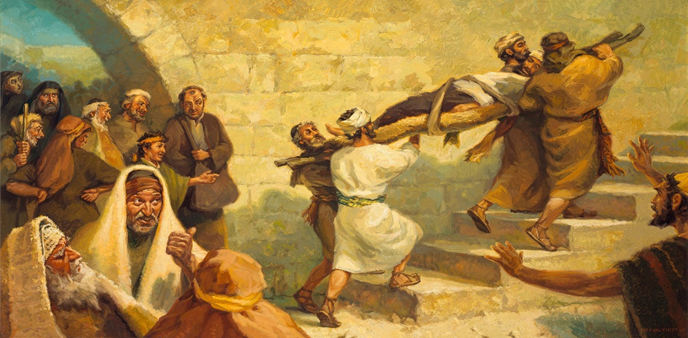


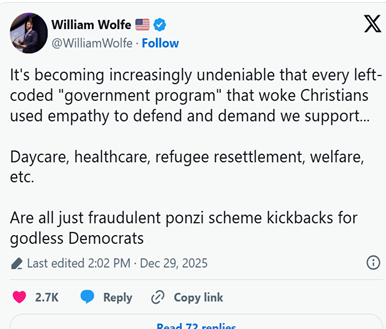
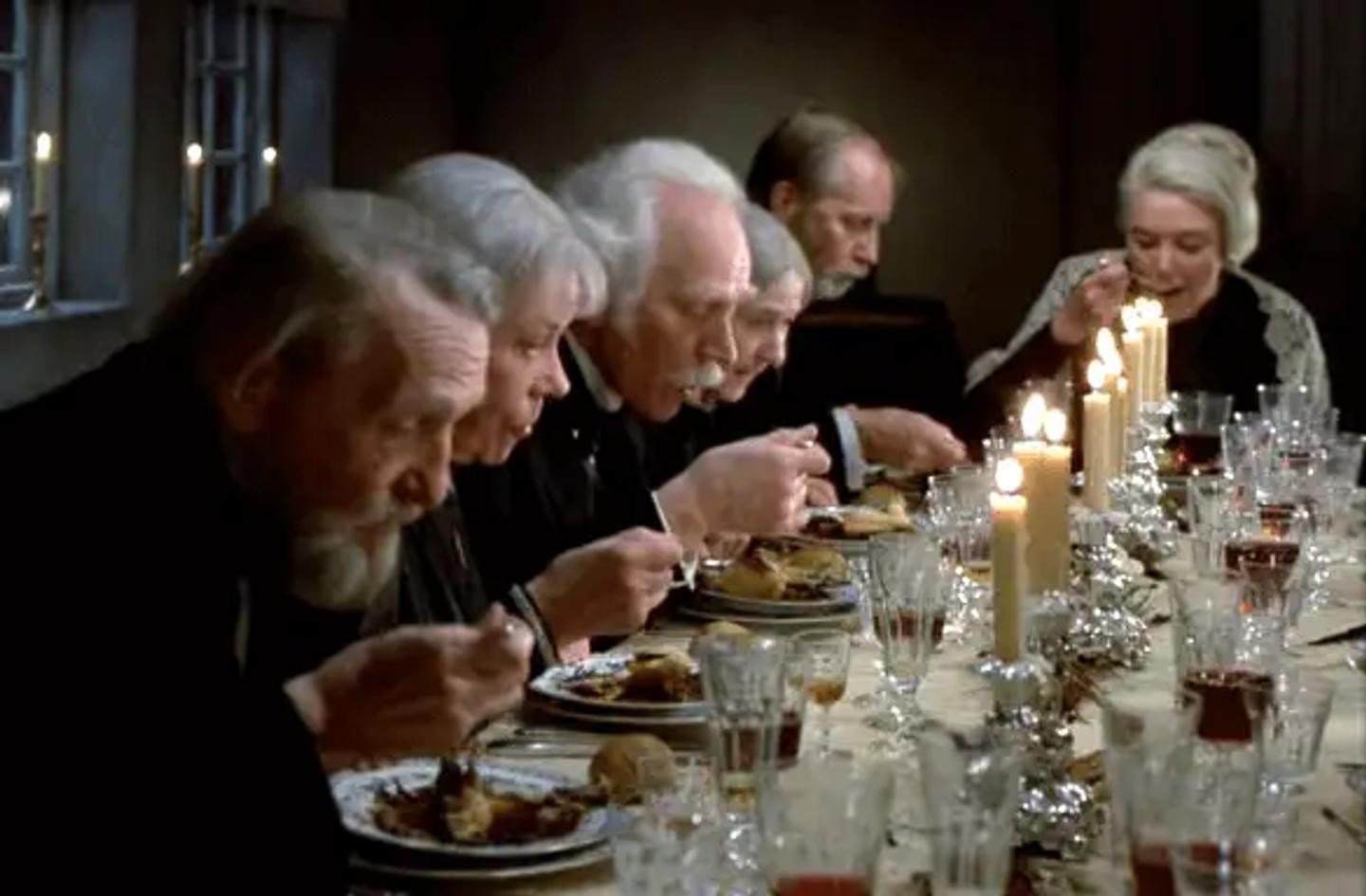
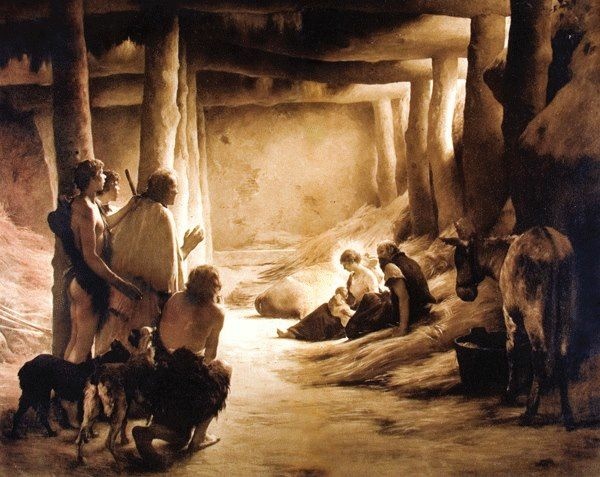


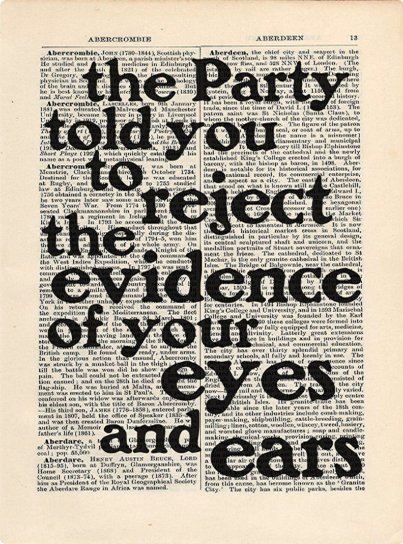
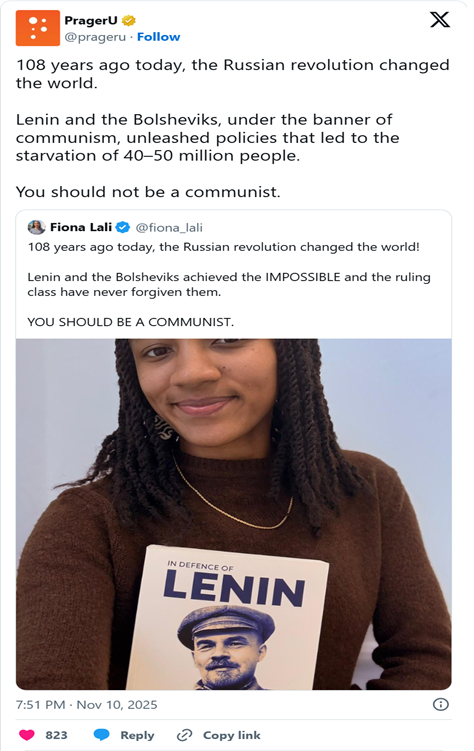
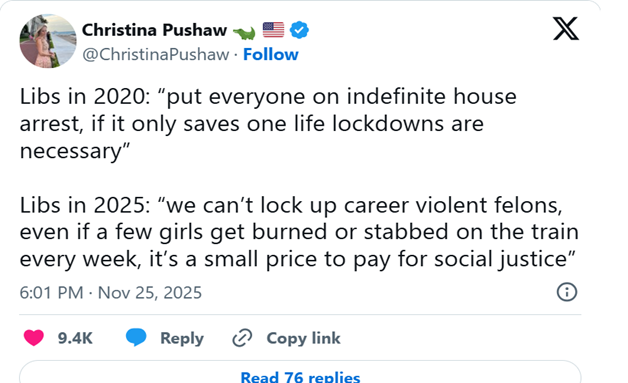
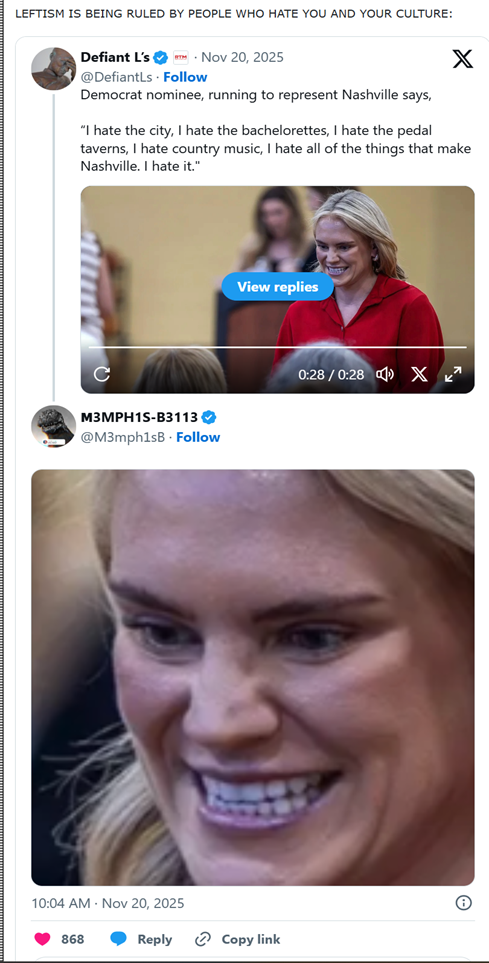
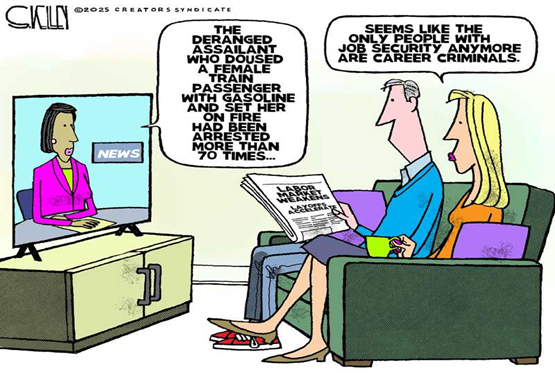
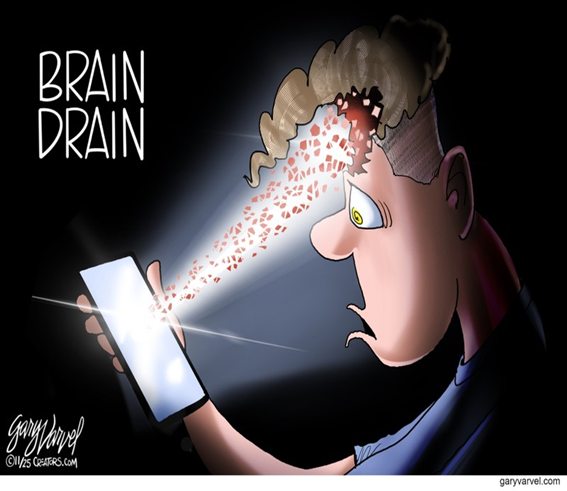
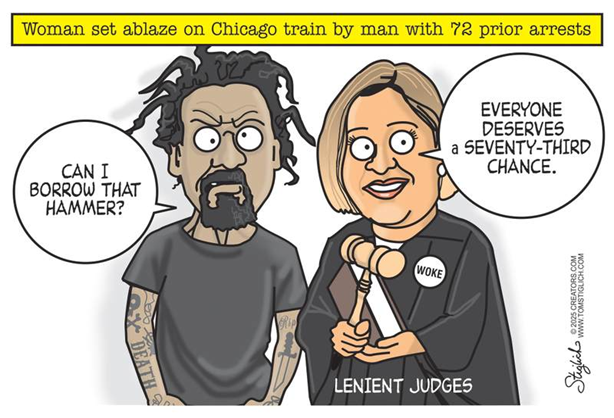








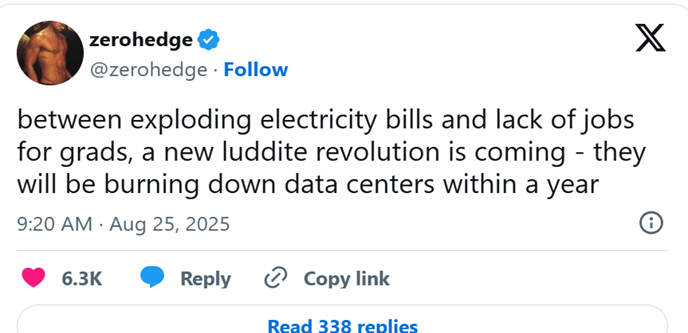





 Cindy Wity
The Inside Out Story
January 26, 2026 Leave a comment
“Evil intentions come from inside, out of people’s hearts.”-Jesus
In the world you will have . . . the content of their character, coming out as . . .
Cruel, intolerant, intimidating, subversive, disruptive, antagonistic, rude, lazy, overindulged, abusive, deceitful, corrupt, amoral, unlawful, power hungry, confederate, self-deceiving, addled, mentally and emotionally stunted, neurotic, narcissistic, manipulative, antisocial, psychotic, borderline psychotic, unruly, destructive, evasive, duplicitous . . . as persecution.
These traits aptly describe what comes out of the Lord-of-the-Flies Left in all of its manifestations – Democrats, Progressives, Democratic Socialists of America, ANTIF, BLM, NGOs, NGO paid protestors, MSM, and Globalists. These characteristics also describe a good many Islamists. The most recent examples of what comes out of the Left has been exhibited by Democratic governance in Minnesota, by ICE protestors, and by Somalis.
What Comes Out of Them is Deliberate Deception:
Don’t buy what comes out of the MSM (CNN, MSNOW, NYT, WaPo, ABC, CBS, NBC, etc.) about the ICE protestors and the Somali fraudsters. The so-called journalists on these ‘news’ sites are wanna-be script writers who push the content of their character onto everyone with their narrative. And like street gang members, they have a no-snitch code for their comrades in arms who go about breaking the law at every turn. It seems that the MSM’s purpose these days is to make the world bleed so it can lead with the story.
The media will deceive by framing both the law and the good guys as bad. Instead of taking in what comes out of MSM, see what you see.
And, don’t go by what comes out of the mouth of Democratic pols (Waltz, Frey, Ellison). With the aid of mother media, they cover their asses just like anyone under investigation on the real-life crime shows.
To wit: Minneapolis Mayor Jacob Frey, on ABC’s “This Week” characterized the violent confrontations – the riots, assaults, and lawlessness – targeting federal immigration agents in his city as an expression of “love.”
Minneapolis. January 7. Renee Nicole Good, as an expression of “love” and encouraged by what came out of the mouth of her lesbian lover, directed her vehicle into an ICE agent. She was shot as the agent defended himself against being crushed. (MADD would certainly agree that a vehicle is a deadly weapon.) Sponsored activist mob mayhem followed as an expression of “love.”
Minneapolis. Sunday, January 18th. More organized mayhem. A mob, led by Black Lives Matter organizers and encouraged by a video posted on social media, stormed into an area church during a service. Inside the sanctuary of Cities Church, agitators loudly chanted “Justice for Renee Good.”
See what you see when Don Lemon and ‘Sanctuary City’ Radicals Invade Minneapolis Church.
On Sunday, Don Lemon and a group of radical, anti-ICE left-wing extremists stormed a Minneapolis church. They barreled into a house of worship while families with young children were praying and proceeded to harass and intimidate congregants based on supposed “intel” that someone connected to the church had ties to ICE.
WHOOPS: Don Lemon’s live stream is a goldmine of evidence against him… – Revolver News
With displays of ersatz moral sanctimony, the Machine politics of Left destroys people and their place in the world and their past and their sacred space, their house of prayer. What comes out of the Left is not “love”. What comes out of the wild boar Left is grunting, posturing, and bristling followed by picking fights to see who is the stronger.
What Comes Out of Them is Stupid
When the Pharisees confronted Jesus about his disciples eating with unwashed hands, he responded to their desire to harass him and his disciples about the performative ritual purity they were so concerned with. He got under their skin when he said . . .
“What makes someone unclean,” Jesus went on, “is what comes out. Evil intentions come from inside, out of people’s hearts – sexual immorality, theft, murder, adultery, greed, wickedness, treachery, debauchery, envy, slander, pride, stupidity. These evil things all come from inside. They are what make someone unclean.” Mark 7:20-23
Note that stupidity is on the list of evil intentions. The stupid act without sense. In the matter at hand, the stupid ramp up their violence-instigating rhetoric because they simply are not able to discuss or persuade – they lack sense. Force is all they have left, and they will use it. And so it is that the NGO paid army of activists, agitators and provocateurs – useful idiots all – descend into savagery that a mayor describes as acts of brotherly “love.”
Rory Miller, “a corrections officer and sergeant working booking, maximum security, and mental health units” and “trained corrections and enforcement officers, primarily in force-related skills… and force policy” wrote in his book Force Decisions: A Citizen’s Guide that . . .
“If you have to be defiant, don’t be stupid about it. Argue, if you absolutely have to, but show the officer your hands. If the officer says, “Show me your hands!” and you say, “No,” you have given the officer no choice but to assume that you have a weapon ready to deploy. This is so stupid—right up there with checking for gas leaks with matches—it shouldn’t even need to be said, but it happens. Being defiant about something stupid can escalate a verbal situation to deadly force for childish, immature ego.”
“If the officer ever uses the magic phrase, ‘For your safety and mine, I need you to…’ do it. That is a solid signal that the officer perceives this as an issue of safety, and the officer will absolutely use force if you do not comply.” (Emphasis mine.)
A Citizen’s Guide to Violence in Minneapolis › American Greatness
What Comes Out of Them is Lawlessness
Richard Lawson at The Free Press writes Sanctuary Cities are Built on Shaky Law:
Federal law makes it a crime to “encourage” illegal immigration, which is exactly what Tim Walz and Jacob Frey are doing.
The Supreme Court recently clarified that federal law is violated when a person provides “assistance to a wrongdoer with the intent to further an offense’s commission.” It is also unlawful to knowingly act in support of illegal aliens residing in the U.S., or even to conspire to help them remain here.
(Emphasis mine.)
Democratic governors and mayors in Minnesota, Oregon and Illinois have gone so far as to actively enable the chaos by withdrawing police protection. And, Dem Leaders Move to Block Funding for ICE, DHS.
Fools escalate violent rhetoric:
Dem AG Suggests People Can Shoot Masked ICE Agents Under Stand-Your-Ground Laws.
April 17, 2025, Columnist David Brooks of the NYT wrote an opinion column openly and explicitly called for a mass uprising alluding to a Communist revolution.
Headline USA writes:
“Agitators aren’t just targeting our officers. Now they’re targeting churches, too,” the U.S. Immigration and Customs Enforcement agency stated. “They’re going from hotel to hotel, church to church, hunting for federal law enforcement who are risking their lives to protect Americans. (Emphasis mine.)
The ordained reverend “Nekima Levy Armstrong, who participated in the protest and leads the local grassroots civil rights organization Racial Justice Network, dismissed the potential DOJ investigation as a sham.
“When you think about the federal government unleashing barbaric ICE agents upon our community and all the harm that they have caused, to have someone serving as a pastor who oversees these ICE agents, is almost unfathomable to me,” said Armstrong.
ICE should not back down one iota no matter the threats or moral posturing against them. All illegal invaders must go home. President Trump will be justified to invoke the Insurrection Act.
The Trump administration is working to clean up the horrible mess the four years of the illegitimate Biden regime created. That mess includes the 20-30 million illegal invaders that are taking jobs and taxpayer money and bringing in the content of their character.
Understand, the invasion was done on purpose to destroy the U.S. There is much more going on here than meets the fixated eye. You won’t get this understanding from the talking heads of MSM. They are in on it. The immigrants were sent here to destroy the U.S.
Read the newly published The Invisible Coup: How American Elites and Foreign Powers Use Immigration as a Weapon by Peter Schweizer.
No Christian should be swayed by MSM or by Progressive Christianity’s “Welcome the stranger” social justice tactics. No Christian should be muddled in their thinking about legal mass deportations.
~~~
In the world you will have . . . the content of their character – fraudulent Islamists enabled by Democrats.
The amount of fraudulent billing in Minnesota’s Medicaid programs could be as high as $9 billion, Assistant United States Attorney Joe Thompson said Dec. 18.
The ADL’d – the Machine combine of America and Democracy Last – don’t seem to care that the Minnesota Somali fraudsters stole billions of taxpayer dollars to spend on themselves and to send to Somalia. The Somalis were enabled by Democratic governance with its (purposeful?) lack of oversight in Minnesota and other Blues states.
What struck me most about the Minnesota case was not only the scale of the theft but the silence surrounding it. The fraud appears to have operated in plain sight within tightly knit circles, yet few people spoke out. . .
According to federal indictments, the stolen money flowed through networks bound by kinship and loyalty. The theft was large, coordinated, and sustained. What stood out was not only who took the money, but who stayed silent. In societies with strong civic norms, whistleblowing is often praised, or at least protected. In tightly bound clan systems, speaking out can mean punishment.
High-trust societies solve this dilemma by extending cooperation beyond family and tribe. Laws, institutions, and norms reinforce the idea that cheating ultimately harms everyone, including oneself. Low-trust societies work differently. Trust is reserved for kin. Outsiders are assumed to cheat. In that environment, cheating is not necessarily immoral. It is often rational, expected, and even applauded.
Somalia And The High Cost Of Low Trust | ZeroHedge
Senseless people vote for senseless people. That’s how Minnesota has tanked under Waltz, Frey, and Ellison.
Senseless people voted in NYC for a Democratic Socialist Jihadi Shia Muslim deeply critical of Israel who wants to “globalize the intifada.”
And citizens of Virgina will now suffer because the senseless elected Abigail Spanberger as its governor and reps who encourage lawlessness and impose tyranny. This New Virginia Law Helps Illegals Vote for Democrats
Out of them comes taxes, more taxes and more oppression:
~~~~~
Concerned about the content of his older brother’s character, Russian playwright, short-story writer, and doctor Anton Chekhov (26), wrote a letter of advice to Nikolai (28), a talented painter, writer, and alcoholic. In 1886, Chekhov writes:
“To my mind, civilized people ought to satisfy the following conditions:
1. They respect the individual and are therefore always indulgent, gentle, polite and compliant. They do not throw a tantrum over a hammer or a lost eraser. When they move in with somebody, they do not act as if they were doing him a favor, and when they move out, they do not say, “How can anyone live with you!” …
2. Their compassion extends beyond beggars and cats. They are hurt even by things the naked eye can’t see. If for instance, Pyotr knows that his father and mother are turning gray and losing sleep over seeing their Pyotr so rarely (and seeing him drunk when he does turn up), then he rushes home to them and sends his vodka to the devil….
3. They respect the property of others and therefore pay their debts.
4. They are candid and fear lies like the plague. They do not lie even about the most trivial matters. A lie insults the listener and debases him in the liar’s eyes. They don’t put on airs, they behave in the street as they do at home, and they do not try to dazzle their inferiors. They know how to keep their mouths shut and they do not force uninvited confidences on people. Out of respect for the ears of others they are more often silent than not.
5. They do not belittle themselves merely to arouse sympathy. They do not play on people’s heartstrings to get them to sigh and fuss over them. They do not say, “No one understands me!” or “I’ve squandered my talent on trifles!” because this smacks of a cheap effect and is vulgar, false and out-of-date.
6. They are not preoccupied with vain things. They are not taken in by such false jewels as friendships with celebrities, handshakes with drunken Plevako, ecstasy over the first person they happen to meet at the Salon de Varietes, popularity among the tavern crowd….
7. If they have talent, they respect it. They sacrifice comfort, women, wine and vanity to it….
8. They cultivate their aesthetic sensibilities. They cannot stand to fall asleep fully dressed, see a slit in the wall teeming with bedbugs, breathe rotten air, walk on a spittle-laden floor or eat off a kerosene stove. They try their best to tame and ennoble their sexual instinct…
And so on. That’s how civilized people act. If you want to be civilized and not fall below the level of the milieu you belong to, it is not enough to read The Pickwick Papers and memorize a soliloquy from Faust. It is not enough to hail a cab and drive off to Yakimanka Street if all you’re going to do is bolt out again a week later.
You must work at it constantly, day and night. You must never stop reading, studying in depth, exercising your will. Every hour is precious.”
Letters of Anton Chekhov to His Family and Friends (public domain | public library)
~~~~~
Why are poets and storytellers being drawn towards Christ? In this bonus episode Justin Brierley speaks to two adult converts to Christianity whose stories overlap in remarkable ways.
Celebrated poet and author Paul Kingsnorth, and mythologist and storyteller Martin Shaw, both had unexpected conversions that have led them into the Orthodox church.
Episode 9 – Paul Kingsnorth & Martin Shaw: A poet and mythologist convert – Justin Brierley ⬩ Think Faith
Royce White, a Voice from the Belly of the Beast Minnesota:
https://americasvoice.news/video/1L3WPrlAlN0ouni/
https://americasvoice.news/playlists/show/the-royce-white-show/
https://www.youtube.com/@pleasecallmecrazypodcast
~~~~~
Marginalia:
See what you see here: Arrested: Worst of the Worst | Homeland Security
In past articles I have tried to plead with conservatives to recognize that these activists are NOT sincere fellow citizens engaging in legitimate protest. They are a mercenary army paid to go to war. I’ll say it once again: WE ARE AT WAR. We need to start acting like it.
When there are no consequences for bad behavior, bad behavior will escalate into violence and chaos. It’s important to understand that the political left is made up largely of people who are emotionally stunted. They are toddlers trapped in adult bodies. And, like spoiled children, they act the way they do because they have never been spanked.
Maybe It’s Time For Conservative Patriots To Rally In Minneapolis | ZeroHedge
Approximately 3,000 federal agents are currently deployed in Minnesota, as part of an immigration operation dubbed “Operation Metro Surge.” The Department of Homeland Security (DHS) announced on Monday that the operation has resulted in the arrests of 3,000 criminal illegal aliens, “including vicious murderers, rapists, child pedophiles, and incredibly dangerous individuals.” (Emphasis mine.)
Walz, Ellison, Frey’s Offices Served Grand Jury Subpoenas › American Greatness
~~~~~
Amelia:
So, what was already disturbing now looks downright corrupt. It turns out that one of the men caught on video inside the church, pumping his fist while terrified children cried, isn’t some random left-wing extremist. He actually works for the local (Soros-backed) prosecutor’s office.
Shocking new evidence shows just how deep and dark the MN church Ambush goes… – Revolver News
The insurrection, the color revolution is upon us
Rate this:
Filed under 2026 Current Events, Culture, Immigration, Insurrection, media, Political Commentary, Politics, Progressivism Tagged with character, culture, democrats, deportations, Globalism, ICE, Immigration, Jacob Frey, Keith Ellison, minneapolis, news, politics, progressivism, The Left, Tim Waltz, Trump