The room is dark now except for the lights on the Christmas tree. Tired of all the pharmaceutical commercials promising smiles on users, she’s shut off the TV. There is no real hope to be found anywhere in media. She’s had it with the fake, the clichéd and the unmitigated gall of nihilism that says “life has no meaning so keep watching for the meaning we give to it”.
She’s a flesh-and-blood human. She wants real, not CGI. She wants no part in manipulated drama, no part of AI. And she wants nothing of a New World Order and its utopian nightmare. Right now, she wants signal and not noise. Past, present, and future, like specters, enter her thoughts.
She recalls losses. She recalls past sorrows. She recalls her soul’s constant groaning and lamenting and crying out for rescue arising from its well of wordlessness. Drawn from that well are her tears, tears that now blur the glowing angel atop the tree.
The present is a world that is hurting and she feels helpless. When she prays she feels like a Secret Santa and not like a hands-on saint like Mother Teresa.
Tonight, many will end the year with loss. Some have lost a loved one and some a job and some the means to continue.
Tonight, some will end the year struggling with addictions.
Tonight, some will end the year alone and alienated.
Tonight, some will end the year struggling with depression and thoughts of suicide.
Tonight, some will end the year struggling with respiratory illness or the effects of the COVID vaccination.
Tonight, some will end the year in the hospital with a debilitating illness, some with cancer.
Tonight, some will end the year estranged from their families with memory loss, Alzheimer’s, and dementia.
Tonight, some will end the year with war injuries and memories of loved ones killed in battle.
Tonight, the entire creation is groaning. The future looks as bleak.
Is the cosmic and historical drama moving toward the ultimate reconciliation of things?
Will the evil of the human condition, our sufferings and our failures, reveal their redemptive meaning when seen from the vantage point of ultimate salvation?
She has chosen the vantage point of an Aslan Christmas and not of a Charlie Brown Christmas. She has chosen to embrace a hope that will not put her to shame – a bold noble hope, a hope that has faced lions and suffering first hand, a poured-out-love hope and not a mopey introverted “Oh, Bother” cartoonish perspective.
Will the Holy Spirit work all things together for good with those who love him and are called according to his purpose?
She has chosen to live in the realm of the Spirit. For the Searcher of Hearts knows what the Spirit is thinking. The Spirit comes alongside her – she doesn’t know how to pray as she ought – and pleads on her behalf. And that pleading is the wordlessness welling up in her tonight.
~~~~~
Scripture can become a weapon in the hands of the ultra-certain. As if every pain or suffering is part of “God’s divine plan.” So how should we understand and apply the Bible to our real lives with our real-life problems?
NT Wright, a New Testament scholar, is a trusted expert to help us understand what truths resound across time and circumstance and which don’t. In this conversation, Kate [Bowler] and Tom [NT Wright] dig in especially on Romans 8:28 which is the Pauline version of EVERYTHING HAPPENS FOR A REASON. Is that what Paul intended to say? Is there maybe another, more life-giving way to interpret it instead?
Kate and NT Wright also discuss:
The importance of lament as a response to the human condition
Why we have such a low tolerance for uncertainty
Which scripture to turn to when life comes apart (and which to avoid)
What our response should be to others who are in pain or experiencing tragedy
The italicized words are from Leszek Kolakowski’s essay Can the Devil Be Saved as published in Modernity on Endless Trial, Leszek Kolakowski, The University of Chicago Press, 1990, 75
Romans 5 & 8 are referenced.
~~~~~
Out of the deep have I called unto thee, O Lord: Lord, hear my voice O let thine ears consider well: the voice of my complaint If thou, Lord, wilt be extreme to mark what is done amiss: O Lord, who may abide it? For there is mercy with thee: therefore shalt thou be feared I look for the Lord; my soul doth wait for him: In his word is my trust My soil fleeth unto the Lord: Before the morning watch I say, before the morning watch O Israel, trust in the Lord, for with the Lord there is mercy: And with him is plentеous redemption And he shall rеdeem Israel: from all his sins
~~~~~
The 1951 b&w A Christmas Carol with Alastair Sim is the best movie version of Dicken’s classic.
When have entered a dark season. Houses and yards are lit up. And, perhaps, some of the residents.
“The holidays are always bad” – Frank Martin.
American writer Raymond Carver published a story about a man trying to move from an addiction to alcohol toward sobriety. The story, set over three days, includes New Years Day. Where I’m Calling From first appeared in theNew Yorker in 1982.
Written in Carver’s no-nonsense economical fashion, the story is told by a nameless Narrator who immediately draws us into the residential treatment center where he finds himself and another because of an inability to stop drinking.
“J.P and I are on the front porch at Frank Martin’s drying out facility. Like the rest of us at Frank’s Martin’s, J.P. is first and foremost a drunk. But he’s also a chimney sweep. It’s his first time here, and he’s scared. I’ve been here once before. What’s to say? I’m back.”
From the opening words we learn that alcoholism can take over one’s identity. The Narrator labels both J.P. and himself and everyone at the treatment center. But then the Narrator does go on to say that he knows J.P. as more than “a drunk”.
We also learn, from the Narrator’s “I’m back”, that the struggle with alcoholism can become a cycle of drinking and drying out. And then we find out that it can also become the ultimate wake-up call.
Let’s listen in . . .
“We’ve only been in here a couple of days. We’re not out of the woods yet. J.P. has these shakes, and every so often a nerve — maybe it isn’t a nerve, but it’s something — begins to jerk in my shoulder. Sometimes it’s at the side of my neck. When this happens, my mouth dries up. It’s an effort just to swallow then. I know something’s about to happen and I want to head it off. I want to hide from it, that’s what I want to do. Just close my eyes and let it pass by, let it take the next man. J.P. can wait a minute.
“I saw a seizure yesterday morning. . .”
A large man nicknamed Tiny had the seizure. As the Narrator tells us, Tiny was showing signs of improvement and looking forward to going home for New Year. But then Tiny collapsed at the table before all of them and was rushed to the hospital. The physical signs of alcoholism and withdrawal from it – shakes, spasms, swallowing issues and a seizure – have a major effect on the Narrator.
Loss of self-control brought the Narrator and the “drunk” others to Frank Martin’s drying out facility. And now the loss of physical control due to alcohol use disorder – the Narrator doesn’t want to countenance that. He recoils and hopes for the best – to “let it pass by” to someone else at the table.
“But what happened to Tiny is some-thing I won’t ever forget. Old Tiny flat on the floor, kicking his heels. So every time this little flitter starts up anywhere, I draw some breath and wait to find myself on my back, looking up, somebody’s fingers in my mouth.”
Reading on we get a sense of the need for company and storytelling that withdrawing from alcoholism produces. J.P. and the Narrator sit on the front porch of Frank Martin’s drying out facility. The Narrator listens to J.P.’s story.
The first thing we hear about is a childhood trauma. Twelve-year-old J.P. happened to fall into a dry well near a farm near where he grew up. It wasn’t until later that day that his dad found him and pulled him up. We find out from the Narrator the effect on J.P.:
“J.P. had wet his pants down there. He’d suffered all kinds of terror in that well, hollering for help, waiting, and then hollering some more. He hollered himself hoarse before it was over. But he told me that being at the bottom of that well had made a lasting impression.”
(So far, two lasting impressions from life-or-death situations.)
J.P. remembers looking up at the circle of blue sky from the “bottom of that well” and seeing passing clouds and birds and hearing rustling (of insects?) and the wind blow over the opening. To me this is a picture of the alcoholic at the bottom of the well (the bartending term “well” comes from one of the many names for the underneath of the bar top) and who now looks up and sees life going on without him and a “little circle of blue” that represents hope. The Narrator relates what J.P. said about that time:
“In short, everything about his life was different for him at the bottom of that well. But nothing fell on him and nothing closed off that little circle of blue. Then his dad came along with the rope, and it wasn’t long before J.P. was back in the world he’d always lived in.”
J.P. receives a lifeline. The Narrator wants to hear more.
“Keep talking, J.P. Then what?””
We learn from the Narrator that J.P. meets Roxy, a chimney sweep, at a friend’s house. J.P. says that he could “feel his heart knocking” as she looked him over. J.P. receives a “good luck” kiss from Roxy.
“He could feel her kiss still burning on his lips, etc. At that minute J.P. couldn’t begin to sort anything out. He was filled with sensations that were carrying him every which way.”
J.P. asks to date her.
“Then what?” the Narrator says. “Don’t stop now, J.P.”
We learn that J.P. and Roxy date. To be close to Roxy, J.P. becomes a chimney sweep and begins working with her. The two later marry, have two kids, and buy a house. The Narrator relates what J.P. felt at the time and adds a comment:
“I was happy with the way things were going,” he says. “I had everything I wanted. I had a wife and kids I loved, and I was doing what I wanted to do with my life.” But for some reason — who knows why we do what we do?— his drinking picks up.
J.P. goes on to talk about how he began to drink more and more, even taking a “thermos bottle of vodka in his lunch pail”. But then he stops talking.
The Narrator, who’s using J.P. story to help himself relax and avoid his own situation, coaxes to J.P. to continue.
J.P.’s drinking effects his relationship with Roxy. Their fights became physical – a broken nose for J.P. and a dislocated shoulder for Roxy.
“They beat on each other in front of the kids. Things got out of hand. But he kept on drinking. He couldn’t stop. And nothing could make him stop. Not even with Roxy’s dad and her brother threatening to beat hell out of him. They told Roxy she should take the kids and clear out. But Roxy said it was her problem. She got herself into it, and she’d solve it.”
Roxy fixes things by getting a boyfriend. J.P, finds out and goes berserk – like pulling off her wedding ring and cutting it in two. Things for the “drunk” J.P. go downhill – like falling off a roof and breaking a thumb and being arrested for drunk driving.
The Narrator wants us to know that he and J.P. are staying at Frank Martin’s of their own free will and that they’re trying to get their life back on track. Since it’s the Narrator’s second visit, Frank encourages him to stay longer – “The holidays are always a bad time.”
We then learn from the Narrator how J.P. arrived at the residential treatment center. Roxy’s father and brother drive J.P. to Frank Martin’s drying out facility, carry him upstairs and put him to bed. A couple of days later, J. P’s out on the porch with the Narrator telling his stories.
At one point, when the two are on the front porch, Frank Martin, who the Narrator says looks like a prize fighter and “like somebody who knows the score”, comes out to finish his cigar.
“He lets the smoke carry out of his mouth. Then he raises his chin toward the hills and says, “Jack London used to have a big place on the other side of this valley. Right over there behind that green hill you’re looking at. But alcohol killed him. Let that be a lesson. He was a better man than any of us. But he couldn’t handle the stuff, either.”
Frank then encourages them to read London’s Call of the Wild. The book is in the house, he tells them.
J.P., who wants to hide when Frank’s around, says he wishes he had a name like “Jack London” instead of his own name, Joe Penny. (Does the initial using J. P. feel that the shame, failure, and disappointment of being a “drunk” is attached to “Joe Penny? Does he desire a new name because of his tarnished name?)
The Narrator then tells us about his two trips to Frank Martin’s. When his wife brought him here the first time, Frank said he could help. The Narrator wasn’t sure:
“But I didn’t know if they could help me or not. Part of me wanted help. But there was another part.”
The second time, the Narrator was driven to Frank Martin’s by his girlfriend. He had moved in with her after his wife told him to leave.
This second trip to the treatment center came after their drinking bouts around Christmas. The girlfriend had received horrible news in the form of a medical report. With that kind of news, they decided to start drinking and get “good and drunk”. On Christmas day they were still drunk. After a lot of Bourbon, the Narrator decides to go back for treatment. The drunk girlfriend drops him off. The Narrator is not sure if she made it home OK. They haven’t talked on the phone.
New Year’s Eve morning. The Narrator tries to contact his wife, but no answer. He recalls their last conversation. They screamed at each other. “What am I supposed to do?” he says, thinking that he can’t communicate with her anyway.
We learn that there’s a man in the group who’s in denial and says his drinking is under control. He says he doesn’t know why he’s at Frank Martin’s. But he also doesn’t remember how he got there.
New Year’s Eve. Frank made steaks for the group. But Tiny doesn’t eat. He fears another seizure. “Tiny is not the same old Tiny”.
After dinner Frank brings out a cake. In pink letters across the top: HAPPY NEW YEAR – ONE DAY AT A TIME.
Eating cake J.P. tells the Narrator that his wife is coming in the morning, the first day of the year.
The Narrator tries calling his wife collect, but there’s no answer again. He thinks about calling his girlfriend but he decides that he doesn’t’ want to deal with her. He hopes she’s OK but he doesn’t want to find out if there is something wrong with her.
In the morning, Roxy arrives. J.P. introduces his wife to the Narrator. The Narrator wants a “good luck” kiss. The Narrator can see that Roxy loves J.P. She uses “Joe” instead of “J.P.”
This scene seems to trigger something in the Narrator. Lighting a cigarette, he notices that he has the shakes. They started in the morning. He wants something to drink. Depressed, he turns his mind to something else.
The Narrator remembers a happy time with his wife in their house and the house painter that surprised him one morning. These were good vibes: “And at that minute a wave of happiness comes over me that I’m not him — that I’m me and that I’m inside this bedroom with my wife.”
Sitting outside on the front steps, the Narrator thinks about reconnecting – calling his estranged wife again and then his girlfriend. He tries to remember any of Jack London’s books he’s read. “To Build a Fire” comes to mind. It’s a life-or-death story set in the Yukon.
The Narrator thinks again about reconnecting – calling his estranged wife and wish her a “Happy New Year” and to let her know where he’s at when she asks. After that, he’d call his girlfriend hoping that her mouthy teenage son won’t pick up the phone.
“Dirty Realism is the fiction of a new generation of American authors. They write about the belly-side of contemporary life – a deserted husband, an unwanted mother, a car thief, a pickpocket, a drug addict – but they write about it with a disturbing detachment, at times verging on comedy. Understated, ironic, sometimes savage, but insistently compassionate, these stories constitute a new voice in fiction.”
Carver’s influences include Anton Chekhov, Ernest Hemingway, Flannery O’Connor to some degree and others.
Like with Chekhov’s stories, Carver’s stories are like windows you can peer through and get a sense of the characters and what’s going on. Though indirect and conveying things without moral pronouncements, Carver’s stories suggest much with details that can say many things. Falling into a well and the mention of Jack London, for example, in the story above.
J.P.’s account of falling into a well gives us some idea of how it feels to be an alcoholic – helpless, in over your head, scared, and looking for a lifeline and a way out.
The Narrator, at the beginning, says “We’ve only been in here a couple of days. We’re not out of the woods yet” and at the end Jack London’s “To Build a Fire” comes to mind. I see his initial admission of trekking through the woods to sobriety and his later hint of his attempts toward sobriety (building a fire in the woods) as an inclusio or framing of the Narrator’s struggle with alcohol. His journey to sobriety will require a set of survival skills he doesn’t yet possess.
The setting of “To Build a Fire” is in the extreme cold of the largely uninhabited Yukon Territories. The unnamed (like the Narrator) solitary hiker is walking on a side trail in the woods toward an outpost. His self-confidence in hiking and survival skills has him disregard an old man’s advice about not traveling alone in such harsh weather.
Remember the Narrator saying this about his first arrival at Frank Martin’s?
“But I didn’t know if they could help me or not. Part of me wanted help. But there was another part.”
The hiker thinks that he can keep trekking toward the outpost without building a fire, despite it being 50 degrees below zero. His dog seems smarter than the hiker who underestimates the power of nature and the possibilities that can arise. While the hiker has some practical smarts, he lacks wisdom. A quote from the story describes the hiker:
“The trouble with him was that he was without imagination. He was quick and alert in the things of life, but only in the things, and not in the significances.”
At one point the hiker, almost frozen, finally decides to build a fire. Because it was easier to gather the wood needed, he builds his fire underneath a canopy of tree branches. The boughs above his fire are laden with snow. The jostling of his twig gathering and the heat of the fire cause the snow to fall onto the fire and quench it. The hiker tries again, this time out in the open, but he’s freezing up. His hands can’t function. He eventually resigns himself to his frozen fate.
One could see parallels between the unnamed hiker’s folly and the Narrator’s struggle with alcoholism. For one, there’s a self-reliance that paid off in the past that goes on to think it can handle all things. Maybe that’s why Frank Martin brought up Jack London:
“Jack London used to have a big place on the other side of this valley. Right over there behind that green hill you’re looking at. But alcohol killed him. Let that be a lesson. He was a better man than any of us. But he couldn’t handle the stuff, either.”
Another would be building a fire (drying out) under the pretense that you’ve got things figured out and under control. And that could end up in a cycle of a cycle of fires going out and building another fire, of drinking and drying out. Or worse.
Besides the hidden clues, discernable themes of addiction, self-destructive behaviors, addiction’s effect on others, loss of control while under the influence of alcohol, identity, loneliness, alienation, failure, vulnerability, and the need for human connection and story – they’re found in Where I’m Calling From.
~~~~~
Raymond Carver described himself as “inclined toward brevity and intensity”.
Characterized by an economy with words, Carver’s stories focus on surface description and its subject matter. Things are laid bare. No flowery words. No adverbs. Meaning is found in the raw context.
“Carver decided to explore minimalism in writing. He showed, in his text, real situations of everyday life; some of them could be crude, or complicated to understand, but still, he represented feelings that everyone could recognize: sadness, loneliness, failure, etc.”
Raymond Carver once said “I’m a paid-in-full member of the working poor.” He wrote stories that a blue-collar reader could connect with – of unremarkable people and the seemingly insignificant details that affect them. His own life was a constant struggle with alcohol addiction.
Carver had self-destructive issues with drinking. Alcohol shattered his health, his work and his family – his first marriage ended because of it. He stopped drinking on June 2nd 1977.
The Life of Raymond Carver documentary with Rare Interview (1989):
Hailed as the American Chekhov and short-listed for a Pulitzer Prize at the time of his death, only ten years earlier Raymond Carver had been completely down and out. In this vintage program filmed just a year after he died, Carver’s second wife, Tess Gallagher, and writers Jay McInerney and Richard Ford, his close friends, explore Carver’s artistic legacy: his stories and poems about the other side of the American Dream. In addition, excerpts from two of Carver’s most famous stories are dramatized. “No one since Steinbeck had written about these people,” says McInerney, “the people whose dreams go belly-up.”
Why do I read Carver? Because he writes about people like me and my lived experience. I can relate to J.P. and the Narrator. I’ve known alienation, loneliness, shame, brokenness, failure. I’ve made bad decisions. I’ve been at the bottom of the well. And the bottom of the well has been in me.
Several years ago I had a chat with the rector of the church I was attending. It was midweek when he and I met in the church hallway. I had just dropped off some bags of groceries to be delivered to a homeless shelter in the area.
We hadn’t talked in a while and he wanted to catch up. So we sat down in a room just off the entrance to the chapel. I could tell, first off, that he was eager to convince me to share a room with another single woman during the upcoming trip to Israel that he was heading. When I let him know that I wasn’t interested, he asked me how I was doing.
I told him about work and that I was thinking about retiring at some point. Then, I don’t remember why – maybe to tell him Where I’m Calling From, I told him that there was a well of pain so deep in me that if I brought any of it up, I didn’t know what would happen.
He responded with “Hmmm.” When our conversation ended, he prayed for me.
What I like about Carver’s stories is what I like about Anton Chekov’s stories – I don’t find sanctimony or moralizing. There is no rush to judgement. There are common shared experiences.
Where I’m Calling From, for the most part, is narrated in the present tense. If narrated in the past tense, we’d be in a position to judge. We’d be in the “I told you so” position.
But the present tense narration draws us in. We become involved. We wait and see what happens. We listen to the stories being told. We don’t judge. We understand. And we connect. As a follower of Jesus in this dark season, this is what I’m called to do.
The entire creation is groaning and that includes me.
We have entered a time to reflect on incarnational reality – the presence of God both with us and within us.
The Nativity by Gari Melchers
With awe we marvel at the birth of Jesus and the reversal of power. God humbly took on the appearance of man and became man’s servant.
We remember our own birth from above which opened our eyes to the reality of the kingdom of God on earth. Two realms – heaven-and-earth – together in our temple being.
We now acknowledge that new creation poured into well-worn no longer flexible ways of religion that have stretched to the limit and become brittle will be lost in the process. New wine needs new wine skins, for new wineskins are able to expand by grace as needed.
And we admit that the inappropriateness of trying to redeem things with a new unshrunk patch of legalism will cause more damage than what it attempts to fix.
We accept that new creation means the renewal of the present world rather than its abandonment and replacement by some other kind of world altogether.
We retell the course of events before Advent and the promises fulfilled.
We contemplate ultimate purposes and ultimate or final things.
We acknowledge the darkness that surrounds us and remains with us. We turn once again to the True Light that defies the darkness. We light candles and say “The Light of Christ”.
We sing “Joy to the World” with the longing and expectation of the world being put right with the return of the King as he establishes his reign of justice, mercy and peace.
But hold on. I wonder what sort of advent we’ve fallen into.
Recall this advent advert?
“The Great “Reset”, nee “Build Back Better”, is the scheduled advent of a man-made new world order and, we are told, a “better future”. Should we hope that with this advent things will be put right? Will the “The Great “Reset” bring joy to the world? Will it bring justice, mercy and peace? Will it bring relief from the burdens of life? So far, the Build Back Better Plan/Inflation Reduction Act has created more burdens.
Will the arrival of “The Great “Reset” bring peace on earth, goodwill toward men? Or will it, like critical theory and The Accuser, constantly find fault and offer no hope of forgiveness and redemption? Will it promote more ill will, division, and hate?
Will the arrival of “The Great “Reset” advance beauty and truth and goodness? Or will we recoil in horror at its manifestation? Will it be antihuman? Will it be Beastly?
With the arrival of “The Great “Reset” will the darkness that surrounds us now increase? Human forces and agencies were not able to contain the Gerasene demoniac.
What is the telos of “The Great “Reset”? Will it be like the kingdom of God on earth which turns everything upside down – power, privilege and wealth. Or, will it promote a world where the loudest, strongest, wealthiest, and most privileged people prey on the less fortunate. Will it be the Californication of America?
Will the arrival of “The Great “Reset” be good news that will cause great joy for all the people? Or, will this advent be the start of a countdown to the collapse and the end of the world? Will human trafficking end? Will drug trafficking end? Will justice be blind? Will depression and suicides decrease? Will it be a time of depopulation?
Herod the king, in his raging, Chargèd he hath this day His men of might in his own sight All young children to slay. -Coventry Carol
Will the arrival of “The Great “Reset” mean that the meek, the mournful, and the merciful are held in contempt so the rest of the world can have the “right” to ease and comfort?
Should we hope that with the advent of the New World Order that things will be put right? Should we expect justice, mercy and peace? Or should we expect pseudo-justice, pseudo-mercy and pseudo-peace in the form of pseudo-religion? Socialist activist and communist party leader in Italy Antonio Gramsci is one of many who promoted the latter:
“Socialism is precisely the religion that must overwhelm Christianity. … In the new order, Socialism will triumph by first capturing the culture via infiltration of schools, universities, churches, and the media by transforming the consciousness of society.”
Do you want the infiltration of schools, universities, churches, and the media and the transformation of the consciousness of society in the New World Order? Have you already joined this religion? What sort of advent have you fallen into?
Maybe you should take a look at the advent of the man-made New World Order:
Here’s the best summary video I’ve seen of the advent of the NWO and what is coming for you, me, and our children and grandchildren. It begs the questions “Why was I born at this time?” and “Which advent do I choose?”
To put things right, per a globalist worldview, the UN has an 2030 goal agenda. The virtuous-sounding goals touch on andseek to monitor and control, through digital technology, every aspect of human life for a “better world”. But, DO NOT Be Fooled!
To exist in the UN’s 2030 NWO society, people will have to submit their biometrics to the digital industrial complex. Each will be assigned a digital carbon footprint identity to monitor and control their behavior. Freedom, human agency and human dignity will be a thing of the past. Religions will be replaced with materialism.
Digital socialism and communism with centralized assets and resources will ration out resources to each person deemed socially responsible. The world court, world police, and the world health organization will control everyone via digital currency and digital IDs.
UN’s 2030 agenda goals:
The oldest liturgical prayer that we know: “Come, Lord Jesus!”
This advent, you can either pray the incarnational prayer “Come, Lord Jesus!” or the Globalist prayer “Come, Klaus Schwab!”
~~~~~
A CRITICAL EXAMINATION OF TWO MYTHS THAT DRIVE CULTURE: THE AXIAL AGE AND DARK GREEN RELIGION
“Most people, I believe, do not comprehend the way in which each of us is inevitably caught up in what theologian Ched Myers has called the “war of myths” – a battle of overarching stories that claim to explain life (what it’s about, where it’s going, and what its purpose is).” – Iain Proven, retied E. Marshall Shepherd Professor of Biblical Studies (Old Testament) at Regent College.
The contemporary world has been shaped in part by two important and potent myths. Karl Jaspers’ ‘axial age’ myth as narrated by Karen Armstrong and others and the myth of the ‘dark green golden age’ as narrated by David Suzuki and others. Both myths contend that to maintain balance we must return to the idealized past. In this lecture, Iain Provan engages critically with both myths, explaining why we should not embrace them and why it matters if we do. This was recorded at the University of British Columbia Graduate and Faculty Christian Forum.
“We have a ruling class in the United States defined by its hatreds. Not its loves, not its hopes, but by its hatreds. They hate all kinds of people, large groups of people: the deplorables, the bitter clingers, America’s entire blue-collar population, the unfashionable people. They’re hated by the people who run our country.
But no one is hated more by them than a man called Alex Jones.”
Ep. 46 The Alex Jones Interview
TIMESTAMPS:
2:46 Alex Jones predictions 15:07 Deplatforming 21:59 Dividing us on race 25:37 The border 28:09 Austin 32:12 New World Order 42:09 Brian Stelter demon video 50:57 Depopulation 1:07:51 Food 1:13:51 Whiskey 1:16:22 Presidential… pic.twitter.com/IsJAQDUzDc
“I thought about safety, security, good jobs, good education — all that stuff is very important to my family and my community,” she recalled. “And when I broke down those values between Democrats and Republicans, to me it was obvious who stood up for my values.”
“We calculate the toxicity of the vaccine for all ages,” explained Dr. Rancourt, “given the number of doses given worldwide to conclude that 17 million people would have been killed by this vaccine.”
The paper is based on 17 countries in the Southern Hemisphere and equatorial region. A definite causal link is shown between many peaks in all-cause mortality and rapid vaccine rollouts. The authors quantify the fatal toxicity risk per injection, which is exceedingly large in the most elderly.
The peer-reviewed study, published in the journal Epidemiology and Infection on Nov. 13, analyzed mask use among 3,209 individuals from Norway. Researchers followed them for 17 days, and then asked the participants about their use of masks. The team found that there was a higher incidence of testing positive for COVID-19 among people who used masks more frequently.
Between 2021 and 2022 when most of the now-fully vaccinated world got jabbed, cancer deaths skyrocketed, particularly among young people, according to data from the United Kingdom’s Office for National Statistics (ONS).
“One, if by land, and two, if by sea”, and three, if by One Health.
Who can forget COVID tyranny? Who can forget the constant fear porn driving people to disarm themselves of critical thinking to allow entry of the COVID narrative into their lives?
Who can forget that our churches, our businesses, our relationships, and our lives were masked and quarantined for a flu with a 99% recovery rate? Who can forget the horrific mandates imposed upon us? Who can forget the threats made to induce vaccine submission? Who can forget the severe adverse events that have occurred and will continue to occur from the untested mRNA vaccine?
Who can forget that the CDC banned the use of effective repurposed drugs – Ivermectin and hydroxychloroquine – so that an “emergency use authorization” could make it possible to flood the country with the untested mRNA vaccine? Lives were lost because of this ban.
And, who can forget that before the COVID plandemic the country was rapidly bouncing back from Obama’s anti-America years?
As I write this, a worldwidetotalitarian medical police state is being formed that will make the COVID plandemic’s years of oppression look like a maskless walk in the park. I’ve posted warnings about what’s coming – digital ID’s and digital currency – at least twice before. What is coming is hundreds of times more oppressive than what happened during the COVID plandemic. (They are planning to release another pandemic soon – as a test of our response and the overlords authority.)
Tell me. Have you heard about any of this in the main stream media? Have you heard anyone in the media talk about what the CCP-backed World “Health” Organization (WHO) is up to? Have you heard anyone mention digital passports and digital currency? Have you heard about One Health, a global biotech surveillance state, complete with surveillance and censorship of virtually every aspect of life on earth?
Have you heard about any of this from your rep or senators? No? Why not? Is this off their radar? Could our rep or senators be all in on global governance? Could the Uniparty, aka the Swamp, which is made up of both Dems and Republicans, be all in on the subjugation of the U.S. to global governance? Could it be: “It’s a BIG club and you ain’t in it!”
Nothing in this post is conspiracy theory. What is taking place is mostly out in the open. You can read what they doing on websites. For example, One health (who.int):
“By linking humans, animals and the environment, One Health can help to address the full spectrum of disease control – from prevention to detection, preparedness, response and management – and contribute to global health security.”
And here is WEF’s Klaus Schwab praising the CCP – communist China:
🇨🇳Klaus Schwab: "We must recognize China as the best superpower in the world"
🗣World Economic Forum (WEF) founder Klaus Schwab ordered world leaders to accept China as the world's new leading superpower and hailed their tough "COVID measures" as a role model for other… pic.twitter.com/tKSWoxPNxI
Frank Gaffney, Chairman, Center for Security Policy; Co-Chair, Stop Vaccine Passports Task force; Co-Founder, Sovereignty Coalition.
Co-Host and Panelist
Reggie Littlejohn, Founder and President, Women’s Rights Without Frontiers; Co-Chair, Stop Vaccine Passports Task force; Co-Founder, Sovereignty Coalition. – Topic: The WHO’s new “Bureau’s Draft” of the Pandemic Treaty: Surveillance, Censorship and Loss of Sovereignty
Panelists
Hon. Michele Bachmann, Member of Congress (2007-2015); Presidential candidate (2012); Dean, Robertson School of Government, Regent University – Topic: What I observed in Geneva at the World Health Assembly. Once sovereignty is lost, it cannot be regained. No one is a more powerful speaker on that topic than you.
Dr. David Bell, M.D., Senior Scholar at Brownstone Institute; public health physician and biotech consultant in global health; former medical officer and scientist at the World Health Organization (WHO) – Topic: Deferring to the WHO regarding Pandemic Preparedness Makes No Sense.
Dr. Francis Boyle, Ph.D., Professor of international law at the University of Illinois College of Law; JD degree magna cum laude from Harvard Law School, and a Ph.D in Political Science from Harvard University; Former Board Member, Amnesty International; Draft author, U.S. domestic implementing legislation for the Biological Weapons Convention, known as the Biological Weapons Anti-Terrorism Act of 1989, that was approved unanimously by both Houses of the U.S. Congress and signed into law by President George H.W. Bush – Topic: Any agreement coming out of the WHO is already baked into U.S. law. It will not have to wait for the advice and consent of the U.S. Senate to be implemented here.
Dr. Kat Lindley, D.O., family physician and president of the Texas branch of the American Academy of Physicians and Surgeons; co-Founder, Global Health Project; member – Topic: The constitutional, legal and legislation protections we have depended on will not work to stop the WHO power grab.
Alex Newman, Contributor, The Epoch Times and other diverse publications; award-winning international journalist, educator, author, and consultant who co-wrote the book “Crimes of the Educators: How Utopians Are Using Government Schools to Destroy America’s Children” – Topic: The dangers of digital heath passports and their connection with the ability to buy or sell.
Dr. Karladine Graves, D.O., Private Family Physician in North Kansas City, MO; Advocate for physicians – Topic: If the Pandemic Treaty goes through, it will injure or destroy the doctor/patient relationship and give the WHO power to force vaccinations.
A May 15th webinar provides insight into “a global biotech surveillance state, complete with surveillance and censorship of virtually every aspect of life on earth under the One Health approach”:
Frank Gaffney, Chairman, Center for Security Policy; Co-Chair, Stop Vaccine Passports Task force; Co-Founder, Sovereignty Coalition.
Co-Host and Panelist
Reggie Littlejohn, Founder and President, Women’s Rights Without Frontiers; Co-Chair, Stop Vaccine Passports Task force; Co-Founder, Sovereignty Coalition. Topic: One Health and the Bio-Medical Surveillance State
Panelists
Dr. Elizabeth Lee Vliet, M.D., President and CEO of the Truth for Health Foundation; Member of the International Society of Gynecologic Endocrinology. Topic: One Health: The Vise of Totalitarianism
Dr. Kat Lindley, D.O., family physician and president of the Texas branch of the American Academy of Physicians and Surgeons. Topic: One Health and the Disruption of the Physician/Patient Relationship
Dr. David Bell, M.D., Senior Scholar at Brownstone Institute; public health physician and biotech consultant in global health; former medical officer and scientist at the World Health Organization (WHO). Topic: The Hijacking of One Health
Dr. Meryl Nass, M.D., Board-certified internist; biological warfare epidemiologist and expert in anthrax. Topic: One Health – W.H.O. land grab?
Brian O’Shea, Private investigator and security expert. Topic: One Health: Global Public Health’s & The CCP’s Authoritarian Trojan Horse.
This is at least my third alarm about what is coming to our shores to destroy life as we know it. Globalist overlords are intent on redistributing money, resources, and control to themselves. They use highfalutin sales rhetoric from “ESG” to “stakeholder capitalism” to “conscientious capitalism.” But all the gibberish, for those of us not in the globalist “club”, leads to “You’ll own nothing and be happy.”
Globalist overlords are intent on using every world crisis they create (pandemics and Climate Change) to “reset” the lives of people to their own vagary. They act to crush our wills and claim our children. They tell us what to think and do from sun up to sundown, everything from “Cut carbon” to “No stone-fired pizza” to “Eat bugs” to “You’ll own nothing and be happy.” And yet most Americans love their trucks, their home, and eating real meat. Most Americans have faith in God, but the intelligentsia, aka politically connected radical socialist atheists, want nothing to do with God in any form or fashion including “In God We Trust” America.
The destruction of our lives and all we hold dear is their creative inclination. The suits acting to “reset” our lives act in line with what Mikhail Bakunin, revolutionary socialist, social anarchist, and collectivist anarchist once said:
“The urge to destroy is also a creative urge.”
And they will creatively destroy quietly. Consider that with digital technology, no one has to be sent to a gulag or shot for not going the way of the tyrants. None of that KGB stuff needs to happen as was done in the past. Except for some public figures, there will be none of that public messy stuff that would make globalists look like Stalinists. Digital technology will do all the dirty work. Your digital device will be a KGB agent looking in on you.
Digital governance will decide if one eats, travels and leaves their home. So, when people are deprived of liberty, of choice, of movement and of hope, they will go mad. They can then be institutionalized if they don’t commit suicide first. Like Pontius Pilate, globalists can then wash their hands of the matter.
If you still doubt the extremes to which a global biotech surveillance state will deal with you, then recall the authoritarian-directed days of COVID. And look now at the two-tier system of justice under the Biden regime’s DOJ and Merrick Garland. And look at how J6 political prisoners are being treated. Each example brought together is but a small preview of what digital global governance will become.
With the extra time you have this Fourth of July weekend, Iurge you to view the videos posted here. Then take action. There may not be another election.
I urge priests, pastors and leaders of the church to warn people of what’s coming and to help parishioners put a stop to it. I have no doubt that the godless globalists will restrict all Christian activity by calling it a global health “concern” (see communist China, the globalist’s role model for suppression of religion). Send a link to this post to church leaders.
Will you resist tyranny, or will this be the last Independence Day? Will you act to defend our injured, bleeding Country and insure its independence?
*****
“I only regret that I have but one life to lose for my country.” –Captain Nathan Hale, an American soldier and spy for the Continental Army during the American Revolutionary War. He was hanged by the British.
“However, at the gallows, he made a sensible and spirited speech; among other things, told them they were shedding the blood of the innocent, and that if he had ten thousand lives, he would lay them all down, if called to it, in defense of his injured, bleeding Country.”
-Captain Nathan Hale’s execution, as reported in the Essex Journal (13 February 1777).
Tell your reps that you do not consent to a bio-tech totalitarian state under the WHO and the WEF.
Tell your reps that you do not consent to a digital health passport.
Note: Twenty states, all with Republican governors, prohibit proof-of-vaccination requirements. In eleven states, governors banned proof-of-vaccination requirements through executive orders. In nine states, legislators passed laws banning proof-of-vaccination requirements.
Six states—California, Illinois, New York, Hawaii, and Oregon, and Washington—have facilitated the creation of digital vaccination status applications or passed laws or enacted orders exempting fully vaccinated individuals from some COVID-19 restrictions if they can provide proof of vaccination. All six states have Democratic governors.
“CEO Larry Fink says he is going to stop using the term “ESG.” BlackRock is setting itself up to be an intermediary to help “rebuild” the Ukrainian economy. Also, James O’Keefe recently exposed an employee of BlackRock saying some really frightening things.”
It wasn’t an Easter greeting card . . . or was it?
The other day I received a mailer from a local cremation-burial company. I hadn’t been online looking for a last responder. My profile must have been purchased on the cyberinfo Stock Exchange: a person of a certain age who lives in a certain area with a certain income.
The letter starts We need your help.
(I haven’t done embalming, but maybe I could help with the flowers.)
We are conducting a survey to determine how members of our community plan for one of the hardest things a family has to face . . . the death of a loved one.
(Who’s this loved one? Let’s find out.)
The end-of-life service wants to assist with sensitive, caring and professional help. . . We need to know the real thoughts and feelings of individuals just like you. Well, there you have it. It’s documented. I have “real thoughts and feelings” just in case you thought of me as plastic and pitiless. I am not penniless, either, and that brings me to their quest for help.
The one-page front and back letter has a survey of nineteen questions and an offer of an ABSOLUTELY FREE! Final Wishes Organizer if I return the completed survey.
The survey, the letter says, is designed to help the service know what I (and not just any member “of our community”) want and need at “this most difficult time”. Well, at “this most difficult time” I want free stuff. But the survey didn’t go there. The first question is a wink and a nod come-on.
How old are you?Are you Under 25, between 26-40, between 41-65, 66 or older?
This service obviously knows my age range, where I live, and that I am retired which means that during “this most difficult time” I am receiving a portion of my life’s hard-earned income back as a monthly “benefit” from the government. The death service wouldn’t buy information that was a dead end.
O Death where is they sting? With the number of online and mail solicitations for life insurance I receive, I get the idea that everyone wants a piece of me during “this most difficult time”. When I’m dead they’ll have nothing of me and I’ll like it. And I better die in the next ten years.
The government-run program designed to protect, provide, help, and secure ECONOMIC SECURITY for people in the United States and which has been tracking my income whereabouts since birth, will be depleted by 2034. Social Security will bite the dust – but not because of me. And, if the tear-it-all-down Democrats have their way, our republic will bite the dust before 2034. To celebrate, they’ll erect statues of a Smartphone, Dylan Mulvaney, Barack Obama, a Black-gloved fist, Chairman Mao, and Martin Luther Floyd. Give me liberty or give me death.
Which of the following would you choose – burial or cremation? Hmmm. I would like to bury the elemental composition of my body, 23% of which is carbon. This last will serve as my offset for a life well-carboned. And I would like to cremate my past. Star dust to star dust, ashes to ashes, and a tick up on my final social credit score. I want to be known as the Environmental Dead Person of the Year. Who wouldn’t?
The survey continues with a range of “Show me the money” questions such as Are you currently employed?Are you aware of prepaid funeral plans?How much do you expect to pay for a funeral?Do you have life insurance, a will?Who’s the money person we should be talking to? And, to expand the scope, do you have a need for a cemetery plot? That’s the last thing I need.
(Check the boxes and we’ll tell you which box is yours. We have convenient layaway plans. Come in and check out our waiting room!)
The last question asks if I want more information about funeral planning and the types of service available. If so, I am to return the completed survey in the postage paid envelope with my phone number and address. Should I throw the service an old bone and complete the survey?
According to the mailer, the free guide “provides insightful information about planning ahead”. The guide, no doubt, nudges the reader into preparing for a tidy prepaid end. One doesn’t want to leave any loose ends. I’m half Dutch, so I’m half tidy and half-loose ends, as those who know me would confirm.
Final Wishes? To not be fed plant-based food, to not be vaccinated and fed with vaccinated food, and to die in the shire.
Planning ahead? I’d like to make it convenient for everyone like with my birthday. But every year I pass my death day and have no clue.
A tidy end? I plan on being there when I die. And afterward. That’s been prepared. I will share in the life of God’s new age and his kingdom on earth.
And, though an old hymn says “I can’t feel at home in this world anymore”, this world is my home. I’m not just passing through. I will return with the Lord and continue to walk around on resurrection ground and reign on this earth as a priest to our God.
You purchased a people for God,
From every tribe and tongue,
From every people and nation,
And made them a kingdom and priests to our God
And they will reign on the earth.”
-The Revelation of John 5: 6-10
*****
Mr./Ms. Rep./Sen.,
When you use my income to fund government programs that are earmarked to benefit interest groups, e.g., “$3 million for an LGBTQ museum in New York, more than $3.6 million for a Michelle Obama Trail, and authorization for the creation of a Ukrainian Independence Park”, you are not benefitting Jen Q Public. You are picking winners and losers. And, Jen Q Public is on the losing end.
Taxation means I have less money to take care of myself. With every tax increase I am forced to give less to my neighbor and to those people who need it via organizations that I can monitor and see results. Taking money out of my hands and stuffing it in your coffers is taking away charity, aka love, and replacing it with impersonal bureaucracy.
As spent, every tax dollar benefits your reelection campaign to do more picking of winners and losers. You do not represent Jen Q Public when you spend money like this. You represent yourself.
I want my money back. I do not want your welfare and your public assistance programs and your public health bureaucracy and your earmarks and your wars. I want my money back. I want to take care of myself and my neighbor. Get your hands out of my pocket.
By the streams the birds of the air have their habitation; they sing among the branches. Psalm 104: 12
A couple of months ago I purchased a Zoom H4n Handy Recorder to record bird song. Below is one of my first attempts to capture local bird song. I am still learning how to use the recorder and the Audacity audio software to filter out distortion, so bear with me.
In this recording, captured this Easter morning about 6 AM in central Indiana, you will hear me walking toward the birds, wind distortion in the middle, more walking and relocating and then a solo bird song against a background chorus of bird song.
Around the 2 min. mark you will start to hear some wind distortion
Around 2:30 I am walking into the wind and relocating
Around 3:20 the wind distortion ends
Around 3:40 a bird solo
230409-000 Easter Morning Central Indiana Bird Song
These birds actively communicate in the early morning. I’m an early bird, so this research is a good fit for me and my Parrolet Henry approves. Next up: refining my recordings and discerning which types of birds these are.
Just this morning I noticed a nest being built on a wreath I hung on a patio door. the birds of the air have their habitation at my place, too. Soon, new life.
In a statement, [Indiana’s Gov.] Holcomb said it is “important that we recognize and understand” that struggles with gender dysphoria are real. But also said that medical transitions should “occur as an adult, not a minor.” . . .
If you had lived in the Roman-occupied Holy Land in 4 BC, you would have known about the Roman general Varus who crushed a Jewish revolt against the Roman authority. The causes of that revolt and later revolts stemmed from several factors: the cruelty and corruption of the Roman leaders, Jewish religious nationalism, the impoverishment of the Jewish peasantry, and the corrupt priesthood class.
Varus sent a part of his army into the country, against those that had been the authors of this commotion, and as they caught great numbers of them, those that appeared to have been the least concerned in these tumults he put into custody, but such as were the most guilty he crucified; these were in number about two thousand.War 2.66-79, Josephus (Emphasis mine.)
Mass crucifixions continued in the first century.
“. . . given that crucifixion was seen as an extremely shameful way to die, Rome tended not to crucify its own citizens. Instead, slaves, disgraced soldiers, Christians, foreigners, and — in particular — political activists often lost their lives in this way.”
4 BC is a time of violent suppression under an unyielding Roman rule. If you said something and acted against that rule, you were crucified to keep order under Roman rule. If you said nothing and lived with the oppression then you were quick to point fingers to keep order for yourselves under Roman rule.
“the citizens received [Jarus] and cleared themselves of having any hand in this revolt, and said that they had raised no commotions, but had only been forced to admit the multitude, because of the festival, and that they were rather besieged together with the Romans, than assisted those that had revolted.” War 2.73, Josephus
We don’t know the exact year of Jesus’ birth. Most scholars go with 4 BC.
*****
Mark’s gospel account opens with John the Baptist clearing the way for Jesus with baptisms of repentance for the forgiveness of sins. The account immediately turns to Jesus and the start of his ministry. We then read of a growing following and of eye-witnessed accounts about unclean spirts being cast out, the sick being healed, and a dead twelve-year old girl being raised to life. And, we learn of Jesus’ words and their impact on local communities as they were heard in the synagogue.
Jesus’s teaching was met with astonishment (Mk. 1:22): “he wasn’t like the legal teachers; he says things on his own authority”.
Later, when Jesus returned to his home region for a time and on the sabbath taught in the synagogue, his words were again met with astonishment (Mk. 6:2). And also, with consternation.
“Where does he get it all from?” they said. “What’s this wisdom he’s been given? How does he get this kind of power in his hands? Isn’t he the handyman, Mary’s son? Isn’t he the brother of James, Joses, Judah and Simon? And aren’t his sisters here with us?” They took offense at him. (Mk. 6:1-3)
Then we read that Jesus “couldn’t do any remarkable thing there, except he laid hands on a few sick people and cured them. Their unbelief dumbfounded him”. (Mk. 6: 5-6)
Earlier in the gospel account, Jesus’ relatives, hearing about the growing crowds and excitement surrounding Jesus, came to restrain him. “He’s out of his mind,” they said (Mk. 3:21). Experts from Jerusalem also showed up and tried to discredit him, labeling the source of Jesus’ power as demonic. Jesus dealt with them in no uncertain terms (Mk.3: 22-27).
In these accounts we see the attempted suppression of Jesus by his family, his community and by religious authorities. His family dubs him crazy and tries to rein him in from bringing more unwanted attention to them. His hometown community takes offense, perhaps thinking “You are uppity talking like that, saying things on your own authority. You’re one of us. Get with the program. Don’t make waves. Fit in and makes us happy that we can be around you.” The religious authorities started a smear campaign.
Undoubtedly, the locals feared antagonizing Roman authorities which could then lead to arrest and possible crucifixion. And just as undoubtedly, the religious leaders from Jerusalem, mediators between Rome and the Jewish population, wanted to keep the peace and their positions. They feared a newcomer, extraordinary in word and deed, upsetting their apple cart. They began a program of misinformation about Jesus.
The push to silence and discredit Jesus and his astonishing words and deeds led to unbelief that conformed to the world around. And that led to the suppression of the remarkable in Jesus’ local community.
*****
Right after this, in Mark chapter 6, we read that Jesus goes around to villages teaching. Suppression tactics do not stop his kingdom work. Jesus sends out the Twelve in pairs to expand his ministry. The twelve were chosen for this reason (Mk. 3:13-14).
“They went off and announced that people should repent. They cast out several demons; and they anointed many sick people with oil, and cured them.” (Mk. 6:12-13).
And then we read that Jesus’ name became well know and reached the ears of the King (Mk.6: 14).
(This king, Herod Antipas, tetrarch of Galilee, was the son and a successor of Herod the Great the Roman client king of Judea until his death in 4 BC. And though Herod the Great had a religion of Second Temple Judaism, he lived with extreme paranoia that resulted in terror:
Herod the Great was a brutal man who killed his father-in-law, several of his ten wives, and two of his sons. He ignored the laws of God to suit himself and chose the favor of Rome over his own people. Herod’s heavy taxes to pay for lavish projects forced an unfair burden on the Jewish citizens.)
When Herod Antipas heard about Jesus he said “It’s John the Baptist, risen from the dead! That’s why these powers are at work in him.” (Mk. 6:14).
Mark goes on to relate what happened to John the Baptist:
“Herod had married Herodias, his brother Philip’s wife. John regularly told Herod it wasn’t right for him to take his brother’s wife; so, Herod gave the word, arrested him, and tied him up in prison.” (Mk.6:17-18).
Herodias, not at all happy with John saying these things, wanted him dead, but Herod wouldn’t let that happen. Herod was afraid of John because he considered John “a just and holy man”. And, Herod would come down to John’s cell and listen to him talk. “What he heard disturbed him greatly, and yet he enjoyed listening to him” (Mk.6: 20).
Now, you know the story of Herod’s birthday and the great party attended by his supporters, military officers and the great and good of Galilee. Herodias’s daughter dances and wows the crowd and the birthday boy. What Herod saw moved him greatly. He enjoyed watching her dance. So, he offers to give the girl a gift to match the wow of her dance.
When Herod hears the girl’s gift request, he becomes panic-stricken, perhaps thinking “This is a holy man. You don’t mess with that. People like him you keep around and under control . . . and there goes the one voice that moved me to distraction.
Herod had made oaths to give her a wow gift in front of his guests. And, “He hadn’t the guts to refuse her” (Mk.6:26). So, John was beheaded.
In this account we read of suppression of John the Baptist on account of what he was saying in public. He was locked up to control the PR surrounding Herod’s immoral marriage to his brother’s wife Herodias. In jail, John didn’t remain silent. And Herod, whose father Herod the Great was into Second Temple Judaism, thought the abrasive John a curious figure to be observed, perhaps like a woman’s sensual dance.
Herod hears about Jesus doing astonishing things and that he’s a just and holy man. He reckons John the Baptist has been resurrected. (Now what have I done?”)
*****
“Two particular details about Roman crucifixion are of special interest to us in this book. First, it would not be much of an exaggeration to say that Jesus of Nazareth grew up under the shadow of the cross…The Galilee of Jesus’ boyhood, then, all knew about Roman crosses (Antiquities 17.286-98; War 2.66-79)…When he told his followers to pick up their crosses and follow him, they would not have heard this as a metaphor…The second point of special interest for us is the way in which the Romans sometimes used crucifixion as a way of mocking a victim with social or political pretensions. “You want to be high and lifted up?” they said in effect. “All right, we’ll give you ‘high and lifted up.’” Crucifixion thus meant not only killing by slow torture, not only shaming, not only issuing a warning, but also parodying the ambitions of the uppity rebels. They wanted to be move up the social scale? Let them be lifted up above the common herd…”
-from the chapter The Cross in Its First-Century Setting, N.T. Wright’s The Day the Revolution
*****
Psychology defines suppression as pushing unwanted thoughts, emotions, memories, fantasies, and more out of conscious awareness so that you’re not thinking of these things anymore.
In 4 BC terms, suppression would include dealing with people who are seen as a threat to the system and who annoy and make certain people feel uncomfortable. Such people were mocked, scourged, and put on display for the public’s conscious awareness.
Forms of suppression from 4 BC to the present have included public derision, impalement, death by burning, crucifixion, labeling, canceling, shadow banning, blocking, misinformation campaigns, repeating lies, criminalizing dissent, fines, gag orders, persecution, false charges, arrest, and imprisonment.
What makes the world godless and by what means?
Suppressing the existing facts of reality and the established facts of truth makes the world godless.
In your search for truth . . .
Does your theology suppress science so you don’t have to deal with thinking about science?
Does your science suppress any thought of God so you don’t have to deal with messy, uncomfortable thoughts and emotions?
Does your political view suppress facts as long as there are enough people going along with lies and half-truths?
Is crucifixion the ultimate suppression?
No. See the empty tomb. Unbelief is the ultimate suppression.
A new king, from humble origins, came to exalt the lowly and abase the haughty. This king was not born in a royal palace in Jerusalem. He was born in small town Bethlehem where King David’s line of ordinary people began.
According to Dr. Luke’s genealogy (Lk. 3:23-38) this new king did not come through the line of Solomon and the kings of Judah. This new king descended from David’s little-known ninth son Nathan.
One day this king made a slow assent up to Jerusalem, the city of kings. He’s not riding a majestic steed. He’s riding a beast of burden – a donkey (Zech. 9:9). There are no trumpets and no royal entourage. There’s just a ragtag band of disciples and a lot of everyday folk waving Feast of Tabernacles palm branches with great expectations of a mighty warrior king in their midst.
The large crowd that had come for the festival had heard that this king had come to Jerusalem. They had heard that he had done a wonderous sign: called Lazarus out of the tomb and raised him from the dead. They wanted to see for themselves. They took their palm branches and went out to meet him.
This king had visited the lowly in their districts, in their towns, in their homes, and in their synagogues. The grass roots had been acknowledged and now they respond to the populist king as he heads up the hill. The disciples, still thinking in kingdom overthrow terms, energize the crowd.
“Hosanna!” they shouted. “Welcome in the name of the Lord! Welcome to Israel’s King!”
The Pharisees, who were plotting to kill Lazarus (Jn. 12:10) whereby destroying any evidence of a sign and disheartening his followers, called out to the king to have him rein in his disciples. But the king responded, “If they stayed silent, the stones would be shouting out.” Every bit of the groaning creation, including the lowly stones underfoot, would have a say in the matter. This king would not throttle his followers. But that day, he did throttle their political dreams.
This king did not overthrow the local Roman authority and establish himself on a throne. No. This king, in a matter of days, would overthrow death and establish new creation life with access to his ages old throne room where he sits robed in majesty and strength (Ps. 93:1-2).
*****
God used lowly salvation agents to bring about a reversal of status, not just for the agent but also for Israel and the world.
Hannah, a lowly and alone salvation agent – a barren woman in a society that mocked the barren – is given a child, Samuel. This prophet and judge would one day anoint David, the socially insignificant son of a peasant farmer, to be King. Samuel anointed David in Bethlehem. Jesus, born in Bethlehem, descended from the line of David, as described above. Hannah’s motherhood and reversal of status, as Mary’s later, would lead to the salvation of Israel and of the world.
Hannah prayed (1 Sa. 2) a reversal of status prayer that foreshadows a king (David):
“My heart exults in the Lord; my strength is exalted in my God. My mouth derides my enemies because I rejoice in your victory.
There is no Holy One like the Lord, no one besides you; there is no Rock like our God. Talk no more so very proudly; let not arrogance come from your mouth, for the Lord is a God of knowledge, and by him actions are weighed. The bows of the mighty are broken, but the feeble gird on strength. Those who were full have hired themselves out for bread, but those who were hungry are fat with spoil. The barren has borne seven, but she who has many children is forlorn. The Lord kills and brings to life; he brings down to Sheol and raises up. The Lord makes poor and makes rich; he brings low; he also exalts. He raises up the poor from the dust; he lifts the needy from the ash heap to make them sit with princes and inherit a seat of honor. For the pillars of the earth are the Lord’s, and on them he has set the world.
He will guard the feet of his faithful ones, but the wicked will perish in darkness, for not by might does one prevail. The Lord! His adversaries will be shattered; the Most High will thunder in heaven. The Lord will judge the ends of the earth; he will give strength to his king and exalt the power of his anointed.”
Mary, with a similar theme in her song of praise, says this in The Magnificat:
“My soul declares the Lord is great,
My spirit exults in my savior, my God.
He saw his servant-girl in her humility . . .
Down from their thrones he hurled the rulers,
Up from the earth he raised the humble.
The hungry he filled with the fat of the land,
But the rich he sent off with nothing to eat.
He has rescued his servant, Israel his child,
Because he remembered his mercy of old,
Just as he said to our long-ago ancestors-
Abraham and his descendent forever.”
And here’s, David 2 Sam. 2:28:
You deliver a humble people, but your eyes are upon the haughty to bring them down.
And in Psalm 18:27
For you deliver a humble people, but the haughty eyes you bring down.
As we have just seen, agents of salvation from the lowest ranks of society have their status reversed. This is brought about by God on behalf of the humiliated, oppressed, and the poor. God elevates the lowly – those forgotten and disenfranchised by those in power – and brings down the proud.
Palm Sunday is a reminder that the world sees things one way – as a Game of Thrones – and that our King doesn’t play games.
Could it be that form criticism thinking has morphed into advocacy for a “Living” Theology that, like with advocacy for a “Living Constitution, seeks to add what culture seeks to add, e.g., the normalization of perverse sexual relations.
. . . when the fullness of time arrived, God sent His Son . . .
You and I, remnants of dying stars, have recently arrived on a habitable zone planet within an incredibly old cosmos . . .
American astronomer Edwin Hubble (1889-1953) discovered, through analyzing the distance and redshift effect of two dozen galaxies, that galaxies are receding from us at a velocity that is proportional to their distance from us. A clear straight-line relationship of recession velocity to distance exists and is called Hubble’s constant (H0).
From his discovery we learned that the universe is not static. It is expanding at a constant rate. And, that we are able to estimate the age of the universe based on the relationship of objects in space that were at one time tightly compacted together.
If we assume that the expansion’s apparent velocity (that is, how fast the galaxies appear to be moving apart) has been constant over the history of the universe, we can calculate how long ago the galaxies began their separation. This should tell us the time that the expansion began, which should give us an estimate of the age of the universe.
The approximate age of the universe can be derived using Hubble’s law: v = H0d where (d) is the distance between two galaxies, (v) their apparent separation velocity, (H0) the expanding universe (Hubble’s) constant. The velocity of the galaxy, aka, redshift, is directly proportional to its distance.
. . . advances in our understanding of the stars has led us to refine the ages of the stars in globular clusters, and we now estimate them to be about 13 billion years old. This means, though, that the stars in the globular clusters must have formed within the first several hundred million years of the universe’s existence!
An explanation of the age calculation and the source of the two quotes above are found here:
In addition to calculated estimates based on distance and velocity, an imaging spectrograph such as the one outfitted on the Hubble space telescope provides a detailed stellar history, in light wavelength format, of the cosmos.
A star’s spectral light provides its life story. From it we learn of the star’s distance from us, its size, its mass, its composition, its pressure, its magnetism, its solar system connection and where it is in its life cycle.
Deborah Haarsma, astronomer and president of BioLogos, provides further perspective of our cosmic setting:
With a telescope and spectrograph, we learn of the history and makeup of our physical world. We learn that matter-energy, space-time, and the laws of physics existed well before 6-8000 years, as some would have it. Most important, such observations could only happen in a universe designed to support a developing intelligent life.
With a cover-to-cover reading of scripture we learn of the history and structure of reality. That reality involves causal relationships in both the physical and metaphysical realms. John Polkinghorne (1930-2021), theoretical physicist, theologian, and Anglican priest, offers insight into the interactions of human agency and the divine:
You and I, remnants of dying stars, have recently arrived on a habitable zone planet within an incredibly old cosmos . . . and so did Abraham, Joseph, Moses, Deborah, Samson,Hannah, David, Elijah, Daniel, Ruth, Esther, Elizabeth and Mary, Peter, James, Mary of Clopas, John the elder, Saul/Paul, and Joanna the apostle. These and many others were born during pivotal times per biblical accounts. Their interaction with God made a difference to the world we live in. Their stories are told today.
The apostle Paul, who over time had come to understand the significance of all that had come before after the Damascus Road encounter with Jesus (Col. 1: 1523), had to remind the Jewish Christians in Galatia (Gal. 4) that, like him, they were born into this world as heirs. But before they encountered the living Lord they were slaves to the “elements of the world”. The heir/slaves had been kept under guardians and stewards until a time set by God:
When the fulness of time arrived, God sent out his son, born of a woman, born under the law, so that we might he might redeem those under the law, so that we may receive adoptions as sons.
So, you and I, remnants of dying stars are to inherit all that God has created in this incredibly old cosmos.
Why you and me here and now in this ancient universe? Why this place and time? What’s our telos? Let’s space it. It’s time to get our heads out of cyberspace and ponder something greater than, say, the Twitterverse. The fulness of time has come for us, the heirs of redemption.
Lift up your eyes on high and see: Who created these? He who brings out their host and numbers them, calling them all by name; because he is great in strength, mighty in power, not one is missing. – Isaiah 40:26
*****
“In February 2003, the WMAP project released an all-sky map of the radiation emitted before there were any stars. This cosmic microwave background radiation (CMB) is the remnant heat from the Big-Bang and was predicted already in 1946 by George Gamow and Robert Dicke.”
As I have mentioned before, inflation is another tax . . .
Inflationary pressures and rising wages continue to benefit State tax revenues. Revenue drivers are personal income tax payments, much of which are forwarded through paycheck deductions, and sales tax payments, which are charged as percentages of the price of the goods sold. Inflation increases these prices and pay rates, thus increasing income and sales tax revenues.
The light shines in the darkness, and the darkness did not overcome it.
-The Gospel According to John 1:5
Night after night the natural illumination of billions of stars and reflective orbs goes unnoticed except for an occasional glimpse at the obvious moon. When the sun goes down, we use artificial light to focus our attention elsewhere.
Most of us live in areas immersed in artificial light. Streetlights, flood lights, porch lights, garden lights, gas station lights, stadium lights, airport lights, and the composite glare all detract from what can be seen in the heavens. City lights certainly keep one from seeing the dazzling brilliance of billions of stars and orbiting planets.
As a student at Moody Bible Institute many years ago, I looked out my dorm window located seven floors up from the street. I wasn’t able to see the night sky. All I saw was sky glow generated from the all-night lights of the densely populated city of Chicago. I remember feeling unplugged from what made me tick – the electric night sky.
Later in life, when I returned from business trips, I looked down on the massive grid of orange white sodium street lights as the plane approached O’Hare airport.
Maybe you’ve seen photo comparisons between an industrialized country at night and North Korea at night. The photos are captioned to favor the massive lighting of the industrialized nation. North Korea is said to be “left in the dark ages”. But . . . maybe there is a tyranny of artificial light in the industrialized countries that matches the dark penumbra of dictators in others.
Let’s look at recorded night sky seasons of light.
One starry, starry night God covenanted with Abraham and made him promises (Gen. 12:1-3): “… I will make you a great nation … in you all the families of the earth will be blessed.”
Later in the Genesis account (Gen. 22:17): “I will indeed bless you, and I will make your offspring as numerous as the stars of heaven and as the sand that is on the seashore”.
Living in a time when there was no light pollution, Abraham could easily view the galaxy with billions of stars. Maybe he was looking at the Milky Way when God spoke to him about his descendants.
Two millennia later, another starry, starry night revelation confirmed that God would fulfill his covenant with Abraham and do it in a way that no one in heaven or on earth expected. Doctor Luke records what happened (Lk. 2:8-14):
There were shepherds in that region, out in the open, keeping a night watch around their flock. An angel of the Lord shone around them, and they were terrified.
“Don’t be afraid,” the angel said to them. “Look: I’ve got good news for you, news which will make everybody very happy. Today a savior has been born for you – the Messiah, the Lord! – in David’s town. This will be the sign for you: you’ll find the bay wrapped up, and lying in a feeding trough.”
O Holy night! The stars are brightly shining It is the night of our dear Savior’s birth … in “David’s town!”
Remember the young shepherd boy David? He kept a night watch over his father Jesse’s flocks. The starry hosts not only provided enough illumination for him to keep an eye on the sheep, they also kept him company. And they gave him musical inspiration. From David’s Psalm 19:
The heavens are telling the glory of God;
and the firmament proclaims his handiwork.
Day to day pours forth speech,
and night to night declares knowledge.
There is no speech, nor are there words;
their voice is not heard;
yet their voice goes out through all the earth,
and their words to the end of the world.
This rough and tumble God-hearted boy with enough stones to kill a Philistine giant would be chosen to be King over Israel. He was promised much more.
One night, God instructed the prophet Nathan to speak to David: “Thus you shall say to my servant David, ‘Thus says the Lord of hosts, I took you from the pasture, from following the sheep, that you should be prince over my people Israel.”
Nathan then speaks of God’s unconditional covenant with David. God promises David that the Messiah (Jesus Christ) would come from the lineage of David and the tribe of Judah and would establish a kingdom that would endure forever (2 Samuel 7: 1-29). Another night sky revelation pointed the way to God’s fulfillment of his promise to David.
Some time after the birth of Jesus, a group of eastern scholars looked up at the night sky, noticed a particular star, understood its significance, and decided to follow it. When they arrived under the star’s location they asked “Where is the one who has been born to be king of the Jews? We have seen his star rising in the east, and we have come to worship him.”
It was under a star-studded night sky that Abraham heard God detail his covenant with him. Night after night thereafter the constant spectacle of luminous stars reminded Abraham of God’s covenant faithfulness.
It was to the star-studded night skythat David looked for knowledge of God and for inspiration. David intuited from the night sky what the apostle Paul wrote later to the church in Rome: For since the creation of the world God’s invisible qualities—his eternal power and divine nature—have been clearly seen, being understood from what has been made . . .
It was a star-studded night when shepherds were suddenly roused in their quiet pastoral setting. A brilliant celestial being – an angel – brought the good news of a savior. Today a savior has been born for you – the Messiah, the Lord!
It was a singular star in the night sky that wise men followed to find their way to a distant town and a king.
It is written “What has been will be again, what has been done will be done again; there is nothing new under the sun”.
Besides being blunt and depressing history and philosophy lessons, perhaps this verse in Ecclesiastes (1:9) can work as a motivator for us. We could seek out meaning above and beyond our mundane lives. Maybe a change in en-light-enment is in order.
Has technology blinded us to the heavens, to the billion points of light declaring the glory of God? It’s time we tone down the artificial so that we can behold the natural illumination of the night sky and gain a different perspective. The truth is out there, away from the city lights.
The light shines in the darkness, and the light pollution works to overcome it.
*****
This is your season to shine:
Those who are wise shall shine like the brightness of the sky, and those who lead the many to righteousness, like the stars forever and ever. – Daniel 12:3
*****
The following video discusses the effects of light pollution. Keep in mind that blue light, the closest to ultraviolet light, from electronic devices may damage your eyesight.
When was the last time you saw the Milky Way? The Big Dipper? Unadulterated night skies? See what you may have been missing:
Dr. Robert Malone, “As I have said repeatedly, it came out of a gene therapy research program. These & the adenoviral vectors are absolutely gene therapy technology applied for the purpose of eliciting an immune response.” pic.twitter.com/Ctw0kwYVOH
‘The pathway to prevent anymore harm is all the vaccines need to be pulled off the market, withdrawn – that needs to happen immediately. What’s at stake here is death’ ~ Dr Peter McCullough pic.twitter.com/oGBsyk1CMO
“In my hospital… they wanted me to use Remdesivir — it increases your risk of kidney failure 20 fold & increases your risk of dying by about 4%… The federal gov't will give hospitals a 20% bonus if you prescribe this toxic medication.”pic.twitter.com/iFqcahObRo
Under this bill, religious organizations and business owners who do not submit to the government’s attempts to dictate Americans’ theology will be subject to legal scrutiny, endless lawsuits, and fines. Young, Ernst, Romney, Moore Capito, Lummis, and their seven other Republican colleagues who voted for the objectionable legislation were warned of its problems by legal scholars, legislators, and religious liberty groups including Ryan T. Anderson, Roger Severino, Rep. Chip Roy, Sen. Mike Lee,Alliance Defending Freedom, and Liberty Counsel. Regardless of those warnings, the GOP senators voted to proceed. (Emphasis mine.)
Why is Indiana’s Senator Todd Young in favor of this bill? I’m not in favor of it. I oppose it like many others:
Heritage’s November poll (see link below), however, found that 47 percent, a plurality, of voters represented by Sens. Todd Young of Indiana, Joni Ernst of Iowa, Mitt Romney of Utah, Shelley Moore Capito of West Virginia, and Cynthia Lummis of Wyoming strongly oppose the legislation.
These results show that voters’ opinions of the Respect for Marriage Act in these five states is not what is being reported. Voters in these conservative states oppose the bill and this opposition only grows when more information is given. It is clear that it will take more than a naming misdirect to convince the GOP base that this bill is not a threat to their religious liberty.
“Happy Thanksgiving”? A plague has cast a pall over the land.
Over several seasons much seed has been sown and much labor put in to cultivate good outcomes. But fields and harvests have been set upon by the narcissistic, Machiavellian, psychopathic, sadistic and authoritarian locust of the Left. They have picked clean what is to be gathered in for a National Day of Thanksgiving.
Known for their swarming behavior, these locust gathered to quickly devour the good that had been nurtured over time and leave behind toxic residues. The effect on mankind has been devastating. Lives have been mandated and masked, vexed and vaxxed, cancelled, and clotted. And more.
No amnesty!
Children have been held back in school because of idiotic COVID scientism policies that Democrat teacher’s unions went along with. And in class, children were ‘promoted’ with social emotional learning into Progressivism. They were taught to hate the color of their skin and the colors of the American flag and to love the colors of the rainbow flag.
Children have been and contine to be sexualized, mangled and affirmed to be something they are not in order to please the mal-adjusted psychopathic. Affirming what isn’t affirms the belief system of the Left – nihilism.
Parents have been told by school teachers, therapists and a certain Jesuit that it’s OK for their child to practice the inordinate desire of homosexuality instead of the virtue of rightly ordered love, as described by Saint Augustine:
But living a just and holy life requires one to be capable of an objective and impartial evaluation of things: to love things, that is to say, in the right order, so that you do not love what is not to be loved, or fail to love what is to be loved, or have a greater love for what should be loved less, or an equal love for things that should be loved less or more, or a lesser or greater love for things that should be loved equally. (On Christian Doctrine, I.27-28)
Of course, those who disagree with teachers, therapists and said Jesuit are considered to be out of order and are childishly called “homophobic”. A toxicity of being – “the world, the flesh, and the devil” – is being prescribed for our children.
Lives have been and will continue to be destroyed by the fentaynal, the criminals, the gangs, and the narco-terrorists ushered in by the Left’s open border policy. Leftist NGOs like Catholic Charities are enablers of illegal border crossings, human trafficking and the demise of human life using the mis-interpreted “welcoming the stranger” Scripture.
“What you don’t hear from the Biden administration is that 95% of the fentanyl killing Americans comes from the wide-open southwest border,” said [Mark] Morgan, now a visiting fellow in The Heritage Foundation’s Border Security and Immigration Center. “How many more people have to die before we say enough is enough and secure our borders?”
Lives of concerned U.S. citizens have been and continue to be DOJ’d and FBI’d for speaking out at school board meetings and online. “Extremist” labels continue to be pinned on those who take a stand against the growing evil. Evil projects to defend it narcissitic core.
Lives have been and continue to be aborted – exterminated at will.
Lives have been and continue to be corrupted by the media – both by the Left’s narrative ‘news’ and its Disney-fied entertainment.
Lives of low and middle class families have been and continue to be taxed by the “transitory inflation” produced by the draconian Green energy policies of the Biden regime (not by oil and gas companies and by not consumers). Disposable income is diminishing and so will donations. (Isn’t all welfare to come from the secular State per the secular State? Isn’t that what is hapening now with wealth redistribution? Thanksgiving is to become meaningless so that Big Brother can become the object of our enforced gratitude!)
The Left continues to cultivate pretense and lies just like their father the devil. The Left continues to censor truth. The Left can’t stand the light of day.
The Left’s right to destroy comes from a perverse need of mastery over others to preserve itself. That’s why acting as locust is their MO. As with demonic oppression and possession, the Left will go as far and devastate as much as you let them.
(Video Warning – Language!)
“They own everything…They don’t care about you…They got you by the balls.”
~ George Carlin
He absolutely nailed it. This is one of the greatest social and political commentaries of the modern era. pic.twitter.com/m565p03YnF
Turning to another analogy to underscore the plundering of our lives by the Left, we are being taken captive by the Brave New One World Babylonians. We are being removed from life as we have cultivated it. Babylonian satraps will determine how we live: “You will own nothing – and you’ll be happy about it.”
Right now, children and adults are being led away to the One World Babylon. They have been socially indoctrinated and pharmaceutically anesthetized to passively uphold and serve the authoritarian ruling order of globalists. The will must be broken before the “fundamental transformation” of Babylonian Globalist possession takes place.
To do this the Babylonians employ – by any means necessary – harassment, enticement, torment, addiction, defilement and enslavement. The conquest of the will and human agency will soon include the genetic re-engineering of humans.
With Biden’s recent executive order, humans will be genetically bred and tampered with – but not for a Sustainable, Safe, and Secure American Bioeconomy, as the title of the order would have us believe. Rather, the genetic tampering is to be done to make humanoids that are passive and compliant. (Or, as Italy’s Prime Minister Giorgia Meloni “has argued in a now-viral speech that the secular – progressive – left wants to turn people into ‘perfect consumer slaves’.”
Our freedom, our humanity, and our souls are set to be vanquished by the invading One World Babylonian hordes. Don’t expect “peace on earth and good will towards men” this year. Expect the pestilence of the Great Reset. Expect that like the locust (and the Biden inflation), they will ravage and plunder all that concerns you. The Left is a pandemic.
Call on the name of the Lord:
The Lord works vindication
and justice for all who are oppressed.
He made known his ways to Moses,
his acts to the people of Israel.
-Psalm 103: 6-7
*****
“…for anyone who is concerned about the survival of culture, there are some important lessons in the armory of cultural instructions accompanying a humble tomato plant. Perhaps the chief lesson has to do with time and continuity, the evolving permanence that cultural animi no less than agricultural cultivation requires if it is to be successful. All those tips, habits, prohibitions, and necessities that have been accumulated from time out of mind and passed down, generation after generation: How much in our society militates against such antidotes to anarchy and decay!” Roger Kimball’s Fortunes of Permanence: Culture in the Age of Amnesia
Archbishop Carlo Maria Vigano, former Secretary-General of the Vatican, warns that: The WEF through the C19 crisis has either direct control or blackmailed world leaders into following the plan of mass devastation through vaccination & submission to a new world order.
Below: The building on the right is an apt representation of Progressivism. The architects of Progressivism and the New World Order do not care that humans have to live with the hideous societal designs they come up with. They only care about being recognized and acclaimed for what they throw together.
More societal designs? A new world order?
In case you still think it’s a conspiracy theory that our elites want a world order, here’s French President @EmmanuelMacron yesterday at the APEC summit:
Jack Posobiec and Savanah Hernandez SLAM Klaus Schwab over his desire to see the "multicrisis" usher in the WEF's "Great Reset." pic.twitter.com/k6AhpmSyHo
Wait! What! I thought CO2 would make us toast! An MIT grade says differently.
No. No. No. Instead, of a climate apocalypse narrative, you and I are heading for wealth redistribution apocalypse! Climate change activists talk about CO2 sequestration. But what they mean is wealth sequestration.
12 Republican senators voted to make it possible for the LGBTQ to sue non-profits that do not bow to them. 12 senators voted against religious liberty including Indiana’s senator Todd Young:
“We have entered, as I see it, a spiritual limbo. Our educational institutions are no longer the bearers of high culture, and public life has been deliberately moronised. But here and there, sheltered from the noise and glare of the media, the old spiritual forces are at work” Roger Scruton
*****
“When a common culture declines, the ethical life can be sustained and renewed only by a work of the imagination.”-Roger Scruton
*****
“Jesus prayed, “This is eternal life, that they may know You . . .” (John 17:3). The real meaning of eternal life is a life that can face anything it has to face without wavering. If we will take this view, life will become one great romance— a glorious opportunity of seeing wonderful things all the time. God is disciplining us to get us into this central place of power.” Oswald Chambers
*****
“No power on earth or in hell can conquer the Spirit of God in a human spirit, it is an inner unconquerableness.” Oswald Chambers
*****
To those who have had no agony Jesus says, “I have nothing for you; stand on your own feet, square your own shoulders. I have come for the man who knows he has a bigger handful than he can cope with, who knows there are forces he cannot touch; I will do everything for him if he will let Me. Only let a man grant he needs it, and I will do it for him.” The Shadow of an Agony,Oswald Chambers
*****
“If we wish to erect new structures, we must have a definite knowledge of the old foundations.” John Calvin Coolidge
*****
Atheism is a post-Christian phenomenon.
*****
If social justice looks like your hand in someone else’s pocket then you are stealing.
*****
“In Sweden, giving to charity, absurdly, came to be considered a lack of solidarity, since it undermined the need for the welfare state.” – Roland Martinsson
*****
“…to love democracy well, it is necessary to love it moderately.” Alexis de Tocqueville
*****
Capitalism seeks to help others through a servce or product it provides. Free Market Capitalism is the most moral and fair economic system available to man. Capitalism augments personal growth, responsibility and ownership. Charity flourishes under capitalism. Charity dies under subjective “fair share” government confiscatory policies. Socialism redistributes ambivalence and greed.
*****
“We are to regard existence as a raid or great adventure; it is to be judged, therefore, not by what calamities it encounters, but by what flag it follows and what high town it assaults. The most dangerous thing in the world is to be alive; one is always in danger of one’s life. But anyone who shrinks from that is a traitor to the great scheme and experiment of being.” G.K. Chesterton
*****
Any intelligent fool can make things bigger, more complex, and more violent.
It takes a touch of genius – and a lot of courage – to move in the opposite direction. Albert Einstein
*****
“You shall know the truth and the truth shall make you odd.” Flannery O’Connor
*****
“There is but one good; that is God. Everything else is good when it looks to Him and bad when it turns from Him.” C.S. Lewis, The Great Divorce
*****
“Though He slay me, yet will I trust Him” (Job 13:15).
*****
God’s grace is not about the allowance for sin. God’s grace is about the conversation God allows regarding sin.
*****
From the book of Proverbs: We are not to favor the rich or the poor. We are to pursue justice.
*****
“Always keep in contact with those books and those people that enlarge your horizon and make it possible for you to stretch yourself mentally.” Oswald Chambers
*****
One goldfish says to another, “If there is no God who keeps changing the water?”
*****
“The truth is always there in the morning.”
From Cat On A Hot Tin Roof script – playwright Tennessee Williams
*****
God blesses those who hunger and thirst for justice, for they will be satisfied.
*****
“America’s greatness has been the greatness of a free people who shared certain moral commitments. Freedom without moral commitment is aimless and promptly self-destructive.” John W. Gardner
**
“Men of integrity, by their very existence, rekindle the belief that as a people we can live above the level of moral squalor. We need that belief; a cynical community is a corrupt community.” John W. Gardner
*****
“In the world it is called Tolerance, but in hell it is called Despair, the sin that believes in nothing, cares for nothing, seeks to know nothing, interferes with nothing, enjoys nothing, hates nothing, finds purpose in nothing, lives for nothing, and remains alive because there is nothing for which it will die.” Dorothy L. Sayers
*****
“Art, like morality, consists of drawing the line somewhere.”
G. K. Chesterton
*****
“The battle line between good and evil runs through the heart of every man.” Alexander Solzhenitsyn
*****
This is what the LORD says:
“Stand at the crossroads and look;
ask for the ancient paths,
ask where the good way is, and walk in it,
and you will find rest for your souls.
But you said, ‘We will not walk in it.’
-The prophet Jeremiah, 6:16
*****
“…our common task is not so much discovering a truth hiding among contrary viewpoints as it is coming to possess a selfhood that no longer evades and eludes the truth with which it is importunately confronted.” James McClendon, Ethics: Systematic Theology, Vol. 1
*****


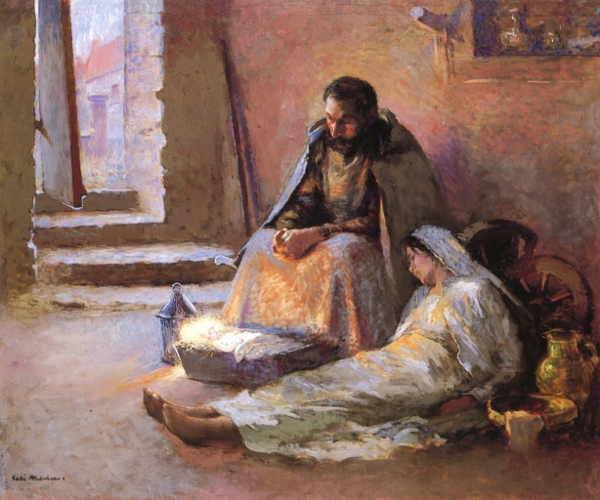
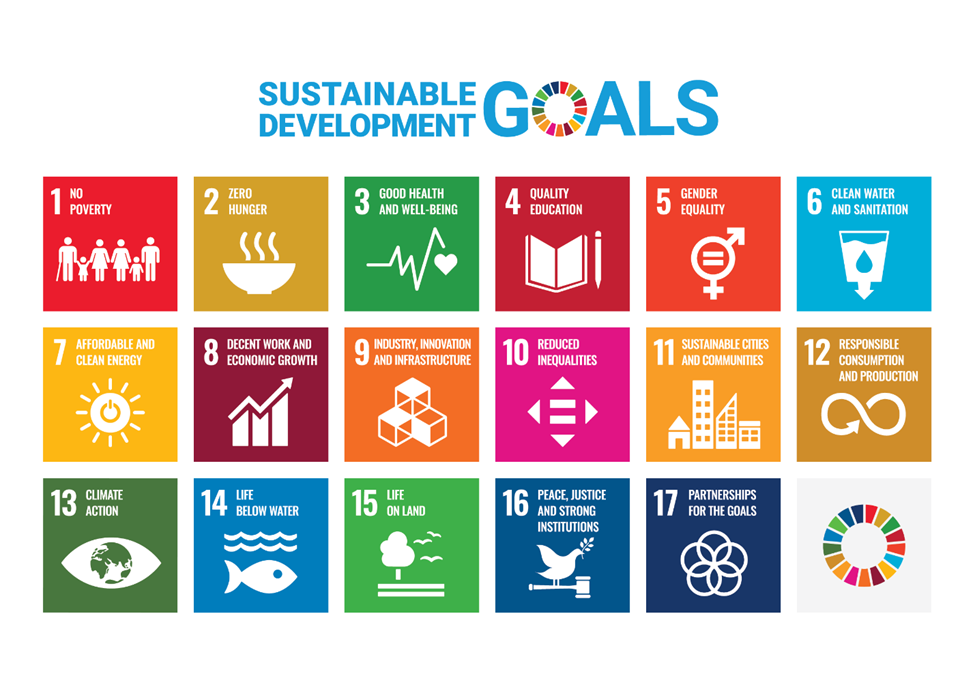
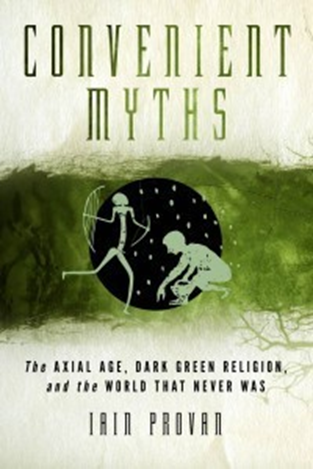
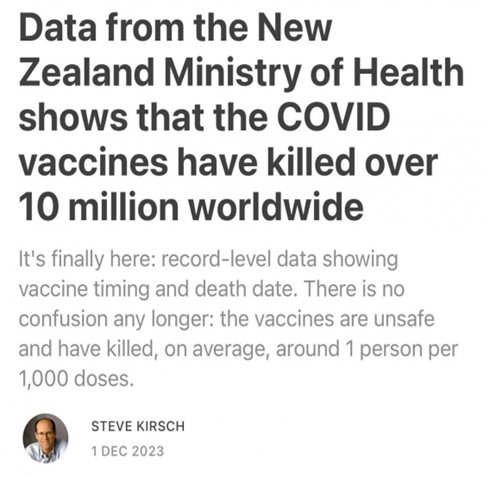
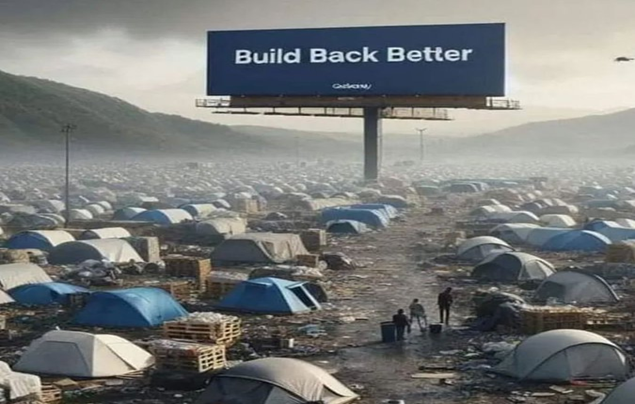
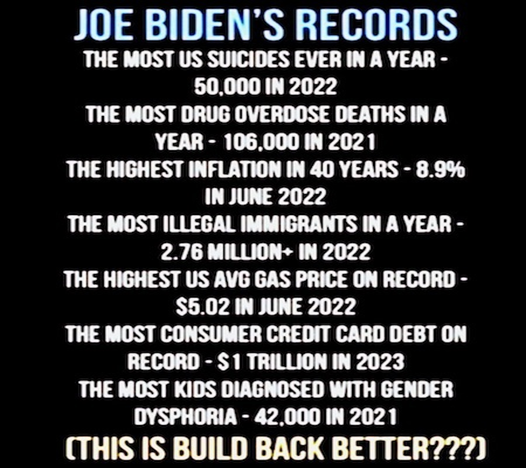



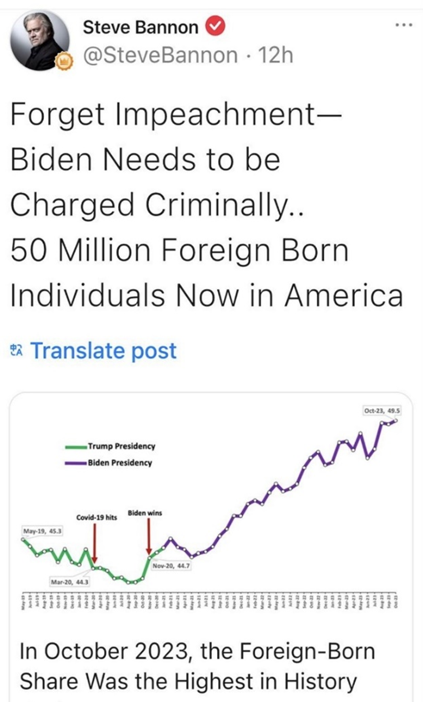
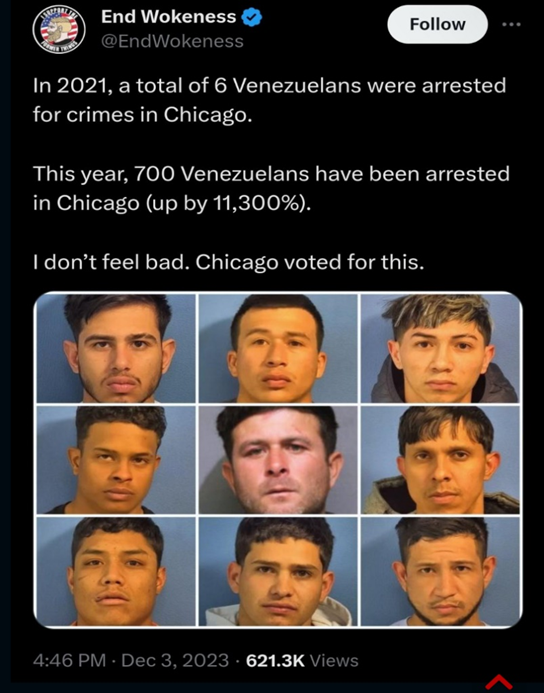


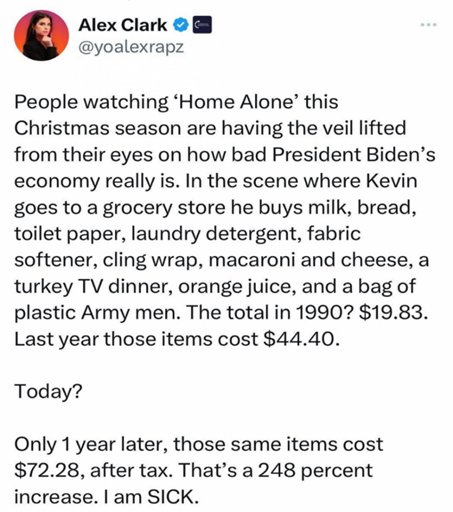

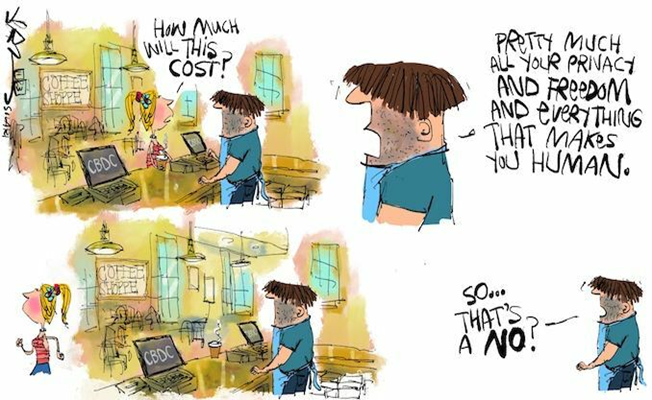
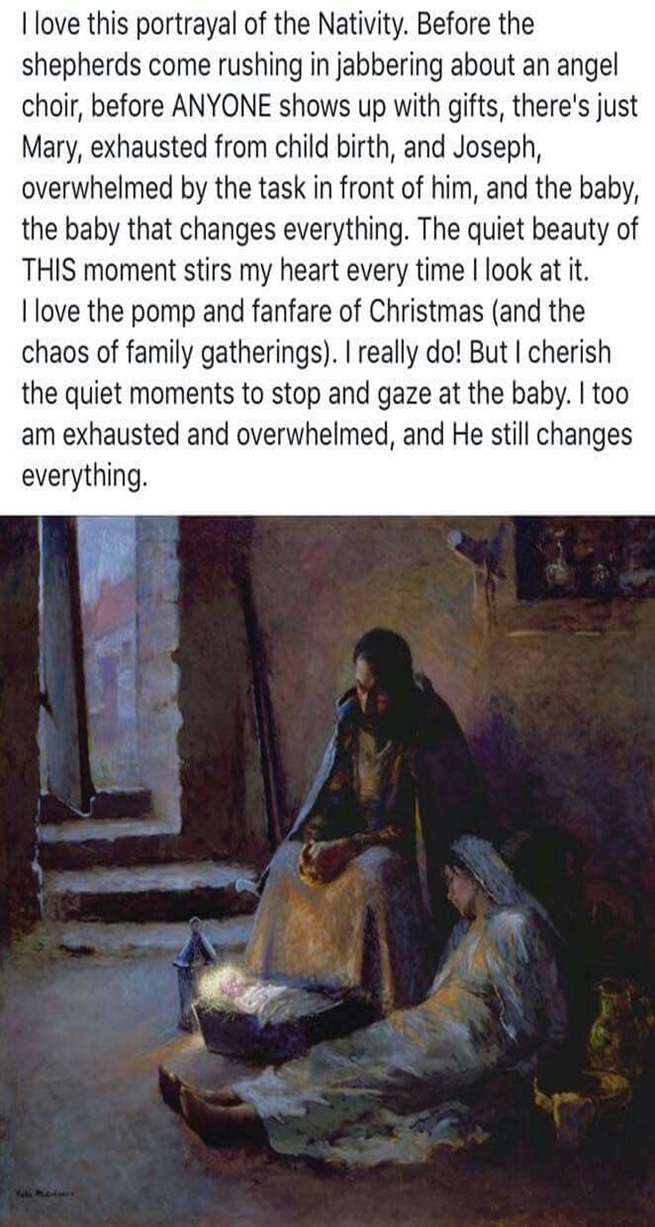
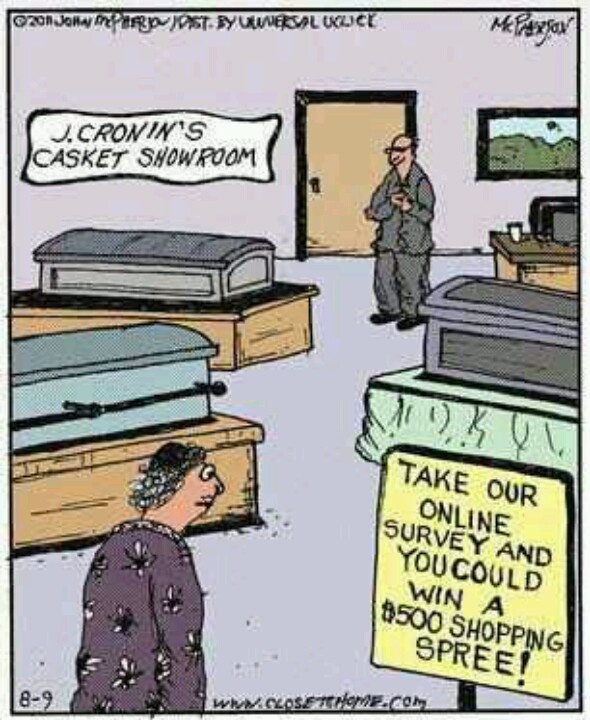






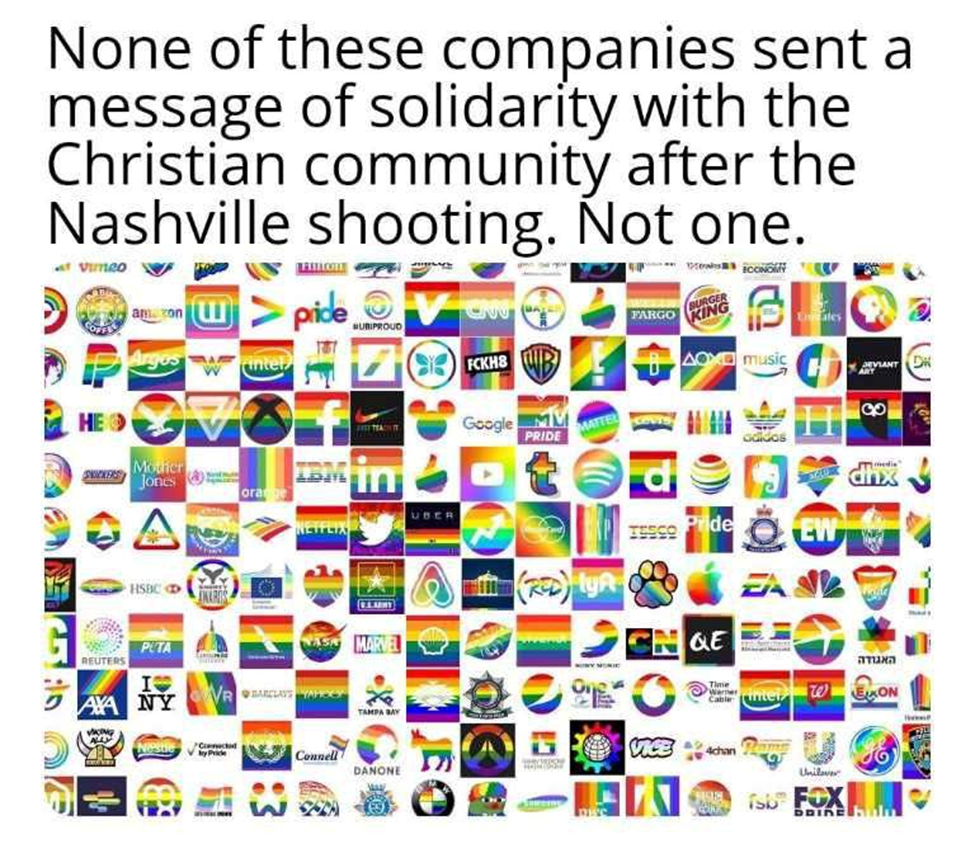




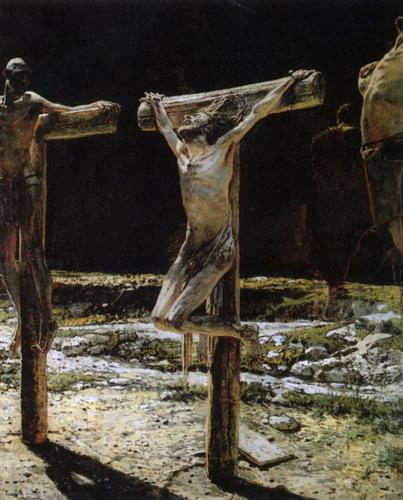
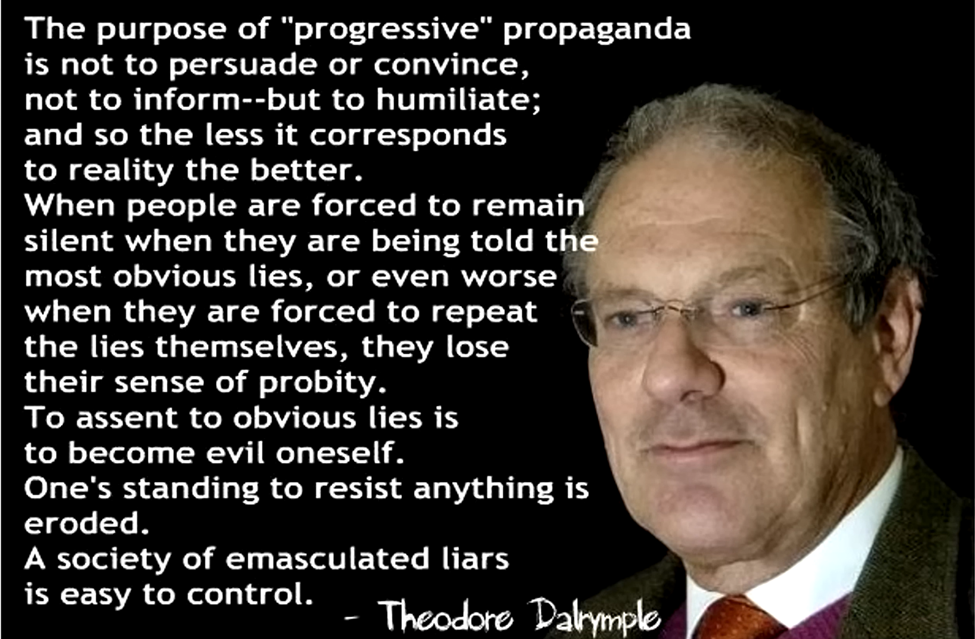
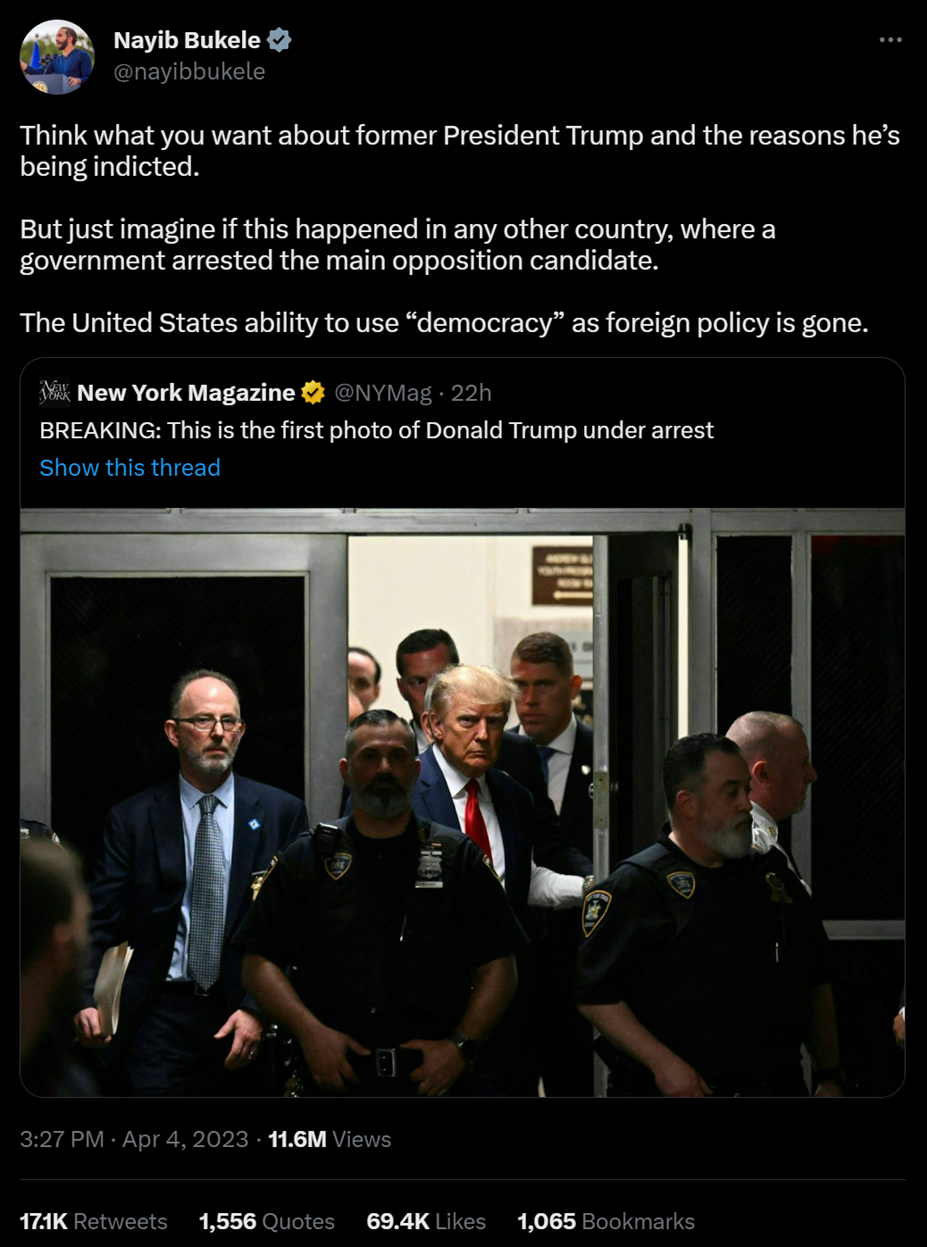
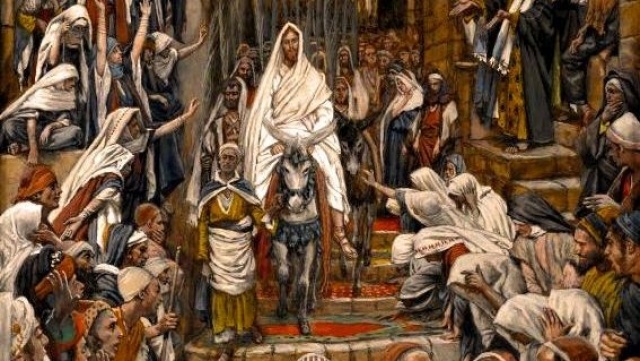


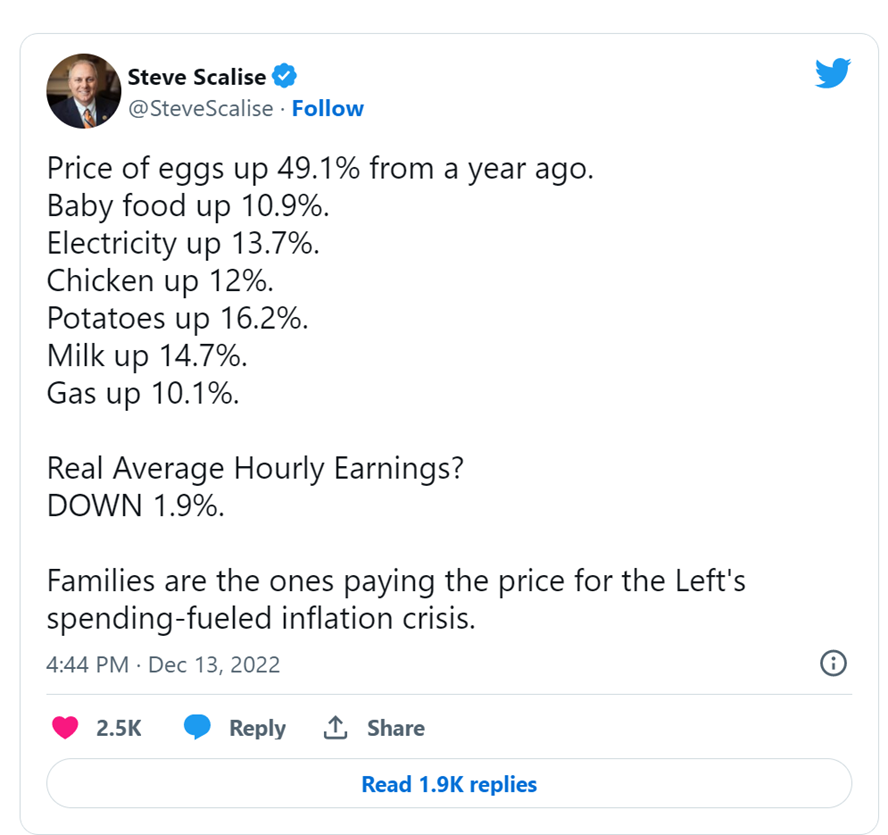








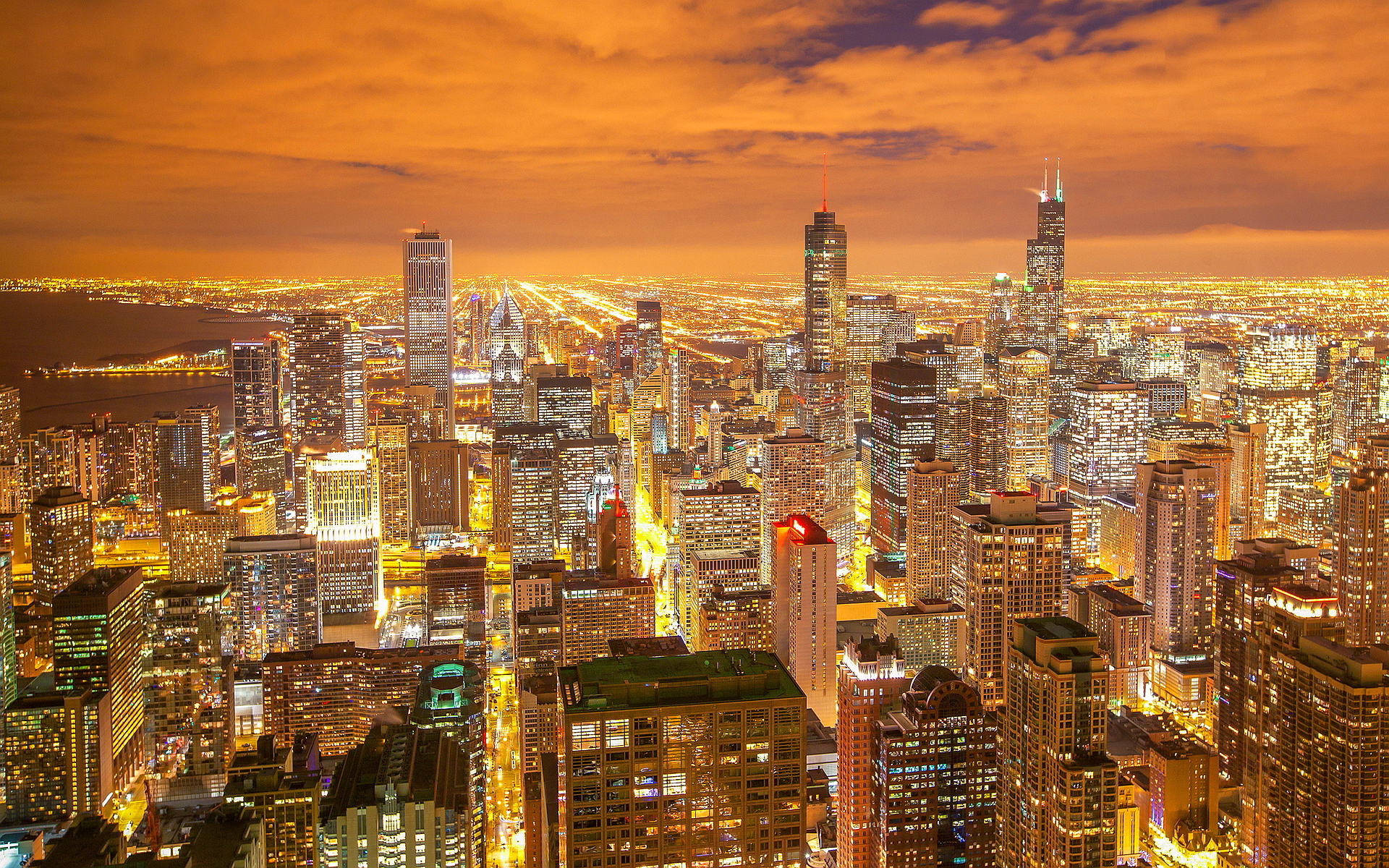








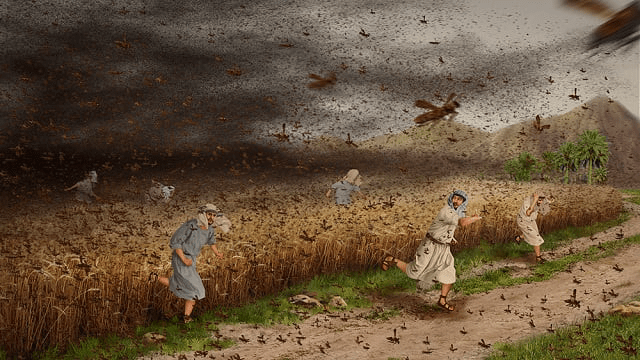

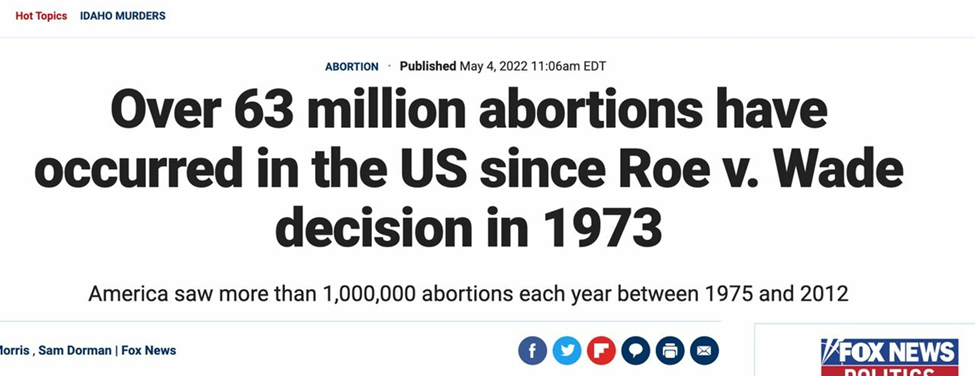

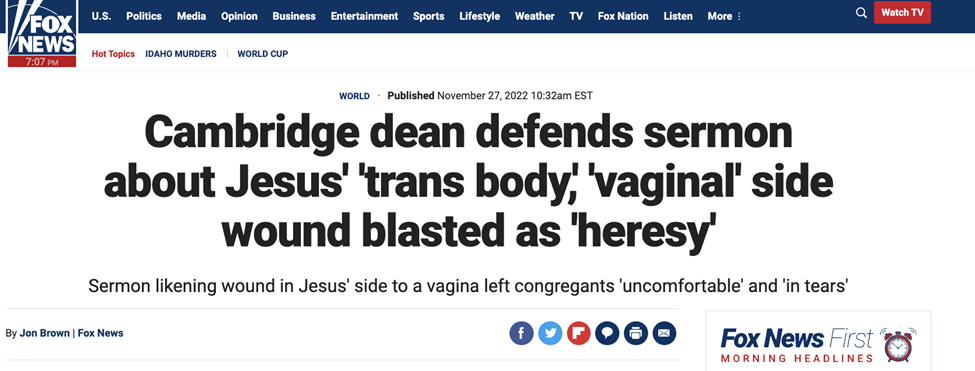



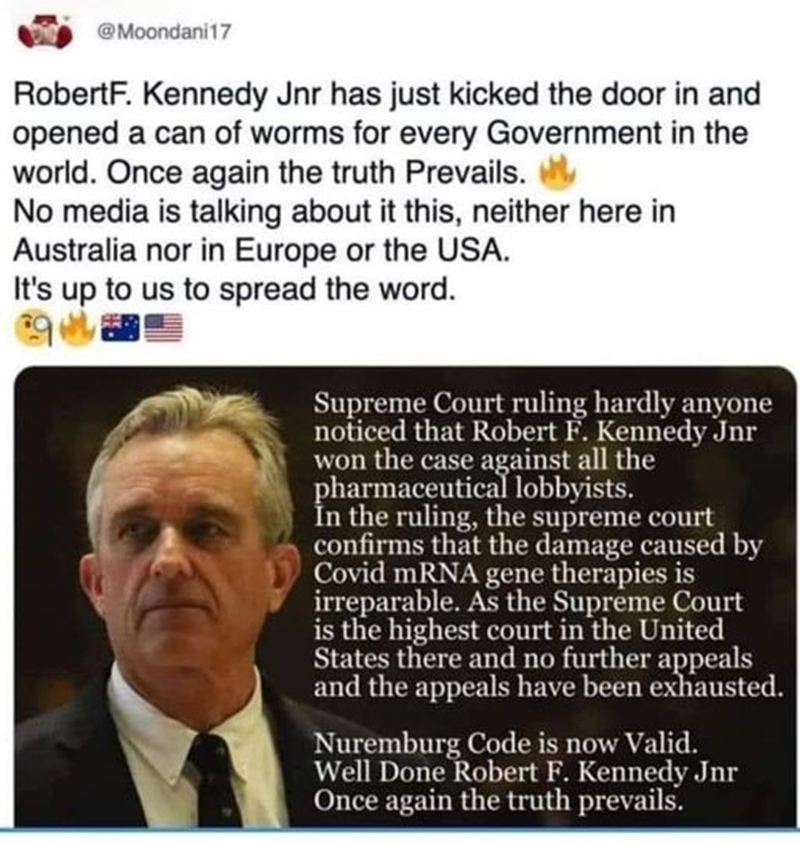


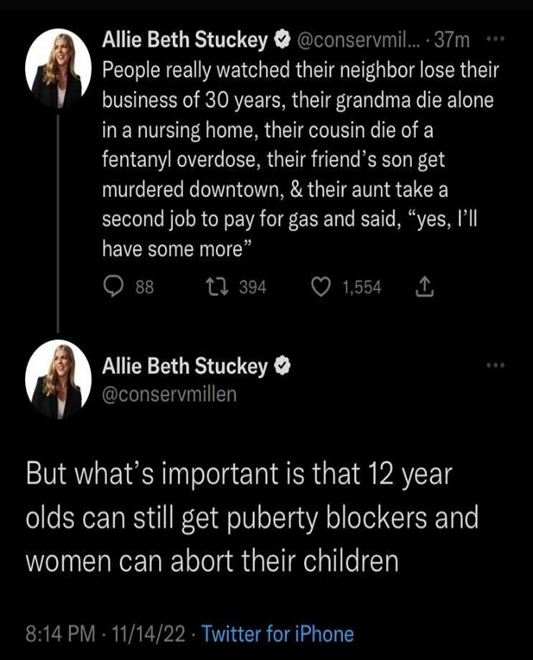



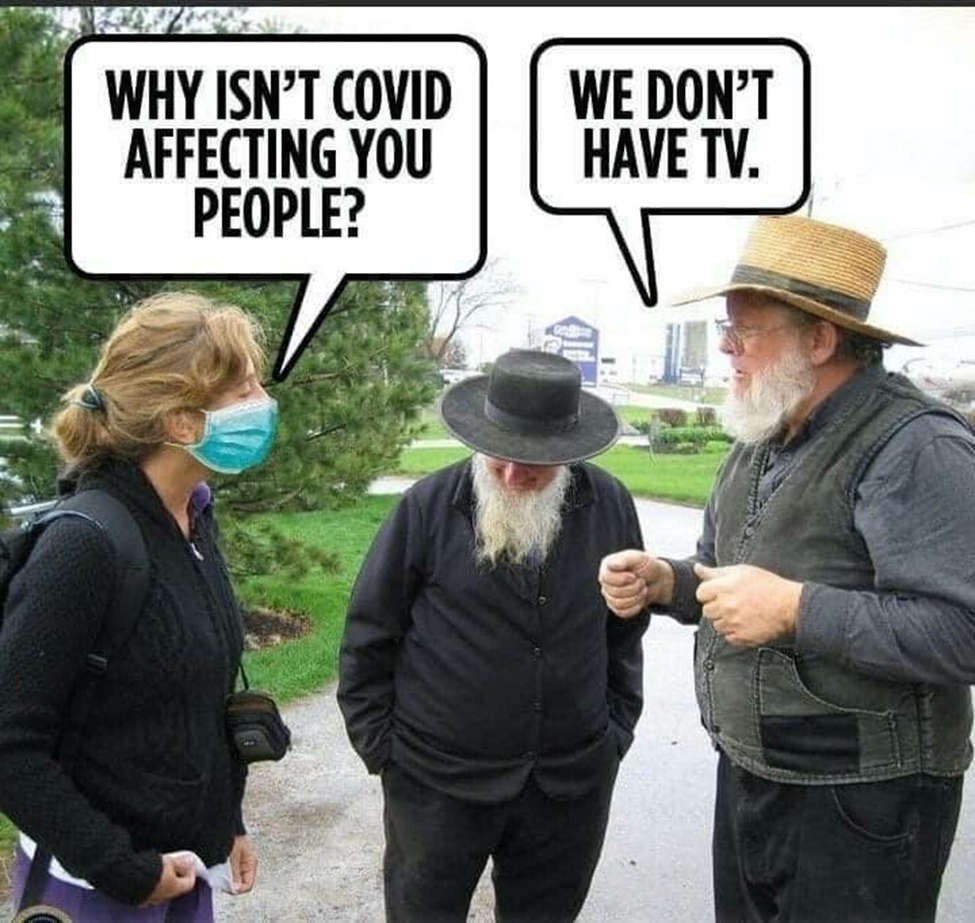






 Cindy Wity
Is This Our Last Independence Day?
June 30, 2023 Leave a comment
“One, if by land, and two, if by sea”, and three, if by One Health.
Who can forget COVID tyranny? Who can forget the constant fear porn driving people to disarm themselves of critical thinking to allow entry of the COVID narrative into their lives?
Who can forget that our churches, our businesses, our relationships, and our lives were masked and quarantined for a flu with a 99% recovery rate? Who can forget the horrific mandates imposed upon us? Who can forget the threats made to induce vaccine submission? Who can forget the severe adverse events that have occurred and will continue to occur from the untested mRNA vaccine?
Who can forget that the CDC banned the use of effective repurposed drugs – Ivermectin and hydroxychloroquine – so that an “emergency use authorization” could make it possible to flood the country with the untested mRNA vaccine? Lives were lost because of this ban.
And, who can forget that before the COVID plandemic the country was rapidly bouncing back from Obama’s anti-America years?
As I write this, a worldwide totalitarian medical police state is being formed that will make the COVID plandemic’s years of oppression look like a maskless walk in the park. I’ve posted warnings about what’s coming – digital ID’s and digital currency – at least twice before. What is coming is hundreds of times more oppressive than what happened during the COVID plandemic. (They are planning to release another pandemic soon – as a test of our response and the overlords authority.)
Tell me. Have you heard about any of this in the main stream media? Have you heard anyone in the media talk about what the CCP-backed World “Health” Organization (WHO) is up to? Have you heard anyone mention digital passports and digital currency? Have you heard about One Health, a global biotech surveillance state, complete with surveillance and censorship of virtually every aspect of life on earth?
Have you heard about any of this from your rep or senators? No? Why not? Is this off their radar? Could our rep or senators be all in on global governance? Could the Uniparty, aka the Swamp, which is made up of both Dems and Republicans, be all in on the subjugation of the U.S. to global governance? Could it be: “It’s a BIG club and you ain’t in it!”
Nothing in this post is conspiracy theory. What is taking place is mostly out in the open. You can read what they doing on websites. For example, One health (who.int):
“By linking humans, animals and the environment, One Health can help to address the full spectrum of disease control – from prevention to detection, preparedness, response and management – and contribute to global health security.”
And here is WEF’s Klaus Schwab praising the CCP – communist China:
World Economic Forum Concludes “Annual Meeting of the New Champions” in China with Accelerated Plans Toward Global Social Credit and Digital Surveillance | The Gateway Pundit | by Shawn Bradley Witzemann | 181
Wanting to learn more about the attack on our independence, I attended, on Wednesday, June 28th, Webinar | A Treaty by Any Other Name: The WHO’s Latest Attack on Our Sovereignty (rumble.com)
Co-Host and Moderator
Frank Gaffney, Chairman, Center for Security Policy; Co-Chair, Stop Vaccine Passports Task force; Co-Founder, Sovereignty Coalition.
Co-Host and Panelist
Reggie Littlejohn, Founder and President, Women’s Rights Without Frontiers; Co-Chair, Stop Vaccine Passports Task force; Co-Founder, Sovereignty Coalition.
– Topic: The WHO’s new “Bureau’s Draft” of the Pandemic Treaty: Surveillance, Censorship and Loss of Sovereignty
Panelists
Hon. Michele Bachmann, Member of Congress (2007-2015); Presidential candidate (2012); Dean, Robertson School of Government, Regent University
– Topic: What I observed in Geneva at the World Health Assembly. Once sovereignty is lost, it cannot be regained. No one is a more powerful speaker on that topic than you.
Dr. David Bell, M.D., Senior Scholar at Brownstone Institute; public health physician and biotech consultant in global health; former medical officer and scientist at the World Health Organization (WHO)
– Topic: Deferring to the WHO regarding Pandemic Preparedness Makes No Sense.
Dr. Francis Boyle, Ph.D., Professor of international law at the University of Illinois College of Law; JD degree magna cum laude from Harvard Law School, and a Ph.D in Political Science from Harvard University; Former Board Member, Amnesty International; Draft author, U.S. domestic implementing legislation for the Biological Weapons Convention, known as the Biological Weapons Anti-Terrorism Act of 1989, that was approved unanimously by both Houses of the U.S. Congress and signed into law by President George H.W. Bush
– Topic: Any agreement coming out of the WHO is already baked into U.S. law. It will not have to wait for the advice and consent of the U.S. Senate to be implemented here.
Dr. Kat Lindley, D.O., family physician and president of the Texas branch of the American Academy of Physicians and Surgeons; co-Founder, Global Health Project; member
– Topic: The constitutional, legal and legislation protections we have depended on will not work to stop the WHO power grab.
Alex Newman, Contributor, The Epoch Times and other diverse publications; award-winning international journalist, educator, author, and consultant who co-wrote the book “Crimes of the Educators: How Utopians Are Using Government Schools to Destroy America’s Children”
– Topic: The dangers of digital heath passports and their connection with the ability to buy or sell.
Dr. Karladine Graves, D.O., Private Family Physician in North Kansas City, MO; Advocate for physicians
– Topic: If the Pandemic Treaty goes through, it will injure or destroy the doctor/patient relationship and give the WHO power to force vaccinations.
A May 15th webinar provides insight into “a global biotech surveillance state, complete with surveillance and censorship of virtually every aspect of life on earth under the One Health approach”:
Webinar | ONE HEALTH: The W.H.O.’s Dangerous New Ideology (rumble.com)
Co-Host and Moderator
Frank Gaffney, Chairman, Center for Security Policy; Co-Chair, Stop Vaccine Passports Task force; Co-Founder, Sovereignty Coalition.
Co-Host and Panelist
Reggie Littlejohn, Founder and President, Women’s Rights Without Frontiers; Co-Chair, Stop Vaccine Passports Task force; Co-Founder, Sovereignty Coalition.
Topic: One Health and the Bio-Medical Surveillance State
Panelists
Dr. Elizabeth Lee Vliet, M.D., President and CEO of the Truth for Health Foundation; Member of the International Society of Gynecologic Endocrinology.
Topic: One Health: The Vise of Totalitarianism
Dr. Kat Lindley, D.O., family physician and president of the Texas branch of the American Academy of Physicians and Surgeons.
Topic: One Health and the Disruption of the Physician/Patient Relationship
Dr. David Bell, M.D., Senior Scholar at Brownstone Institute; public health physician and biotech consultant in global health; former medical officer and scientist at the World Health Organization (WHO).
Topic: The Hijacking of One Health
Dr. Meryl Nass, M.D., Board-certified internist; biological warfare epidemiologist and expert in anthrax.
Topic: One Health – W.H.O. land grab?
Brian O’Shea, Private investigator and security expert.
Topic: One Health: Global Public Health’s & The CCP’s Authoritarian Trojan Horse.
For more on the globalist takeover see Webinars – Stop Vax Passports
This is at least my third alarm about what is coming to our shores to destroy life as we know it. Globalist overlords are intent on redistributing money, resources, and control to themselves. They use highfalutin sales rhetoric from “ESG” to “stakeholder capitalism” to “conscientious capitalism.” But all the gibberish, for those of us not in the globalist “club”, leads to “You’ll own nothing and be happy.”
Globalist overlords are intent on using every world crisis they create (pandemics and Climate Change) to “reset” the lives of people to their own vagary. They act to crush our wills and claim our children. They tell us what to think and do from sun up to sundown, everything from “Cut carbon” to “No stone-fired pizza” to “Eat bugs” to “You’ll own nothing and be happy.” And yet most Americans love their trucks, their home, and eating real meat. Most Americans have faith in God, but the intelligentsia, aka politically connected radical socialist atheists, want nothing to do with God in any form or fashion including “In God We Trust” America.
The destruction of our lives and all we hold dear is their creative inclination. The suits acting to “reset” our lives act in line with what Mikhail Bakunin, revolutionary socialist, social anarchist, and collectivist anarchist once said:
“The urge to destroy is also a creative urge.”
And they will creatively destroy quietly. Consider that with digital technology, no one has to be sent to a gulag or shot for not going the way of the tyrants. None of that KGB stuff needs to happen as was done in the past. Except for some public figures, there will be none of that public messy stuff that would make globalists look like Stalinists. Digital technology will do all the dirty work. Your digital device will be a KGB agent looking in on you.
Digital governance will decide if one eats, travels and leaves their home. So, when people are deprived of liberty, of choice, of movement and of hope, they will go mad. They can then be institutionalized if they don’t commit suicide first. Like Pontius Pilate, globalists can then wash their hands of the matter.
If you still doubt the extremes to which a global biotech surveillance state will deal with you, then recall the authoritarian-directed days of COVID. And look now at the two-tier system of justice under the Biden regime’s DOJ and Merrick Garland. And look at how J6 political prisoners are being treated. Each example brought together is but a small preview of what digital global governance will become.
With the extra time you have this Fourth of July weekend, I urge you to view the videos posted here. Then take action. There may not be another election.
I urge priests, pastors and leaders of the church to warn people of what’s coming and to help parishioners put a stop to it. I have no doubt that the godless globalists will restrict all Christian activity by calling it a global health “concern” (see communist China, the globalist’s role model for suppression of religion). Send a link to this post to church leaders.
Will you resist tyranny, or will this be the last Independence Day? Will you act to defend our injured, bleeding Country and insure its independence?
*****
“I only regret that I have but one life to lose for my country.” –Captain Nathan Hale, an American soldier and spy for the Continental Army during the American Revolutionary War. He was hanged by the British.
“However, at the gallows, he made a sensible and spirited speech; among other things, told them they were shedding the blood of the innocent, and that if he had ten thousand lives, he would lay them all down, if called to it, in defense of his injured, bleeding Country.”
-Captain Nathan Hale’s execution, as reported in the Essex Journal (13 February 1777).
*****
(Warning: Language!)
George Carlin – It’s A BIG Club & You Ain’t In It! – YouTube
*****
Take action:
Information you can use to make a difference: Social Toolkit – Sovereignty Coalition
Tell your reps that you do not want digital currency (CBDC) to replace physical cash. What we have now works.
Tell your reps to withdraw the U.S. from the World Health Organization (WHO).
Tell your reps to pass these bills.
H.R.79 – 118th Congress (2023-2024): WHO Withdrawal Act | Congress.gov | Library of Congress
H.R.343 – 118th Congress (2023-2024): No Taxpayer Funding for the World Health Organization Act | Congress.gov | Library of Congress
H.R.1425 – 118th Congress (2023-2024): No WHO Pandemic Preparedness Treaty Without Senate Approval Act | Congress.gov | Library of Congress
Tell your reps that you do not consent to a bio-tech totalitarian state under the WHO and the WEF.
Tell your reps that you do not consent to a digital health passport.
Note: Twenty states, all with Republican governors, prohibit proof-of-vaccination requirements. In eleven states, governors banned proof-of-vaccination requirements through executive orders. In nine states, legislators passed laws banning proof-of-vaccination requirements.
Six states—California, Illinois, New York, Hawaii, and Oregon, and Washington—have facilitated the creation of digital vaccination status applications or passed laws or enacted orders exempting fully vaccinated individuals from some COVID-19 restrictions if they can provide proof of vaccination. All six states have Democratic governors.
State government policies about vaccine requirements (vaccine passports) – Ballotpedia
Sign the It’s Time for America to Exit the W.H.O. declaration: Sovereignty Coalition
Take Action! Repeal or Amend – International Pandemic Prevention Act 2022 – Stop Vax Passports
A Cheat Sheet for Legislators Regarding the WHO and Health Emergencies ⋆ Brownstone Institute
Take action! WITHDRAW US FROM THE W.H.O. NOW! – Stop Vax Passports
Understand what’s going on around you:
Global Covid Summit
Home – Global Health and Education Projects | GHEP (globalhealthprojects.org)
The CCP is at War with America – The Chinese Communist Party’s COVID-19 Biological Warfare Attack and What’s Next (ccpatwar.com)
Of interest:
A Christian response.
Torch Of Freedom – WHO is running the world? -Part 2 -June 8 2023 (Repared) (rumble.com)
Digital ID-ing is already here. You are being surveilled:
Hohmann: Atlanta Airport goes full dystopian, using digital facial recognition IDs, fulfilling Klaus Schwab’s prophecy that humans will be digitized | The Gateway Pundit | by Jim Hoft | 2
Atlanta’s End-to-End Digital Identity Experience
Delta reveals first-ever dedicated TSA PreCheck® lobby, bag drop | Delta News Hub
*****
“CEO Larry Fink says he is going to stop using the term “ESG.” BlackRock is setting itself up to be an intermediary to help “rebuild” the Ukrainian economy. Also, James O’Keefe recently exposed an employee of BlackRock saying some really frightening things.”
Blackrock—the largest asset holder in the world
BlackRock’s Stealthy Global Ambitions – In The Tank #404 – The Heartland Institute
BREAKING: BlackRock Recruiter Who ‘Decides People’s Fate’ Says ‘War is Good for Business’ While Spilling Info on Asset Giant (okeefemediagroup.com)
A lawsuit waiting to happen: ESG violates fiduciary duty | The Hill
*****
Informed dissent:
And you think it will not happen here to you? Wake up
UK is weaponizing banking now – by Robert W Malone MD, MS (substack.com)
THOUGHTCRIME: Michigan May Imprison Residents for Years for “Misgendering” or “Threatening” LGBTQ Individuals Under New “Hate Speech” Bill | The Gateway Pundit | by Cullen Linebarger | 165
They finally debated RFK Jr. on vaccines and it did NOT go well for “the science”… – Revolver News
American Patriotic Independence Day | 4th of July Music with Beautiful Scenes of America – YouTube
Rate this:
Filed under 2023 current events, Communism, Culture, Digitalization, Fourth of July, Globalism, Health Care, Political Commentary, social commentary, totalitarianism Tagged with CBDC, digital currency, Fourth of July, Globalism, One Health, tyranny, WEF, WHO